Recent Issues I Newsletters I Petfood Forum I Subscribe to Magazine
  Sign In I  Sign Up
PetfoodIndustry.com

  • HOME
  • MARKET INFORMATION
  • NUTRITION
  • SAFETY
  • PRODUCTION
  • PACKAGING
  • TOP PETFOOD COMPANIES
  • News
  • Products
  • Petfood and Treats
  • Petfood-Connection.com
  • Industry Calendar
  • Buyer's Guide

  • ArticleMore Images (2)
      • Email this to a friend Email
      • Print Printer
        Friendly
      • Font size: Decrease Font Increase Font
      • Share:Share
      • Share:Share Close
        • FacebookFacebook
        • MySpaceMySpace
        • stumbleuponstumbleupon
        • deliciousdelicious
        • diggdigg
        • newsvinenewsvine
        • linkedinlinkedin

      Advances in functional petfood ingredients

      Prebiotics, probiotics and their combinations—synbiotics—promise health benefits for pets

      By Debbie Phillips-Donaldson Release Date: Comments(0)

      More Images

      Prebiotic-probiotic-petfood-1206PETpreprobiotic1

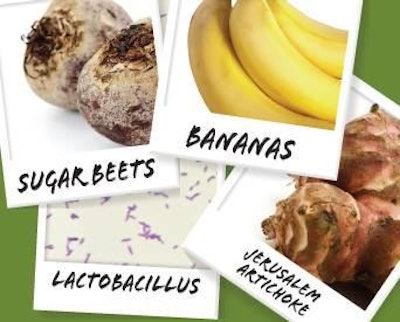
      Jerusalem artichoke by only_fabrizio, sugar beets by elenathewise, bananas by Aggphotographer at BigStockPhoto.com, Lactobacillus by Bobby Strong/CDC

      For new functional benefits in petfoods, prebiotics from sources such as garlic, Jerusalem artichokes, sugar beets and bananas can be combined with probiotics like Lactobacilli or Bifidobacteria to create synbiotics.

      Since the term “functional food” was first used in Japan in the 1980s, food science and nutrition knowledge have progressed from identifying and correcting nutritional deficiencies—improving life expectancy—to designing foods that promote optimal health and reduce risk of disease—improving wellness and the quality of life, said K.B. Kore, PhD, assistant professor with the College of Veterinary Science and Animal Husbandry at Navsari Agricultural University in India.

      This progression began in human food, but as with many concepts, it soon made its way into petfood, prodded by consumers’ demands for products for their furry family members with the same types of ingredients that foods for humans have. In many cases, this means prebiotics and probiotics.

      In a Petfood Forum Asia 2012 presentation, “Prebiotics, Probiotics and Synbiotics as Functional Foods for Dogs,” Dr. Kore shared the potential health benefits of these functional ingredients:

      • Modulation of hindgut health (mainly colon), including maintaining intestinal microbial balance and lowering pH, production of organic acids and ammonia;
      • Resistance to intestinal infection;
      • Improvement in bioavailability and absorption of minerals;
      • Hypoglycemic and hypolipidemic actions;
      • Management of infectious diarrhea;
      • Reduction of risk of obesity; and
      • Reduction of risk and severity of osteoporosis, colon cancer and inflammatory bowel disease.
      An ideal prebiotic beneficially alters luminal or systemic aspects of the host’s defense system.

      Dr. Kore offered an evolving concept of a prebiotic: a selectively fermented ingredient that allows specific changes, in both the composition and the activity of gastrointestinal (GI) microflora, that confers benefits on host health and well-being (Gibson et al., 2004). This builds on a previously accepted definition of prebiotics as non-digestible ingredients that benefit the host by selectively stimulating the growth or activity of one or a limited number of bacteria (commonly considered probiotics) in the colon.

      Dr. Kore added that an ideal prebiotic beneficially alters luminal or systemic aspects of the host’s defense system. Prebiotics that have been researched and used in both human foods and petfoods include inulin, fructo-oligosaccharide (FOS), oligofructose (short chain, or scFOS), galacto-oligosaccharide (GOS) and lactulose from sources such as garlic, onions, Jerusalem artichokes, chicory roots, sugar beets, milk (lactose) and bananas. Dr. Kore also shared potential new prebiotics available on the horizon for petfoods:

      • Xylo-oligosachharide, an oligosaccharide made of xylan through enzymatic hydrolysis (commercially produced with corn cobs);
      • Isomalto-oligosaccharide, a mixture of short-chain carbohydrates with digestion-resistant properties found naturally in some foods and also manufactured from starch; and
      • Soybean oligosaccharide, a type of GOS.

      A study conducted in the Department of Animal Science at the University of Illinois showed that low-level supplementation of scFOS, GOS and their combination have positive effects on select indices of gut health in cats (K. Kanakupt et al., 2011). Until this study, not much research was available on the prebiotic effects of non-digestible oligosaccharides in cats, the authors said.

      In his presentation, Dr. Kore described a probiotic as a “preparation or product containing viable, defined microorganisms in sufficient numbers that alter the microflora of the intestine and by that exert beneficial health effects on the host.” Examples of probiotics commonly used in both human foods and petfoods include Lactobacilli, Bifidobacteria, gram-positive cocci, yeast and fungi.

      Nutrient-digestibility-dogs-1206PETpreprobiotic2

      K.B. Kore, PhD

      Results of a study on prebiotics, probiotics and synbiotics in dogs, conducted by K.B. Kore, PhD, and colleagues at the Centre of Advanced Faculty Training in Animal Nutrition at the Indian Veterinary Research Institute, showed digestibility differed based on the functional ingredients fed.

      Until this study, not much research was available on the prebiotic effects in cats.

      While many treats on the market today use probiotics, the Probiotic Live dog food line, as its name implies, includes actual live probiotics in an extruded dry petfood, a first according to the manufacturer, Bacterfield Corp. Though the company (based in Luxembourg) doesn’t reveal its exact manufacturing technology, it says the formula infuses the bacteria inside the kibble, helping it remain stable for at least 15 months and allowing for a dosage of 1 billion live Enterococcus faecium. The formulation also includes prebiotics such as FOS.

      Because it’s often difficult to get probiotics to colonize and remain that way in the intestine, using them with prebiotics increases persistence in the GI tract by providing a preferred food for the probiotics, thus promoting their growth, according to Trevor Faber of the University of Illinois.

      Recent research into these combinations is producing ingredients called synbiotics, Dr. Kore said. He defined a synbiotic as a mixture of prebiotics and probiotics that helps improve survival and implantation of live microbes in the GI tract by selectively stimulating the growth and/or activating the metabolism of one or a limited number of health-promoting bacteria. Examples of synbiotics include:

      • Bifidobacteria + FOS;
      • Lactobacillus  + FOS;
      • Lactobacillus  + inulins; and
      • Bifidobacteria + inulins.

      Dr. Kore shared results of a study he conducted with A.K. Pattanaik and K. Sharma of the Centre of Advanced Faculty Training in Animal Nutrition at the Indian Veterinary Research Institute. To evaluate the functional food properties of prebiotics, probiotics and synbiotics, they randomly divided 16 Labrador Retrievers into a control group and three treatment groups: one receiving a prebiotic (chicory inulin at 1% of diet on a dry matter basis), one receiving probiotics (at 5% of diet, providing 1×10⁹ of L. acidophilus) and one receiving synbiotics (a combination of the prebiotic and probiotic).

      Future research should continue to search for alternate sources of these functional ingredients.

      The results revealed no effect on nutrient intake, but digestibility was significantly lower in the prebiotic group, digestibility of protein was higher in the synbiotic group and digestibility of fat, fiber and calcium was higher in both the probiotic and symbiotic groups. The researchers concluded:

      • Prebiotics positively modified fiber digestion, calcium absorption, hindgut health indices and intestinal microflora;
      • Probiotics improved some nutrient utilization (fat, fiber, calcium), hindgut health attributes and intestinal microbial balance; and
      • Synbiotics showed added or synergistic effects over using pre- or probiotics alone in all aspects of functional properties ascribed to prebiotics and/or probiotics.

      Dr. Kore said future research should continue to search for alternate sources of these functional ingredients and target the influence of proven synbiotic combinations across different feeding regimens, breeds and lifestyles. Synbiotics could also aid in nutrigenomics, exploring the functional role of the food at the genetic level.


      See the presentation 

      View Dr. K.B. Kore’s Petfood Forum Asia 2012 presentation, “Prebiotics, Probiotics and Synbiotics as Functional Foods for Dogs."


      Research applications for petfood manufacturers 

      Research to date on prebiotics, probiotics and synbiotics has shown health benefits for pets and been applied in the marketplace. K.B. Kore, PhD, assistant professor at Navsari Agricultural University in India, believes future research and development by petfood manufacturers and suppliers could include:

      • Finding new natural sources of prebiotics;
      • Selecting new and more specific strains of probiotics for health and well-being of the host (age group, health of the population, disease specific);
      • Developing technology for non-dairy probiotics (grain-based materials);
      • Creating appropriate delivery vehicles for synbiotics; and
      • Developing products with sensory properties, viability during processing and stability in the product as well as during storage.

      Phillips-Donaldson is editor-in-chief of Petfood Industry. Email her at dphillips@wattnet.net.
      Updated: May 03, 2013 This article appeared in Petfood Industry, June 2012. ©Copyright 2013, All Rights Reserved.


      1
      1
      1

      Related Content

      Previous
      Next
      • functional pet food

      • pet food ingredients

      • pet nutrition

      Functional fiber with color

      Tomato pomace has the potential to provide additional nutrition and health benefits

      Pulses: new ingredients for petfoods?

      With the availability of quality ingredients declining, perhaps we need to explore this category

      Carrageenan: for appearance's sake only?

      What is this quiet, unassuming ingredient, and should it be there?

      More content about functional pet food

      Dealing with choline chloride

      It's an "Intel inside" type of molecule -- but also a problem child

      Are chelated minerals worth it?

      The question is whether they provide additional benefit to the dog or cat

      Broth: connecting food with feelings

      It's the finishing touch that can meet both owner and pet needs.

      More content about pet food ingredients

      Are chelated minerals worth it?

      The question is whether they provide additional benefit to the dog or cat

      Carrageenan: for appearance's sake only?

      What is this quiet, unassuming ingredient, and should it be there?

      Broth: connecting food with feelings

      It's the finishing touch that can meet both owner and pet needs.

      More content about pet nutrition
       

      Comments

      0 Comments

      Add Comment

      Text Only 2000 character limit

    Healthy-bacteria-dogs-1206PETpreprobiotic3

    K.B. Kore, PhD


    Dogs fed a synbiotic (combination of prebiotics and probiotics) had the highest count of health-positive bacteria (fecal Lactobacilli and Bifidobacteria) in the study by Dr. Kore and colleagues.

    Negative-bacteria-dogs-1206PETpreprobiotic4

    K.B. Kore, PhD


    The synbiotic group (dogs fed a combination of prebiotics and probiotics) had fewer health-negative bacteria (fecal Coliform and Clostridia) than the other groups in the study by Dr. Kore.

  •  
  • Create or Maintain an account

    • Sign Up
    • Edit Your Profile
    • Subscribe to Newsletters
    • RSS feeds
    • Why Register

    Custom Publications

    • Empyreal 75 Update
    • The Extru-Technician

    Digital Editions

    • Petfood Industry
  • Events

    • Petfood Forum
    • Petfood Workshop
    • Petfood Forum China
    • Petfood Forum Asia
    • Petfood Forum Europe
    • Webinars
  • Help and Information Center

    • Support
    • Petfood Industry Editorial Staff
    • Advertising Contacts
    • Media Guide
    • Article Reprints

    Newsletters

    • Petfood Industry e-News
    • Petfood Industry Nutrition News

    Digital Directories

    • Petfood Industry Reference and Buyer's Guide
  • Social Media

    • Petfood-Connection
    • Petfood-Connection Smart Phone App
    • Twitter
    • Facebook
    • YouTube

    Nutrition Courses

    • WATT eLearning
    • Customized Training

    WATT Corporate

    • About WATT
    • Corporate Contacts
  • © Watt Publishing Co., 2013 All Rights Reserved
  • |Sitemap

--- Thank you for your patience ----

If you have any issues logging in or any other need feel free to contact us.

loading