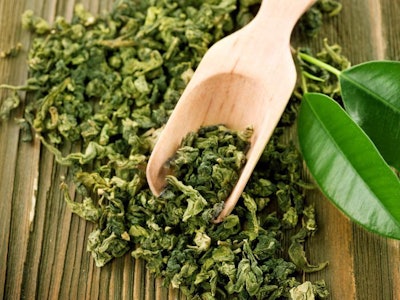
Green tea extract is derived from the leaves of the Camellia sinensis bush. Dried green tea leaves are used to make the popular hot beverage, and the extracts play a central role in herbal medicine. More recently, purified extracts have found favor as a nutraceutical and food antioxidant preservative.
While green tea extract is not technically permitted in US pet foods, there are a number of dog and cat diets that contain this ingredient on their label. It is being promoted for a myriad of effects from health and wellness of the animal to a key component of modern, natural antioxidant preservative systems. There is plenty of human-focused production, consumption, medical and analytical research published on the topic. Green tea has been considered a contributing factor in cancer prevention; and claimed to lower cholesterol, reduce blood pressure, possess bactericidal and anti-viral activity, prevent halitosis and modulate blood sugar; along with a host of other benefits. It has very high name recognition and acceptability with consumers; but does this ingredient really have a place in diets for our pets?