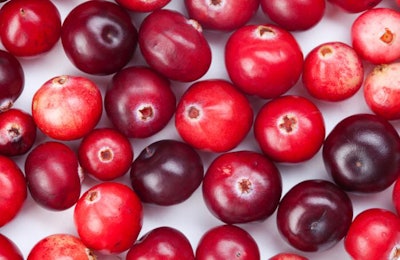
Cranberries are found on the ingredient panel of many pet foods. They are often associated with urinary tract health claims, foods that claim to be fortified with antioxidants, or those that appeal to pet owners looking for added fruits and vegetables. Cranberries are not a traditional ingredient for pets, so more information about them and their utility might be helpful.
The cranberry fruit grows on an evergreen dwarf shrub with trailing vines. The shrubs grow in acidic bogs with sandy-soil bottoms throughout the cooler regions of the planet. In 2015, there were 1.2 billion pounds of cranberries grown worldwide with the US leading production at nearly 70 percent of the market, followed by Canada and Chile as a distant second and third. The early colonists to America were introduced to cranberries by the Natives they encountered and from these humble beginnings, the wild-type berries were improved and agricultural practices were refined to produce a significant market sector. Today they are grown in natural wetland bogs and harvested in the fall.