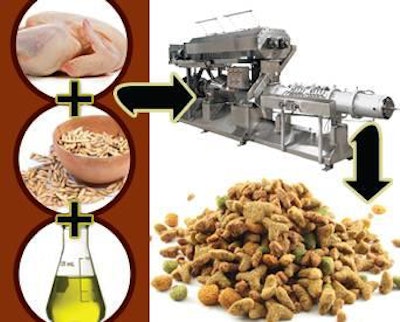
Thermal processing—also known as cooking—of petfoods provides a number of benefits, including convenience, enhanced flavor and texture, improved consistency, pathogen control and decreased spoilage. However, extensive processing can increase variability, destroy essential nutrients and create unwholesome by-products. From a formulator’s perspective, this creates a dilemma regarding how to assure the diet is sufficiently fortified while avoiding excess after accounting for processing effects.
Given we have been sharing our food with dogs and cats since the dawn of civilization some 15,000 years ago, one would think we would have worked out most of the issues. But in comparison to human foods, we have only bits and pieces of information about how the process affects nutrition and variability of petfoods.