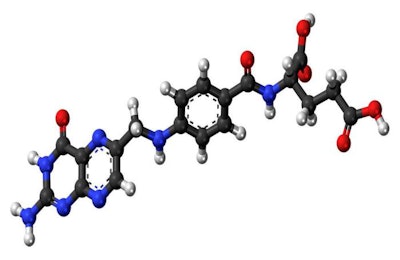
We hear about folic acid periodically as an important element in neonatal vitamins for its role in prevention of neural tube defects during pregnancy and fetal development, but beyond that, it doesn’t hit the news-wire. For our pets, we seldom, if ever, hear of a disease associated with its imbalance, and it isn’t on any of the pet food critic’s list—good or bad. Maybe because it is usually at the end of the ingredient list, but that does not mean it isn’t important. Folic acid is an essential vitamin for dogs and cats. The needed level is quite small, one of the three lowest among the vitamins: the recommended allowance for all dogs is 0.270 mg/kg and for cats is 0.750 mg/kg based on a 4,000 kcal diet (NRC, 2006).
Folate occurs naturally in foods such as green leafy vegetables, beans, Torula yeast and organ meats, specifically liver. It is also produced during fermentation in the large intestine, but may be marginally beneficial. There is some evidence that disruption of normal colonic fermentation with antimicrobials (such as sulfonamides) may lead to a deficiency, which suggests a portion of the animal’s needs are being met from this source. Further, supplementation is especially important for animals that experience disruptions to normal colonic fermentation or are on medications. In other words, supplementation is critical to assure fortification is sufficient when things aren’t perfect.