Before I start, I would be remiss if I didn’t mention that this article is by no means bashing raw pet food. As many people have heard me say before, if you want a nice night out, do not talk religion, politics or pet food. What people feed their pets is their own decision and is often tied to their personal choices, lifestyles and even their checking accounts.
People who consume minimally processed foods will likely feed similar foods to their pets. If they are a gluten-free household (e.g., because of a human allergy or intolerance, not their pet’s), they will likely feed their pets a grain-free food. If they feed a value brand, they may not be able to afford another option. None of these choices make them bad pet parents, especially if their pets were rescued.
That is why, when it comes to how people feed their pets, I aim to educate, not advocate or humiliate. Having said that, misinformation is rampant about what level of microbial contamination should be allowed in pet food. Simply put, the answer is zero.
A performance standard is not permission to feed pathogens
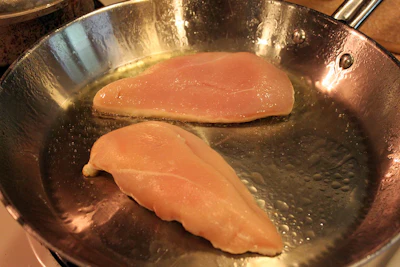
Many of the “experts” in this category argue that “some” Salmonella is acceptable because the U.S. Department of Agriculture (USDA) allows Salmonella-positive samples in products like raw chicken. That comparison is misleading. USDA’s standards for raw poultry are process-control performance standards, not permission to feed Salmonella-positive food: The current standard is 25% positive for raw comminuted chicken (e.g., ground or mechanically separated) and 15.4% positive for raw chicken parts. Importantly, raw chicken can have zero Salmonella contamination, as shown in reports from Agricultural Marketing Service microbial testing of purchased meat and poultry.
However, what they fail to mention is that raw chicken is not “ready to eat”; it is meant to be cooked. That is why USDA has strict requirements and process controls designed to reduce pathogens and achieve lethality in products that will be cooked before consumption. Ready-to-eat meat and poultry products are subject to much stricter pathogen controls, including zero-tolerance standards for certain pathogens in applicable products. That distinction should not be used to suggest that Salmonella or other pathogens are acceptable in pet food.
Unlike meat and poultry products meant for humans, the Food and Drug Administration (FDA) regulates pet foods. Pet food is generally marketed as ready to eat for our pets, and a pet food containing Salmonella and/or other pathogens may be considered adulterated under the Federal Food, Drug and Cosmetic Act. This applies to all forms of pet food, including kibble, canned, air-dried, dehydrated, freeze-dried, raw and fresh-cooked products, although the appropriate controls differ depending on the product and process.
No food format gets a free pass
I am not going to debate which food format is riskier than another, because all foods are at risk without proper food safety plans, robust food-safety programs and a strong food-safety culture.
I am also not going to debate whether people and animals get sick from contaminated pet food, because scientific evidence has linked illnesses to certain foods and locations. The worst case in my experience was the 2012 outbreak of 49 human illnesses in 20 states and Canada caused by Salmonella Infantis in Diamond dry dog food.
Instead, I will focus on what raw pet food companies with microbial issues have in common. There are also many raw food companies that do not have issues, whether due to excellent food-safety practices or the use of scientifically accepted non-heat lethality methods that also preserve the integrity of raw foods (e.g., high-pressure processing and irradiation). However, like any other lethality step, these methods depend on validation, operating parameters and the initial pathogen load.
For example, if a method is validated to achieve a particular reduction, it must be capable of achieving that reduction under actual production conditions. If the initial load is substantially higher than the conditions used for validation, the method may not achieve the required level of control. The examples below show what those failures look like in practice.
The recall tells you what. The warning letter tells you why
As many of you know, recalls can be initiated in a few different ways. The most common include surveillance testing by FDA and/or individual states. Others include illnesses in humans or pets, consumer complaints and identification of the issue by a manufacturer after the food has left its control.
I pay attention to all pet food recalls to see who(company), what (products), when (lot codes) and why (Salmonella, Listeria monocytogenes, etc.); however, I also look at the warning letters published sometime after the recall to better understand the why and the how.
If you take the time to review the recalls and the warning letters, which in some cases followed FDA Form 483 observations, you will see that this is much more than a Salmonella discussion (see table). It also involves other pathogens, sanitation failures and process-control issues that should not be present in a product intended to be consumed without further cooking. Nor should these issues be present in other food formats that use heat lethality.
A Form 483 is an observational report provided to a firm at the conclusion of an inspection. It identifies conditions that investigators believe may constitute violations; it is not itself a final agency determination. FDA separately classifies inspections as No Action Indicated, Voluntary Action Indicated or Official Action Indicated after reviewing the inspection findings and the firm’s response. Those classifications should not be confused with the observations listed on a Form 483. The absence of a recall or warning letter does not prove that a product is safe. A problem must first be detected, reported, investigated and linked to a specific product or lot before regulatory action can occur.
The patterns behind the recalls
This table identifies recent raw pet food recalls, the pathogens involved, the related FDA warning letters and whether those letters cited for evidence of significant violations of FDA’s Current Good Manufacturing Practice, Hazard Analysis and Risk-Based Preventive Controls for Food for Animals requirements (HARPC).
 Ryan Yamka
Click here to download a PDF of the table with links to the relevant warning letters.
A pathogen problem is usually a process problem
In the case of many of the companies in the table, the warning letters show that they had issues with old safety plans and sanitary conditions. In other words, their preventative controls programs were not adequate to prevent or control the introduction of pathogens into the marketplace. These failures can take the form of inadequate lethality steps (including nonthermal processes), cross-contamination, failure to evaluate or control incoming meat for pathogens, inadequate environmental monitoring and ineffective corrective actions.
The argument that a little Salmonella is okay simply does not hold water. It is also important to note that Salmonella is not the only pathogen at issue in many of these cases. What concerns me most is that some companies appear to have continued operating despite prior regulatory findings or corrective-action concerns, as reflected in the recent Department of Justice Filing involving Arrow Alliance Inc., the maker of Darwin’s Pet Food.
The answers matter more than the marketing
Whenever someone asks me what they should look for in a pet food, I tell them to ask:
- Who formulates the food, and what are their qualifications?
- Does the company make the food itself or use a contract manufacturer?
- Does the company test finished products for pathogens and verify nutrients against the formula?
- Does it use positive release (holding product until testing is complete), and what happens when a test fails?
- Does the facility have environmental monitoring and a credible third-party food-safety certification?
- Can the company explain how it controls pathogens in the plant and in incoming ingredients?
Some details may be proprietary, but a company should still be able to give clear, specific answers, not just marketing claims, and those answers should influence whether a pet owner buys its food. Pathogen testing, positive release, environmental monitoring and third-party certification matter most in keeping pathogens out of the home. For the record, even some “big” companies in other food formats cannot answer yes on third-party certification.
A consumer choice is not a food-safety exemption
In the end, this is not an argument against raw pet food. It is an argument against assenting to pathogens as an unavoidable or acceptable part of it. Whatever the food format, a company should be able to explain how it identifies and controls hazards, validates and verifies those controls and responds when they fail. If a company cannot provide clear answers about its food-safety practices, consumers should think carefully before feeding that food to their pets or bringing it into their homes regardless of food format.