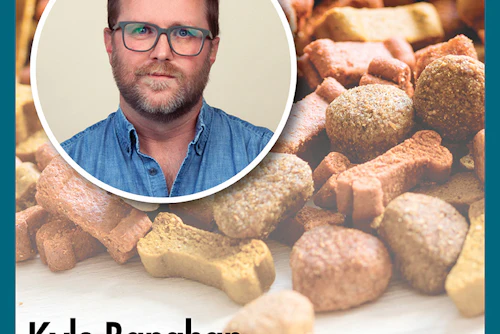
In this episode of Trending: Pet Food, Adam DeJulius, president and CEO, and Nick DeJulius, vice president, both of Miller Foods, which owns and manufactures the raw pet food brand Oma's Pride, as well as Samuel Sardinas, vice president of operations at ColdTrack, sit down with host Lindsay Beaton to discuss what it takes to keep raw and fresh pet food safe and moving through the supply chain.
The group discusses food safety measures like bacteriophage treatment and high-pressure processing, the tight timelines required for handling fresh and frozen ingredients, and the operational bottlenecks that come with small-batch manufacturing and raw material sourcing. They also dig into cold chain logistics and what companies should look for when vetting fulfillment partners.
We want to thank AFB International for sponsoring this podcast. AFB is the premier supplier of palatants to pet food companies worldwide, offering off-the-shelf and custom solutions and services that make pet food, treats and supplements taste great.
Your host is Lindsay Beaton, former editor of Petfood Industry magazine.
Lindsay Beaton, former editor, Petfood Industry magazine and host, Trending: Pet Food podcast: Hello, and welcome to Trending: Pet Food, the industry podcast where we cover all the latest hot topics and trends in pet food. I'm your host, Lindsay Beaton, and I'm here today with three guests: Adam DeJulius, president and CEO of Miller Foods; Nick DeJulius, vice president of Miller Foods; and Samuel Sardinas, vice president of operations at ColdTrack. Hi, guys, and welcome.
All: Good morning.
Beaton: In case you're unfamiliar with my guests or their companies, here's what you need to know. Adam oversees Miller Foods, a 75-year-old family business that encompasses the legacy Miller Farms turkey brand, a regional food distribution network and the national raw pet food brand Oma's Pride. Under his leadership, the company manufactures nearly 3 million pounds of raw pet food annually, supplying more than 1,000 neighborhood pet stores and delivering thousands of direct-to-consumer orders monthly. His daily operations focus on managing specialized cold chain logistics, food safety compliance and natural ingredient procurement across both human and pet food divisions.
Nick leads operations across Miller Foods, including both the Miller Farms turkey brand and Oma's Pride. He originally launched the e-commerce division for Oma's Pride before gaining experience in consumer packaged goods, digital strategy, brand management and account logistics within the Amazon ecosystem. He began his career in hospitality management and is a graduate of Temple University.
Samuel leads ColdTrack's temperature-controlled fulfillment operations. He joined the company in 2015, when it was called NutriFresh, and progressed through leadership roles as the company grew to become the first turnkey cold chain logistics platform for e-commerce brands. Sardinas brings ColdTrack a unique hands-on perspective on operational excellence, inventory management and team development from his career of more than a decade in the logistics and fulfillment industry.
I've gathered all of this expertise in raw pet food, cold chain logistics and modern business strategy to answer this question: What does it take to overcome the operational bottlenecks in raw and fresh pet food production?
I always like to start these conversations by making sure everybody is on the same page and getting the lay of the land. What makes raw and fresh pet food different from other pet food formats, resulting in unique production challenges?
Adam DeJulius, president and CEO of Miller Foods: What makes raw and fresh pet food a little different than other formats — every format has its unique challenges — but what we encounter, based on how we manufacture, is the timing of raw materials and operating through a cold chain. Nearly all of our ingredients arrive fresh or frozen but need to be manufactured in a pretty tight timeframe. Balancing the need to maintain food safety, especially when a product isn't cooked, with the timing of ingredients isn't easy, especially for a smaller fourth-generation family business.
We operate out of a footprint our family's been in for decades. Credit to my brother, Nick, for moving materials around and coordinating things tightly. Making sure we have super fresh ingredients that get manufactured in a timeframe that's optimal for nutritional quality and product appearance, but most importantly for food safety, is a real challenge for us. We've been able to do it, and to do so commercially — producing a raw diet since the '90s, probably the first or second to do so commercially. But the logistics and supply chain management is certainly not for the faint of heart.
Beaton: This is a trend in the pet food space that has grown fairly quickly. It's still a niche trend, but it's definitely grown and become more prominent. How quickly did food safety technologies and production technologies have to evolve to produce raw pet food at scale to meet growing demand once it became more commercialized?
A. DeJulius: I'll address that in two pieces, and then Nick can add to it. What you find is that brands originally, or organically, entering the space — like ours — had prior experience in meat manufacturing. We were able to take the practices for making sausage, burgers or other value-added human food manufacturing and adapt them to a pet food environment.
We were fortunate that our family had a legacy as turkey farmers — sort of accidental turkey farmers — and food manufacturers and distributors, so we had a lot of that operational equipment. I think what you've seen is a lot of the folks who supply the human food space around meat manufacturing have adapted and done the same for pet, which is really helpful. Perhaps they weren't actively marketing or as open to that 10 or 20 years ago, but now I think they do a pretty good job with innovation, bringing manufacturing equipment forward that can make the volume of food required while keeping the quality needed and reinforcing food safety.
As far as food safety, there are a variety of kill steps. From a regulatory perspective, I think there's probably still some way to go, as most folks in the fresh and frozen space would agree. But each manufacturer chooses the kill step that best fits its product, risk profile, manufacturing ability and customer profile — everything from high-pressure processing to bacterial phages to new technologies coming out all the time. Some folks use more of a pasteurization technique. What's most important is making food that's true to the values you set forth, communicating to your customer in a way that shows up as healthy and nutritionally efficacious for pets, and operating with a high level of confidence and integrity that your food will be safe for animals and make the humans purchasing it feel good about their decision.
Nick DeJulius, vice president of Miller Foods: To add onto that: With our family's background in poultry and meat production, this wasn't new to us. Our space was designed for food production, whether human or pet. All of the same safety, sanitation practices, regulations and standard operating procedures were already in place. For us, it's really just about training and following your Hazard Analysis and Critical Control Points plan. We're a U.S. Department of Agriculture-inspected facility, even though pet food is regulated by the Food and Drug Administration, but we still process some human food in an adjacent space, so we treat the entire facility as USDA-inspected. Food safety is always the highest priority for us.
A. DeJulius: That's a really good point Nick made. As a USDA processor since the '70s, it's probably not even something we're conscious about anymore — it's just so deeply in our DNA. Nick and I grew up in this business, and following standard USDA protocol as you walk through the facility is something we're accustomed to since childhood. Now, operating the business, it's really part of how we operate, how we train, what we reinforce and just part of everyday life.
Beaton: Since we're already talking food safety, I want to talk top challenges when it comes to producing raw pet food. What are some food safety considerations for raw pet food that don't come into play the same way for kibble? Is it getting easier to manage those as raw pet food becomes more common and technologies catch up? Or are there still challenges where you wish there was a better or easier way to keep ingredients and the final product safe for consumption?
A. DeJulius: The way we think about this: There's a bit of a misnomer that raw and fresh food has a much higher risk profile than classic kibble or dry food. The exposures inherent in both manufacturing processes are similar, and the results of the manufacturing process aren't all that different. A raw or cooked food has a different risk profile, but whether you're making kibble — which obviously has more dry ingredients but also fresh, perishable items and meat products — the risk profile remains.
If you're making raw and fresh food intended to be handled by human beings and fed to pets, you want it to be healthy, and you operate the same way you would with human food. Having an effective kill step — like the bacteriophage system we use and have for a number of years, which is very popular with tons of food people eat today, including most ground chicken or turkey, most deli meats, or shellfish that's previously cooked — helps fight targeted pathogens such as salmonella, listeria and E. coli. High-pressure processing is another strong example of pathogen mitigation.
I think folks who haven't had as much exposure, or haven't spent time in meat manufacturing or the human food business, sometimes feel discomfort, fear or hesitation with something unfamiliar, like raw food. But the reality, the data and now 30-plus years of healthy, long-performing pets and millions of case studies show that pets fed raw and fresh food have very healthy, active lives that avoid a variety of challenges improper nutrition may expose them to, however they're fed. We feel good about the processes we have in place. Across the industry, we see folks continue to focus on making raw food that's clean and hyper-professional. I love the trend — I think we've done a good job of pushing raw and fresh food manufacturers to show behind-the-scenes content inside their facilities, demonstrating the same level of cleanliness, sanitation and professionalism you'd see in any food you buy in the grocery store every day.
Samuel Sardinas, vice president of operations at ColdTrack: That's a very valid point. Skipping the heat kill step is precisely what makes raw production hard, so you have to deal with those pathogens through a separate function — whether that's high-pressure processing and blast freezing, or the bacteriophage Adam mentioned — as well as keeping the cold chain unbroken. Those are the main challenges with raw and fresh.
N. DeJulius: I was going to add on to that. It's not only about production — once you've made this beautiful product, you have to ensure the cold chain in your packaging and distribution is unbroken. You're making sure your own facility is kept at a low temperature to prevent bacterial growth, but also that partners within your distribution network hold those same standards, so food safety stays top of mind.
Beaton: Food safety is what always gets talked about with raw and fresh pet food, but there are other potential bottlenecks beyond it — you're still producing a product. What are some of the other bottlenecks people should be aware of and prepared for, and how do you overcome them?
N. DeJulius: How much time do we have? Especially in operations and production, there are challenges every day. It can start with machinery — making sure it's working that day, making sure you have a good production and maintenance schedule. As Adam touched on, procurement of raw materials is a challenge. Over the years, as more players have entered the pet food space, not only in raw but also cooked, more companies are vying for the same raw materials — things like organ meats or offal, like lung, heart and liver, that companies used to have trouble getting rid of. Now there's more demand, and there aren't necessarily more animals to harvest, so that's a challenge: always making sure we get the best possible quality for the best price that makes the business work, allows us to survive and pay our employees. And with anything frozen, distributing, storing and shipping it is logistically complicated and can be expensive to protect both food quality and product integrity.
A. DeJulius: I absolutely agree with what Nick said, and he knows best about actually manufacturing our product. Leading the business from where I sit, I think about risk across all touch points of the product — making sure we have consistent, reliable partners, whether that's the people we procure from, our third-party logistics, or 3PL, partner, or our distributors and neighborhood pet retail stores. You need partners who understand the need to control temperature and minimize exposure to your product, whether that's a rise in temperature or how it's handled. That concern isn't fundamentally different across a frozen or dry product — the nuance changes, but you need a solid, reliable partner.
We also trust but verify, making sure we have controls in place so we know our product stays safe all the way from harvesting a particular meat through delivery to a physical store or a customer's doorstep. How well can you track things like temperature and movement of material? The logistics portion of this business isn't as easy as loading pallets onto a truck and waiting for it to arrive — it's constant monitoring of our raw materials, finished goods and the end result, making sure the food stays safe and appetizing for the animal. That's super important, and it's certainly not easy.
N. DeJulius: Another unique challenge on the production side — Adam can probably talk more about this — is that we're making food for pets to consume, but pets don't purchase it with their own money. Every decision has to take into account what will appeal to pet parents: not just packaging, ease of use or marketing, but the product itself. Pets will eat anything — they don't care how things look — but humans eat with their eyes. So we make sure our products look attractive enough to a pet parent that they'd want to feed it to their pet. If it's a beef product, we make sure the beef has that nice, red, fresh color. We don't add any additives, colorings or stabilizers to our products, so that's always a challenge: making sure raw materials meet our standards and produce an appealing, quote-unquote "appetizing," product people want to buy.
Another challenge is that we're still relatively small-batch manufacturers. If we're producing 50,000 pounds a week and rotating proteins, every batch is going to have some variation, because the raw materials are a bit different — not every chicken looks like the next chicken, not every heart looks like the next heart. That's always something we have to monitor. But when we're producing and developing products, we keep both of those customers, quote-unquote, "in mind."
Beaton: We've touched on the cold chain quite a bit, and how incredibly important it is that it remains stable from the ingredient stage through processing and the logistics of delivering the end product. How do you build a system that monitors that from start to finish, particularly when you're manufacturing in one place and the end customer is states away? Where along the chain are you most likely to have issues — are there parts of the process where it's particularly hard to maintain temperature, and how do you monitor and overcome that? A broken cold chain for raw and fresh pet food is pretty much a disaster for the product, so it seems vital that everything makes it from start to finish, even though it passes through so many different entities.
N. DeJulius: It's really when the product gets picked up by our carriers, from either our facility in Connecticut or from ColdTrack — as soon as it leaves our hands, it's in the hands of other companies, of partners we're trusting. It's like a ticking clock: After the product is packaged or boxed with dry ice, there's about 48 hours before it's spoiled or reaches an unsafe temperature. That's probably the biggest challenge. Working with ColdTrack, and with their facilities across the country, we're able to service nearly all of our customers in the continental U.S. within 48 hours, with appropriate notifications and communication, tracking information, and choosing the best carrier to get the product there fastest at a rate that works for our business. But dropping off a package in Arizona in the middle of summer is definitely the thing that keeps us up at night.
Sardinas: That's a very good point. One area that stands out, as Nick mentioned, is that final delivery to a customer's doorstep — if there's a delay in transit, you could end up with a package that arrives spoiled. The good thing is we also factor in the temperatures of where packages are arriving, and typically touch most areas with one- to two-day transit times, so packages aren't in transit for three-plus days, which helps eliminate the risk of spoiled deliveries. Continuously monitoring our carriers' on-time delivery performance and making adjustments where needed also helps reduce that risk.
N. DeJulius: No one wants to open a package that's been in transit for three days to find a box of warm, wet meat. By working with our partners and playing defense, as Sammy said — the correct amount of dry ice, packed securely and tightly with good materials — we make sure that when a package leaves our hands, it's in the best possible position to reach our customers quickly and safely.
A. DeJulius: I'll add two things to what you both said. I think it's about partnership and integrity — whether that's a partnership with a supplier, a distributor, or with ColdTrack as our 3PL and shipping partner. You need partners who understand the risk inherent in the business, who build out processes, data points and data collection, and hold regular reviews: Are there storm or weather events? How will we react to those? Is there some other disruption that could delay packages? Do we have enough information to know when things were delivered, in case a customer has a concern?
Customers fall all along the spectrum of rationality when things don't go as planned — some are very accustomed to receiving a box of meat on their doorstep in Arizona, others are hesitant when it arrives in New York in winter. Our customer service has to have enough information, and a partner like ColdTrack does a great job gathering data from their shipping partners so our team can understand the real situation, react to it, wow the customer and retain them. Having good partners like ColdTrack, or distribution partners like Pet Food Experts, ADMC, Frontier and Vermont Pet Foods, who understand the real risks of getting frozen pet food from Connecticut to California, is essential.
California, interestingly, is one of our largest customer populations, which sort of defies logic for a New England family heritage brand. But we do really well in stores there and have a great direct-to-consumer customer base. There's no way we'd be able to do that if we weren't able to deliver on our promise — a beautiful, bright red, blooming beef product that Nick produced in Connecticut, delivered through the cold chain to stores and doorsteps, kept cold and safe the whole way.
The other part of that with our partners is accountability. When things don't go correctly, does everyone stand behind that and say, "That wasn't the best experience for our customer," or, "We had an issue"? Because that's the nature of business. We're lucky to have partners like ColdTrack and some of our distributors who will say, "This was on us," or, "This was a shared issue," and make sure we take care of it — whether that's not moving forward with certain product, getting a package out to a customer off-cycle, or whatever the issue is. Being real partners, accountable, with integrity to stand up and focus on treating the customer right, is ultimately best for our business, their business and the animal that has to eat the food.
Beaton: Obviously, a lot of people are involved in making sure this food gets from, say, Connecticut to California. Let's say there's a newer raw or fresh pet food company still trying to solidify its supply chain and figure out who it wants to work with.
What were some of the questions you at Oma's Pride asked ColdTrack to make sure you were the right partners for each other? What should a raw pet food company look for to make sure it can trust its partners? It only takes one bad experience along the chain to create a product problem, and then a customer problem — and there's always somewhere else in this industry for pet owners to go. What are some of the important questions to ask potential partners to make sure you're getting the right people?
N. DeJulius: What we really need to do is make a connection and physically go see your partners — see where your raw materials come from, see your distribution partners and 3PLs, like ColdTrack. You need to spend the time and see it with your own eyes, not just take someone's word for it. That's something we do in almost every aspect of our business, whether that's raw materials, boxes, freeze-dry suppliers or ColdTrack itself. Before we signed on, we went down to their facility in New Jersey and really got to see what they were about.
A. DeJulius: Nick and I are both about 40 years old, so we're a newer generation running manufacturing businesses, but I think we still take, probably from our family, a bit more of an old-school approach. You can have beautiful facilities, be incredibly well-funded, and put out great press releases about the giant companies a 3PL partner fulfills for, and referrals are nice, but we all know we don't refer people we haven't had the best experience with. I agree with Nick — it's really important to get your boots on the ground and meet the people you're actually working with.
Ultimately, we manufacture what we believe is the best raw food in America and try to get it out to stores and customers. ColdTrack is a 3PL and logistics company, plus offers great value-added services, but every day we're in conversations trying to solve problems together. You have to find a company that checks the boxes — a national customer footprint if you need one, the ability to deliver within your time and transit needs (typically two days or under for frozen in the markets they cover).
All of those benchmarks are just table stakes. Ultimately, you need to sit down — we prefer to break bread with people we're going to do business with and rely on as real partners, not transactions. If things get difficult or you have discrepancies, like any meaningful relationship, business or otherwise, you need people you can trust and find common solutions with. That's really important.
Not to make this feel like too much of a plug, but ColdTrack has been a really good partner for us. I took over as CEO of our family business in January, and our ability to work with ColdTrack, work through customer issues and deliver on commitments — or solve the issue if we're not able to — is very far down my list of worries. As a newer CEO trying to move things forward in a challenging business environment, that's a huge weight lifted. I know Nick, in operations, feels the same about the ColdTrack relationship and our ability to work through challenges, pivot, or say, "Hey, we want to try this." Having a proactive partner is super important.
Knowing how you operate as a business, getting in front of people, building real human relationships, and making sure they have the capabilities you're looking for — that's the most important stuff. The price conversation people want to focus on either comes later or is something you can work through. If you find the right, aligned partners, the rest solves itself.
Beaton: As we wrap up, I always like to look toward the future. Raw pet food is a trend that's still growing, and it doesn't look like it's going to slow down anytime soon. From all of your perspectives, what do you see as the future of raw and fresh pet food production, both for the final product and for food safety and production technologies? Is there anything you're looking forward to seeing grow, become more efficient, or anything that would make your lives easier?
A. DeJulius: As far as a product trend, I think people will continue to think about pet food as a spectrum. There are diets that will help people feed their animal that are less focused on ingredient quality and nutrition and more on budget, and there's absolutely a need for that in the market. There will be folks who focus on a higher-end kibble, or a hybrid model with other inclusions.
As a consumer follows that journey — from what they were originally fed, through a more natural approach — they'll hit fresh food, and eventually maybe raw food, or they'll stop somewhere on the spectrum. Regardless of where that journey stops, evolves or moves to, or whatever they can afford, people will continue to want their pet food to look and feel more like human food.
Our pets continue to be a deeper part of our families. High-quality ingredients at an affordable price point are super important — people want their pet's food to look, feel and smell like the food they serve their own family. You're seeing brands that traditionally made large-bag, big kibble move into the fresh space, and hats off to them. As an industry, we should all be focused on getting the healthiest, cleanest, most simple food into pets' bowls to help them live longer, healthier lives.
From a manufacturing perspective, monitoring throughout the cold chain, and what we'll call the kill step or pathogen mitigation, will continue to evolve. The FDA's and other regulators' understanding of what pathogenic standards should be for pets, across fresh or cooked food, will continue to evolve too, and I feel confident in that.
But as manufacturers, we have to treat this like human food — it should look and feel no different, from ingredient sourcing and manufacturing through distribution and all the way to animals' bowls. I think that trend will continue, and folks who feel good about the quality and investment they put into treating their manufacturing that way will keep pushing it and feel good about it.
Beaton: Samuel, what are you seeing on your side of things?
Sardinas: There's a lot that could happen in the future. The fresh and frozen space is growing rapidly, and the production side and the cold chain side are the two major areas. Raw meat handling is inherently harder to automate safely and hygienically, so we'd probably expect to see a lot of new technology there, as well as in the kill step process, where new things are being developed and regulatory standards are being looked at and adjusted, primarily focused on food safety.
That makes things a lot better for everyone and can provide clarity for consumers, since the average consumer may be skeptical and think kibble is always the right way to go. As new developments come about, people feel a lot more comfortable with fresh and frozen, especially since most pet parents like the appeal of fresh or human-grade food — what they eat is what they'd like their pets to eat. There's huge growth on the horizon for this space.
Beaton: Samuel or Nick, does it make sense to talk about the Amazon effect — ordering something today and getting it tonight — and how that expectation might start to creep into the raw pet food market, with fulfillment companies investing time and energy into shortening the order-to-delivery cycle?
N. DeJulius: That's probably more of a ColdTrack question, maybe about expanding a distribution network to reduce transit time across the country. To be fair, it's not something we typically think a lot about — it's more something we pass along to our 3PL partners. We're focused on getting our food to customers within a 48-hour period; I think most packages actually arrive within 24 hours. They're in a one-day ship zone, which definitely influences who we work with.
Sardinas: That was a very good question. That's something we're very familiar with now — we already process orders for Amazon that are next-day deliveries, so that's not much of a challenge for us, given our footprint and line hauls and other things we can do to mitigate transit times. It doesn't present more of a challenge for us; ideally, it's something we welcome with open arms. Getting packages to a consumer's doorstep within a one-day transit time is where we like to be, given the perishable nature of the goods. As things progress, and Amazon kicks that door down, we're open to helping them get packages out and delivered as quickly as possible.
N. DeJulius: Going back to trends in what we're doing as a company — one thing we're focusing on is that we're a small business, so we can adapt and make changes quickly. We've been focusing on different packaging and box sizes to appeal to how customers actually want to use our product, whether that's on a shelf or in individual packages, and what's most appealing to them. We're moving toward more smaller portions — portion packs, easy-peel bags, boxes — and less of our traditional larger bricks. Even with some of our treat sizes, we're resizing packaging to make the price point more appealing to customers — perhaps it's not as economical per ounce, but it is per serving. That's something we're focused on as a small business.
Beaton: I want to thank all three of you for coming on to discuss raw pet food production and its unique challenges. As it continues to grow as a trend in the industry, it's important to keep having these conversations about food safety and logistics. Kibble has food safety and logistics issues too, but they're different when a product has to be temperature-controlled to the level raw pet food requires.
As technologies grow and companies scale up, and as this becomes a more entrenched trend in the industry, it's important to stay on top of what this segment looks like. Thank you all very much for coming on to talk about it. Before we go, I always do a little plug for my guests — where can people find more information about you, Oma's Pride and ColdTrack?
A. DeJulius: Thank you for the opportunity to be here today — it's always enjoyable to talk about what's going on in our space, and it helps us reflect on our challenges. You can find us at omaspride.com. We're in more than 1,000 neighborhood pet stores, and we also ship direct to people's doorsteps.
You can check me out at Adam DeJulius on LinkedIn — we like to share a lot of what's going on in our business — and we're a fantastic Instagram follow. We show a lot of behind-the-scenes content, give you a bit of the family business personality, and hopefully make you laugh a little. Check us out at Oma's Pride on Instagram, at omaspride.com, and Adam DeJulius on LinkedIn.
N. DeJulius: As Adam said, you can check out the company at omaspride.com and on Instagram at @omaspride. I'm personally off social media, but if you're so inclined, you can email me at [email protected] — I'd love to hear from you.
Sardinas: Thank you for having us today. You can check us out at coldtrack.com and on LinkedIn as ColdTrack. If you're interested in any perishable fulfillment solutions, give us a shout — we'll be happy to work with you.
Beaton: Perfect.
Thanks again to our sponsor, AFB International, the premier supplier of palatants to pet food companies worldwide, offering off-the-shelf and custom solutions and services that make pet food, treats and supplements taste great.
Your host was Lindsay Beaton, former editor of Petfood Industry magazine.
You can find more Trending: Pet Food podcasts at petfoodindustry.com, SoundCloud or your favorite podcast platform. If you want to chat or share feedback, please email [email protected].