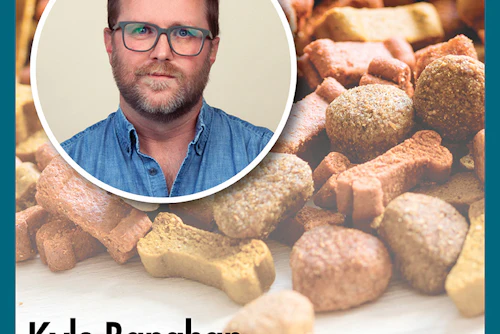
In this episode of Trending: Pet Food, our host sits down with Dr. Jennifer Radosevich, senior vice president of product development at Hill’s Pet Nutrition, and Rich Kelleman, co-founder and CEO of Bond Pet Foods, to discuss how a company can manage more than one focus without losing its brand identity.
We want to thank Scoular for sponsoring this podcast. Scoular is the all-in-one partner for pet food ingredients, helping brands create wellness-focused products that support digestion, immunity, mobility, heart health and more. Learn how they’re shaping the future of pet nutrition at scoular.com/pet.
Your host is Lindsay Beaton, former editor of Petfood Industry magazine.
Lindsay Beaton, former editor, Petfood Industry magazine and host, Trending: Pet Food podcast: Hello, and welcome to Trending: Pet Food, the industry podcast where we cover all the latest hot topics and trends in pet food. I’m your host, Lindsay Beaton, and I’m here today with two guests: Dr. Jennifer Radosevich, senior vice president of product development at Hill’s Pet Nutrition, and Rich Kelleman, co-founder and CEO of Bond Pet Foods. Hello to you both, and welcome.
Dr. Jennifer Radosevich, senior vice president, product development, Hill’s Pet Nutrition: Hi, Lindsay. Thank you.
Beaton: In case you’re unfamiliar with my guests or their companies, here’s what you need to know. Jennifer leads an expert technical team that delivers robust innovation to the market by developing pet food product forms that benefit pet health and delight pets, veterinarians and pet parents.
Prior to product development, she led the research and innovation team, developing leads for new nutritional solutions for Hill’s products and leveraging external partnerships to advance Hill’s Pet Nutrition technology and business goals. Jennifer earned her Ph.D. in biochemistry and molecular, cellular and developmental biology at Iowa State University and has more than 25 years of industry experience leveraging innovation to further business goals in the agribusiness, human and pet food markets.
Before diving into the world of pets and food tech, Rich was a vice president and director at some of the most respected marketing agencies of the time, including Crispin Porter + Bogusky, FCB and Fallon, where he led brand strategy for Burger King, P&G, Kellogg’s, Ford Motor Co. and Coca-Cola, among others. Rich earned a bachelor’s degree in marketing from Boston College, with additional study at Stanford University’s Center for Social Innovation.
The Hill’s Pet Nutrition brand is built on a foundation of science and veterinary partnership. A global leader in pet health for more than 75 years, Hill’s is committed not only to providing science-led nutrition but also to making a difference in the lives of pets and those who love them.
Bond Pet Foods is a Boulder, Colorado-based company producing high-quality animal proteins for pet food applications through precision fermentation. By combining established fermentation methods with food science, Bond is developing consistent, scalable and more environmentally responsible protein ingredients to support the future of pet nutrition.
I’ve brought these two and all their expertise together today to answer this question: How can a company manage more than one focus without losing its brand identity? That’s going to be the meat of our conversation, but first I want to get everybody on the same page about two things that, on the surface, are very different: regenerative agriculture, which Hill’s is very involved in, and brewed protein, which is obviously where Bond comes in. I’d like you to tell me what each one is so everybody knows what we’re talking about.
Dr. Radosevich: I can start with regenerative agriculture. We have a partnership with ADM, and we’re excited about it. Accelerating the adoption of regenerative agricultural practices to ensure the long-term health of the planet, the resilience of our farming communities and the continued quality of the ingredients we provide to our pet partners is very important to us.
It’s really science-led nutrition. Hill’s has a 75-year legacy of science-led pet nutrition, so this partnership is a natural extension of our mission of reimagining a healthier future for people, pets and the planet. We link pet nutrition to soil health in a unique manner.
Grains like corn and soy are foundational to our pet food recipes, so we feel we must invest in the health of our land to safeguard the high-quality nutrition pets deserve. Through this partnership, we have provided financial incentives and technical tools to help farmers transition to sustainable field practices, including cover cropping, fertilizer efficiency and advanced pest management.
We’ve started with ADM on approximately 16,000 acres in Illinois and Minnesota and 2,500 acres in Hungary, aiming to enhance soil health, increase carbon sequestration, reduce erosion and improve water quality. Sourcing from these key hubs in North America and Europe safeguards the high-quality ingredient supplies we need for both our European and North American manufacturing facilities, so we can meet growing consumer demand for sustainably sourced pet food.
In addition to soil health, Hill’s is pioneering sustainable protein alternatives, including precision-fermentation proteins such as the Bond Pet Foods protein.
Rich Kelleman, co-founder and CEO, Bond Pet Foods: On that note, Bond and Hill’s have been working together for more than five years to develop a new class of ingredients for the pet food industry, starting with lamb protein yeast. Lamb protein is the first ingredient we’ve been working to develop out of the gate.
As for what this ingredient is and how it’s made, I believe it’s transformative, but it’s not a new technology we’re developing to create it. Precision fermentation has been around for more than half a century to make everything from enzymes for cheese manufacture, to good bacteria for probiotic supplements, to vanilla and a host of other ingredients used in the supply chain today. We’re just creatively reassembling that process to make high-quality animal protein that could be foundational for pet health.
One way to understand how this works is to look at cheese enzymes as an example. Not too long ago, just a few decades, the enzyme used in cheese manufacture to separate the curds and the whey had to be harvested from the fourth stomach of a baby calf. As demand for cheese continued to grow, it became really challenging to keep sourcing and supplying that ingredient conventionally. Some smart scientists at the time realized that instead of procuring it through conventional farming, you could use a microorganism, such as the yeast Saccharomyces or another fungus, and couple it with the DNA from a baby calf.
Once you put that yeast and animal protein combination into a fermenter and feed it simple sugars, salts, vitamins and minerals, the fermentation process produces an enzyme identical to what’s found in nature. As that method of production matured and scaled, it got to a point where, from a unit-economics standpoint, it was a cheaper way of producing this essential ingredient for cheese manufacturing. It also solved a host of other challenges related to high-volume production of the ingredient, such as water and land use, and other things that could be challenging depending on what was affecting the environmental climate of production.
We’re basically taking that same process and protocol, but instead of producing that cheese enzyme, we’re producing animal protein that can then be incorporated into a pet food recipe.
Beaton: Now that you’ve explained both of these, the threads connecting them are a little clearer in terms of Hill’s interest. Jennifer, why pursue these two things in particular, and which came first: regenerative agriculture or your partnership with Bond? Did they feel connected at the time, or were they pursued completely separately?
Dr. Radosevich: We essentially did them at the same time. Originally, we thought they were separate, but we soon realized they’re two sides of the same coin. We need to future-proof our ingredients from a supply perspective, making sure we can get the same consistent, high-quality ingredients, whether that’s high-quality protein from Bond or high-quality ingredients from our regenerative agriculture producers, but made with a view to the future, in a way that’s much more sustainable.
Both incorporate sustainable solutions, and they’re two sides of the same coin that future-proof our business and make sure we can deliver to pet parents the same premium nutrition their pets deserve.
Beaton: Rich, when you bring this idea to people, it’s obviously an alternative protein source, which is very big in the industry right now, and sustainability is a huge part of the conversation. But this is a very different kind of thing for a lot of people who haven’t been in it or following it. On its face, brewed protein sounds like something way out there. Once you’re in it and start looking at the science, it’s not as far out as it sounds, but it’s definitely a departure from the way pet food protein has been produced in the past.
What kinds of conversations do you have with people who are interested in alternative proteins but feel like it’s a huge departure from who they are as a company or a brand? How do you help them reconcile something that seems very different with a very real need they have?
Kelleman: Fundamentally, most brands, whether or not they’re looking at alternative protein, have the same pain points. In their procurement toolbox, whether it’s proteins or other ingredients, they’re trying to find options that give them a consistent supply, perform in their recipes and formulations, and reassure them, from a brand reputation standpoint, that it’s a safe input into whatever they create. Depending on the brand, new dimensions of value, such as sustainability, are becoming increasingly important and starting to percolate as well.
For me, it’s about laying out what these ingredients can deliver to help solve for the things that matter to these brands. Because it hasn’t existed or been available in the market before, it does take some education and explanation. But once I start sharing a bit more about parallel ingredients produced through the same brewing process and protocol, it’s easy for people to understand, because it’s something they’re already consuming and feel comfortable eating. It’s just connecting the dots for them: This basically follows suit, creating something that could have a different kind of value for a different kind of consumer.
Dr. Radosevich: I will say, when Bond Pet Foods came to us with this value proposition, it was really easy to partner with them, because they hold the same science-led approach to everything they do. We were looking for sustainable, high-quality protein sources to complement our traditional protein sources, so it was a natural fit. It was very easy to share the vision of what precision fermentation technology could bring to pet food, and it made perfect sense for us to partner.
Kelleman: On the flip side, as we looked to create something with the value we were aiming for, Hill’s brought so much to the table with its depth of nutrition expertise. When we looked at the brief, exactly what kind of specification we’d be aiming for, they could bring the weight of all their years and history in this industry to bear, making sure the final specification we landed on could deliver a foundational protein and core nutrition, not just for them but for the industry at large.
Beaton: Let’s zoom out on what you’ve just talked about for a minute, because part of a company’s identity is linked to the partnerships it has. It can be very tempting, especially for a smaller pet food company, to take opportunities as they come without regard for maintaining an identity. If something seems like too good an opportunity to pass up, they might give it a go even if it’s not in their wheelhouse. That could present a whole new opportunity, or they could crash and burn because they’ve gone too far outside what they’re known for.
In your experiences across various aspects of the industry, how do you each handle that and enter partnerships that make sense for your companies as brands, so you maintain who you are while still being able to fold in opportunities as they come?
Dr. Radosevich: When Hill’s looks to partner with anyone, whether a firm or a university, we look for partnerships that are complementary, where we can be better together. We bring years of research on pet nutrition and an understanding of a pet’s biology and how nutrition can help a pet be the best pet it can be. On the other side, we were looking for complementary ways to bring that to our customers.
When we saw Bond Pet Foods, we knew they had a unique approach, one that was science-based and that we really liked and aligned with, so it made sense for us to partner. We each brought something to the table the other could not. When Bond said, “We can provide this consistent, science-led ingredient to you,” we said, “Great.” We were then able to provide resources, namely our pets at the Pet Nutrition Center, to conduct the rigorous feeding trials necessary for the FDA.
From there, we went on a path to commercial scale. Now that Bond has received the no questions letter through the FDA’s GRAS process, a historic regulatory milestone, we’re really thrilled that we can truly be better together and bring this to market together.
Kelleman: What a great moment that was when we got that notice. We were calling each other, popping the virtual champagne, because it’s a big milestone. It starts to move from a conceptual idea and research program to something saleable that could have the impact we dreamed of.
Building on what Jennifer shared about how she and Hill’s look at partnerships, one thing to acknowledge is that partnerships take time. We were talking for a year, maybe longer, before we decided to step into this work together, and that’s intentional. It lets you understand the ambition, what each group can bring to the table, what you’re trying to accomplish and whether there’s synergy. With that understanding, it made sense to carry forward and make the broader investment of collaboration, time, resources and everything else that comes with it.
From Bond’s perspective, every relationship we’ve carried forward, including this very important partnership with Hill’s, has come with that depth of work, diligence and consideration to make sure that, at the end of the day, it provides the value we and our partner are looking for and has the impact we set out to make.
Beaton: I want to talk about education, because for both regenerative agriculture and alternative proteins, there’s a lot of it involved, in your partnerships and even more once everything gets to the consumer. Are there challenges in making sure that education is effective and in getting it out there? When you’re dealing with two different things at the same time, regenerative agriculture and alternative proteins, do you send the messaging out together or separate it? How is Hill’s managing the messaging around two things that are linked but serve two different purposes?
Dr. Radosevich: That’s a good point, Lindsay, because the announcement of the FDA no questions letter for Bond and the regenerative agriculture announcement went out at about the same time. In some ways, that’s a little unfortunate, because we didn’t want to detract from either one; both stand on their own merit. However, we wanted to get those announcements out sooner.
They’re two sides of the same coin, but the education is different for each, because they’re separate ways we can future-proof our business. On the regenerative agriculture side, we’re really trying to communicate to pet parents what we’re actually doing. We don’t want to misrepresent or exaggerate it. We’re starting small with ADM, seeing what works with these regenerative agriculture initiatives. We’re going to learn, and then we’ll look to expand. We just want to be factual: This is what we’re doing, and we’re learning as we go.
It’s the same with the Bond Pet Foods lamb protein yeast, though I think that will be a bit more of a challenge to communicate. We don’t necessarily want to market it as complex biotechnology. This is a different way to deliver protein to pets, so I think we need to focus on the benefits: the safety of the protein, the nutritional quality, the sustainability and the consistency. This is the same great nutrition we’ve been able to deliver, just in a different way, and in a way that future-proofs our business so we can keep delivering it.
Beaton: What does education look like on your end, Rich? I expect there’s quite a bit of it.
Kelleman: Yes, there is. Part of it is partnering with Hill’s marketing team and seeing how we can support their efforts and initiatives as they begin to communicate their new products to the world.
We’re a small company with more limited resources, but what we can do, and will be doing in the months ahead, is pull back the curtain a bit on exactly how we produce these beautiful, delicious proteins for Hill’s and the pet food industry. That means, for example, training the cameras on the fermentation process from start to finish, so people can see where things begin, how the fermentation works to get to the harvest we’re looking for and what happens when we take it from the vessel and dry it down into something that can be integrated into a pet food recipe. More visibility and content that can be shared to make it more tangible will be very helpful in giving people that context.
We’ve also done a tremendous number of studies and analyses on the ingredient, and that’s a great body of data. Some of it is already public and published in peer-reviewed journals, but making more of it visible will give those contemplating products made with these ingredients a resource they can review to build confidence.
One thing to note: We’re not creating anything synthetic here. At the end of the day, it’s an ingredient that’s part brewer’s yeast, Saccharomyces, and part lamb protein in this instance. Both have been used in the supply chain for generations and consumed by dogs and cats. Long story short, from Bond’s end, it’s about making the process clearer and more visible. Showing instead of talking about it will be valuable for the public to see and understand.
Beaton: As we get toward the end of our conversation, I want to get both of your opinions on tips a company could keep in mind when considering a new opportunity that, on its face, might not be part of its primary path, or, if a company is already taking two different tracks, how to ensure the overall messaging remains cohesive.
Rich, you have a new ingredient, essentially a new way of producing an ingredient, that’s blazing its own trail because there’s no equivalent, but it can fold in really easily for any company looking for an alternative protein. What should a company look for that isn’t as obvious when it’s pursuing a new opportunity? If somebody came to you and said, “We’re looking into alternative proteins, but we don’t know anything about this,” what points of commonality with their brand identity can help build inroads? I’m assuming sustainability is one of them, but are there others that have come up in those conversations?
Kelleman: It goes back to what we were talking about earlier. There are a handful of points that are universally interesting for almost any pet food manufacturer. Sustainability can be one, and as we start scaling, we can provide something in that area unlike anything out there today.
Jennifer mentioned this too, but the batch-to-batch consistency of the specification is really tight. If a company is looking for something easier to work with from a formulary standpoint, with a specification it knows will fall within a certain range, precision fermentation lets us hold that within a really tight specification as we commercialize these ingredients. That’s something alternative proteins, especially in Bond’s case, deliver on in a really strong way.
Safety is another. We’re producing this in a tightly controlled setting, just like a brewery, controlling all aspects of production, including the vessels, the pH, the feedstock and other aspects of the fermentation process, all calibrated very tightly. We can show how that creates an ingredient with a high level of quality and safety controls built into its production, and we can share data on that dimension of these ingredients.
At the end of the day, the sum is greater than the parts. It’s not just sustainability, safety, nutrition or the purity of these ingredients; it’s all of that together that can provide a unique product value for anybody considering ingredients made through precision fermentation, or any other emerging ingredient, which can be looked at through those same dimensions and opportunities.
That’s a long-winded way of saying that, for somebody new to exploring alternative proteins, it’s really about unpacking the multiplicity of potential benefits, comparing that with the ingredients they’re sourcing today and seeing whether it’s worth taking the next step to dive in and determine if it fits within their product development thesis.
Beaton: Jennifer, you talked a little about how Hill’s determines its partnerships, but when you’re considering a potential new path, and you’re no stranger to that over the many decades Hill’s has been around, what do you look for to determine whether it’s worth pursuing and makes sense for Hill’s? New trends and opportunities pop up all the time, and with the brand and name recognition Hill’s has, I’m sure you’re up to your eyeballs in partnership requests. Distill for me some of the things Hill’s looks at to decide, “This is in our wheelhouse” or “This is not in our wheelhouse.” And how do you say no to something? That can be difficult, too.
Dr. Radosevich: It’s been interesting. We have a partnership with Plug and Play’s animal health vertical, based in Topeka, which presents us with potential external partners. Bond Pet Foods was one of the first companies we were introduced to through the Plug and Play initiative.
We look first at whether a company is aligned with our science-led, premium mission to drive value for pet parents. Pet parents want to spend as much quality, healthy time with their pets as possible, and we view nutrition as the single most important daily approach to that. We ask, “Is it in line with that mission?” If the answer is yes, we continue and look at whether the value proposition works for both businesses. We are looking for win-win partnerships. We want to make sure we can be better together to ultimately deliver what pet parents are looking for: a healthy, happy pet for as long as humanly possible.
Beaton: I want to thank you both for coming on today to talk about brand identity, how partnerships work and how to merge everything while staying cohesive. There are so many directions a company can go in pet food these days, and I think it’s very common for newer companies to want to try it all. Figuring out what makes sense for you, what’s in your wheelhouse, who to partner with and how to partner with them can be a very difficult conversation, but it’s an important one, because it’s the only way to stand out in this industry. I appreciate your perspectives on how all of that can work and what it looks like in practice since you’ve partnered.
Before we go, I always like to do a little plug for my guests. Where can people find more information about you both, as well as Hill’s and Bond?
Dr. Radosevich: You can find out more about Hill’s Pet Nutrition on LinkedIn. We have a very active social media presence, and many of these announcements with Bond Pet Foods and ADM were made on LinkedIn. I encourage you to follow us there.
Kelleman: For Bond, similarly, LinkedIn is probably the best channel. That’s where we share our major announcements, milestones, partnerships and progress. We also share that content on our website, bondpets.com, which will be refreshed in the coming months as we get closer to producing and scaling these ingredients, with some additional content that could be fun and exciting, including what I mentioned before: showing exactly how we brew these ingredients from start to finish.
Beaton: Perfect.
This episode was sponsored by Scoular, delivering the ingredient access, quality and partnership pet food companies rely on to stay ahead of industry trends.
Your host was Lindsay Beaton, former editor of Petfood Industry magazine.
You can find more Trending: Pet Food podcasts at petfoodindustry.com, SoundCloud or your favorite podcast platform. If you want to chat or share feedback, please email [email protected].