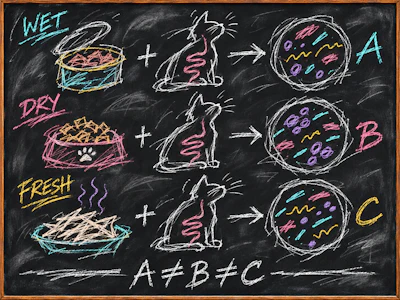
Just as what a cat eats influences the community of microbes in their gut, or microbiome, the format of a pet’s food may affect the gut microbiome too.
Fresh, dry and wet cat foods were associated with different fecal microbial communities and predicted metabolic functions in a 42-day feeding trial. In the research results published in the journal Frontiers in Microbiology, the dry diet produced lower microbial diversity on two measures than the fresh and wet diets, while the wet diet had the highest estimated species richness.
“One particularly interesting finding was that the diets were associated with predicted microbial functions involved in nutrient metabolism,” said Jirayu “Boo Boo” Tanprasertsuk, senior scientist at KatKin and the study’s lead author.
He said the findings provide leads for investigating how commercial diets influence gut microorganisms, including the roles of processing, ingredients and formulation.
The trial enrolled 15 healthy adult cats in a randomized crossover design. Each cat was assigned to receive three commercial, chicken-based, nutritionally complete foods for 14 days each: KatKin Cluck, Purina ONE Tender Selects Blend With Real Chicken and Fancy Feast Liver & Chicken Feast in Gravy.
Researchers sequenced microbial genetic material from fecal samples collected near the end of each feeding period. Two cats were withdrawn from their fresh-diet feeding period because of low food consumption but completed the other feeding periods. The analyses included 42 samples for microbial composition and 40 for predicted functions.
KatKin funded the study and manufactures the fresh diet tested. Four authors were company employees, and the fifth was a University of Florida faculty member and KatKin adviser when the study was conducted.
Diets differed in diversity, species and stool consistency
Fresh and wet diets produced higher diversity scores than the dry diet. These measures account for both the number of species and how evenly they are represented. Fresh and wet diets did not differ significantly from each other on either measure.
The wet diet also had the highest species richness. Fresh and dry diets did not differ significantly on that measure, illustrating that the diversity findings depended on the measure used.
Researchers identified 90 species with different relative abundances between the fresh and dry diets, and 84 between the fresh and wet diets. Thirteen Prevotella species were more abundant with the dry diet than with the fresh diet. Eight Collinsella, five Bacteroides and five Blautia species were more abundant with the fresh diet than with the dry diet.
“The cats were generally healthy, yet their gut microbiomes differed depending on the diets they were fed,” Tanprasertsuk said.
Cats produced softer stools on the wet diet than on the fresh or dry diets, with no significant difference between the latter two.
Nutrient metabolism offers formulation leads
The dry diet was associated with microbial pathways involved in amino acid synthesis, bacterial cell envelope synthesis and complex carbohydrate breakdown. The fresh diet was associated with amino acid breakdown, lipid synthesis and the use of carbohydrate sources including starch, glycogen, fructans and host-associated glycans. The wet diet shared functional similarities with both.
Nutrient composition may partly explain those patterns. The dry food contained the most starch and fiber and the least crude protein of the tested diets. The fresh food contained the least fiber and more protein than the dry food. However, because the foods differed in multiple ways, the study could not determine which specific characteristics caused the microbial differences.
“An important takeaway for manufacturers is that when we formulate a diet for a cat, we are also influencing the microorganisms living inside its gut,” Tanprasertsuk said.
He said nutrients, bioactive compounds, ingredients, additives and processing methods could potentially be modified to influence the microbiome. Manufacturers would need to balance those effects with cats’ nutritional needs and preferences, along with cost and palatability.
The study’s genetic findings described potential microbial functions rather than measured metabolic activity. To establish practical value, Tanprasertsuk said controlled studies should examine specific factors such as nutrient composition, digestibility, processing conditions, prebiotics and probiotics. Measurements of microbial metabolites, nutrient digestibility and gastrointestinal health would help determine whether predicted functions translate into actual activity and benefits.
“The ultimate goal should not simply be to change the gut microbiome, but to understand whether and how these changes provide measurable benefits to the cat.”
Further research must connect changes with health
The trial did not establish that one diet or its associated microbiome was healthier than another. It tested one product per format, and the absence of washout periods meant carryover effects could not be completely excluded.
Tanprasertsuk said there is no universally accepted definition of a healthy feline gut microbiome. Longer trials should examine whether microbial changes accompany improvements in, or maintenance of, clinically meaningful outcomes such as vomiting, diarrhea and chronic gastrointestinal conditions. Microbial metabolites and markers of intestinal inflammation could help explain potential mechanisms.
Studies involving cats in home environments could also test whether the observed patterns correspond with health outcomes across more diverse populations. Following cats consuming different diets over time could offer an alternative to large, long-term feeding trials, although observational studies would have difficulty establishing causality, he said.
“The most convincing evidence for gut health claims would come from demonstrating improvements in clinically meaningful outcomes together with microbiome changes.”