The UK has launched AMRBioBorders, a border surveillance project that tests imported raw pet food meat ingredients for antimicrobial-resistant bacteria before they enter the domestic supply chain, addressing a critical monitoring gap in a rapidly growing market.
- The UK's AMRBioBorders project tests imported raw meat ingredients used in pet food for antimicrobial-resistant bacteria at border entry points.
- Raw pet food skips heat-treatment steps that kill pathogens, making the microbiological quality of raw ingredients a direct determinant of finished product safety.
- Border-level testing captures resistant organisms before distribution to manufacturers and households, enabling intervention before contamination spreads.
- AMR in raw pet food poses a cross-sector concern affecting animal health, human exposure, and household food safety in a single supply chain.
- The initiative signals that importers and manufacturers sourcing raw protein for pet food must now treat border entry points as regulatory checkpoints rather than blind spots.
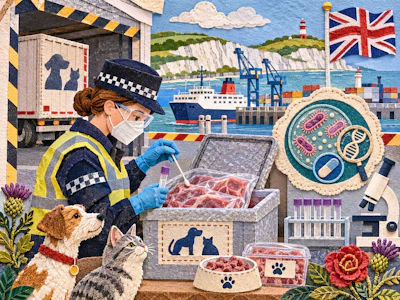
The UK has launched a border-focused surveillance project to test imported raw meat ingredients used in raw pet food for antimicrobial-resistant bacteria, moving scrutiny of a high-risk supply chain to the point where material crosses into the country. The initiative, named Antimicrobial Resistance Biosecurity at the Borders, or AMRBioBorders, targets a category of ingredient that has largely escaped systematic AMR monitoring even as its microbiological hazards have drawn growing attention. For importers and manufacturers who source raw protein for the pet food trade, the project signals that the entry point is now a checkpoint, not a blind spot.
The rationale is straightforward: raw meat ingredients intended for raw pet food carry particular microbiological food safety risks, and those risks include antimicrobial-resistant bacteria that can move through the supply chain untracked. Raw pet food skips the cooking and heat-treatment steps that neutralize pathogens in conventional processing, which leaves the microbial load of the incoming raw material as a direct determinant of what ends up in the finished product. By concentrating testing on imported ingredients, AMRBioBorders is built to close a surveillance gap that has persisted while the raw feeding category has expanded.
The project's framing around biosecurity at the borders places the emphasis squarely on import entry points, where raw meat ingredients first come under UK oversight. Surveillance at that stage captures material before it is distributed to manufacturers, blended into product and sold to households, giving authorities a vantage point on resistant organisms entering the domestic supply chain rather than detecting them only after they have circulated. That positioning matters operationally: ingredients flagged at the border are ingredients that have not yet reached kitchen counters and pet bowls.
AMR in raw pet food ingredients is a cross-sector concern precisely because the hazard does not stay contained within the bag. Resistant bacteria carried in raw meat can expose the animals that consume it, and the microbiological framing of the project reflects the household handling risk that comes with storing and serving raw product. Antimicrobial resistance is treated here as a key hazard of concern, tying food safety, animal health and human exposure together in a single supply chain that runs from imported protein to the family home.
For the pet food sector, the development lands at the intersection of a booming raw feeding market and intensifying regulatory interest in antimicrobial resistance. The border is now where that interest is being operationalized, and industry participants will be watching for the sampling volumes, target organisms and enforcement consequences that will determine how sharply AMRBioBorders bites.