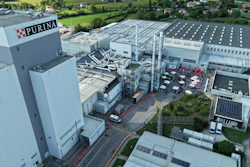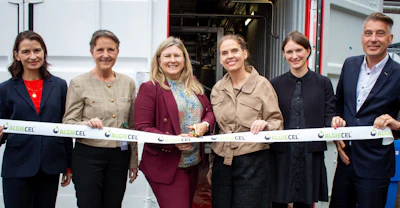
Algiecel, a Danish microalgae ingredients company, has opened a production facility at Novonesis’ site in Kalundborg, Denmark, moving from pilot-scale testing to industrial-scale production of a marine ingredient that does not rely on fish-based supply chains. The Novonesis Kalundborg site is one of the world’s largest enzyme manufacturing sites.
Algiecel expects to produce 12 metric tons of biomass annually beginning in 2027 for pet food and cosmetics customers as it shifts from sample-volume production to recurring commercial supply.
“Kalundborg shows what happens when companies work together to get more value from shared infrastructure, side streams and industrial expertise,” said Ghita Hansen, vice president of enzyme production Denmark at Novonesis. “It creates the conditions for new technologies to scale faster than they could alone. Algiecel’s new facility is a strong example of that.”
Fish oil supply
Cumulative fish oil supply across leading producing regions — Peru, Chile, Iceland, the Faroe Islands, the U.K., Denmark and Norway — was running about 31% below 2025 year-to-date levels by early June 2026, according to IFFO, The Marine Ingredients Organisation. In June 2026, the World Meteorological Organization identified a new El Niño event developing for the 2026-27 season. El Niño events have historically pushed fish oil prices to record highs. Fish oil is used in both pet food formulation and cosmetic products.
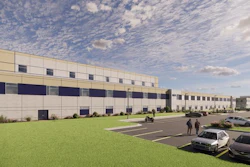
The Kalundborg facility increases Algiecel’s production capacity nearly fivefold. The new reactor has a total volume of 5,500 liters, with 3,240 liters used to grow the microalgae, compared with 700 liters in the company’s pilot system. The facility uses carbon dioxide captured from an operational biogas plant on site rather than commercially bottled gas. According to the company, the design expands by adding identical modular units rather than re-engineering a single larger system.
The opening follows a DKK60 million (US$9.2 million) funding round Algiecel closed in 2024.
The company said the global omega-3 market was valued at about $3.3 billion in 2026 and is projected to reach $5.4 billion by 2033.
“Our customers are looking for a scalable, high-quality and sustainable alternative to the fish oil they are sourcing today,” said Susanne Palsten Buchardt, CEO of Algiecel. “Algiecel is on a path to deliver just that. We’ve run our pilot reactor for more than 10,000 operational hours, and the biology performs as we designed it to. At a moment when fish oil supply is under real pressure, this facility is where we prove we can deliver a reliable alternative, produced under industrial conditions, at the volumes our customers need. It’s the starting platform we’ll use to scale further as demand grows.”
Other company news
Earlier in 2026, Algiecel named Tove Feld chair of its board. Feld previously served as chief technology officer and head of engineering at Ørsted and Siemens Wind Power, and her board experience includes The Renewables Infrastructure Group (TRIG) and DHI. The company also appointed Mette Ingeman Pedersen as chief financial officer. Pedersen previously served as CFO of Topsoe’s Power-to-X business and held senior finance roles at Saxo Bank and Nordea.