Innovafeed and Protix, two producers of black soldier fly ingredients, released a joint position paper examining how the environmental performance of insect protein changes as the industry scales up.
The paper, "When Scale Lowers Carbon: A Perspective on Industrial-Scale Insect Protein," draws on peer-reviewed life cycle assessment (LCA) data and figures published in the Global Feed LCA Institute (GFLI) database.
The two companies, which compete commercially, collaborated on the paper to strengthen the evidence base around insect ingredients. It was written by Marine Bézagu, head of product development for aquaculture at Innovafeed; Maye Walraven, chief business officer at Innovafeed; and Stijn Harms, chief technology officer at Protix.
Scale affects insect LCA results
According to the paper, many existing assessments of insect ingredients rely on early-stage pilot data and compare those results with mature, optimized conventional ingredients. The authors cited a 2026 systematic review of insect farming LCAs that identified production scale as a critical variable. At laboratory and pilot scale, energy use, climate control, feedstock and waste logistics are not optimized, and low production volumes inflate emissions calculated per kilogram of insect biomass.
Published black soldier fly assessments have reported global warming values ranging from about 0.5 to 77 kilograms of carbon dioxide equivalent per kilogram of protein, depending on feedstock, processing energy and allocation method, the paper stated.
The paper cited a 2019 LCA of Protix's commercial operations showing that large-scale black soldier fly production fed on underutilized co-product streams can achieve emissions competitive with conventional protein sources. A 2025 follow-up study, published in the Journal of Cleaner Production, documented a further decline in emissions as output increased.
Innovafeed reduced the carbon intensity of its protein fivefold since 2022, reaching 1.2 kilograms of carbon dioxide per kilogram of protein in 2025, according to the paper. The company is targeting about 0.6 kilograms of carbon dioxide equivalent per kilogram of protein by 2030.
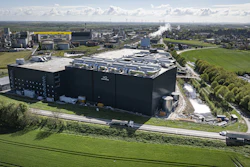
The authors attributed part of that reduction to industrial integration. Innovafeed co-locates its facilities with industrial partners to recover waste heat and feeds larvae directly on wet organic by-products from an adjacent starch plant, streams that would otherwise be dried. A 2020 study found this approach cut the carbon footprint of the resulting meal by 80% compared with a non-integrated industrial producer, the paper stated. Innovafeed's carbon footprint is published as third-party-reviewed branded data in the GFLI database.
Comparing insects with soy and fish meal
The paper compared insect meal with conventional protein sources using GFLI data. Carbon footprints ranged from 0.6 to 15.5 kilograms of carbon dioxide equivalent per kilogram for fish meal and from 4.5 to 7.3 kilograms for soy protein concentrate, with most entries exceeding industrial-scale insect meal, according to the authors. Some responsibly sourced soy protein concentrate measures about 1 kilogram, but less than 3% of global soy is produced in compliance with a recognized sustainability standard, the paper stated.
The authors argued that standard LCA figures leave out certain impacts. Soybean impacts rise once land-use change emissions are counted, and 77% of agricultural land is already used to feed livestock for meat and dairy production.
For marine ingredients, the share of marine stocks fished within biologically sustainable levels fell to 62% in 2021. The paper also cited research estimating that commercial fishing's disruption of ocean carbon sequestration amounts to roughly 10 kilograms of carbon dioxide equivalent per kilogram of fish meal, several times the figure reported in standard LCAs.
"Soy will run out of land, fishmeal will run out of fish: You can pay more for them, but you can't pay the planet to catch up. Insects add protein without drawing on either and will get better with scale," Bézagu said in the paper.
Functional benefits in animal nutrition
The paper stated that global protein demand is rising and that the food system accounts for about one-third of human-caused greenhouse gas emissions. According to the authors, even optimistic shifts, such as raising carbon sequestration by 30% to 50% or moving 15% of protein demand to plant sources, would not close the gap on their own.
The authors also pointed to functional properties that ingredient-level LCAs do not capture. Bioactive compounds in insect ingredients, including antimicrobial peptides, lauric acid, chitin and nucleotides, support gut health and immunity, and can improve survival and feed efficiency in aquaculture, according to the paper.
"Industrial-scale insect production already shows that environmental performance can improve substantially as processes mature and scale," Harms said in the paper. "What excites me most is the potential for further gains through continued innovation, efficiency and better integration within the food and feed system."
The authors concluded that industrial-scale insect ingredients can be part of meeting rising protein demand, describing them as carbon-competitive at scale, still early in their efficiency curve and able to use organic by-products that would otherwise be downgraded.
Note: The paper's authors disclosed they are employees of Innovafeed and Protix, which have a commercial interest in the sector. The paper stated that no funding was received for the research.