Pet food manufacturers can improve palatability by understanding the neurobiology of flavor, including how dogs and cats perceive taste, smell, and texture differently. Since cats lack functional sweet taste receptors and evolved as strict carnivores while dogs are more omnivorous, formulation strategies must account for these differences, with umami and careful processing control offering key opportunities to enhance food acceptance.
- Taste involves three sensory systems: taste buds, smell (aroma and retronasal olfaction), and touch (texture), which work together to shape pet food perception
- Cats and dogs perceive flavors differently: cats lack functional sweet taste receptors and are less receptive to dietary novelty, while dogs show greater omnivory and exploratory feeding behavior
- Umami drives food acceptance: nucleotides and amino acids (like inosine and histidine in tuna) create stronger sensory responses when combined, particularly appealing to cats and dogs
- Bitter taste has lasting effects: bitter compounds signal potential harm to the brain's amygdala, creating longer-lasting food aversions beyond the immediate eating experience
- Processing control matters: Maillard reactions, extrusion, baking, and hydrolysis can enhance or undermine flavor profiles, making thermal process management critical to palatability
Physiology can inform formulation. The biology behind palatability can help pet food manufacturers understand how dogs and cats perceive flavor. Niyired Orozco Giraldo, consultant, discussed the neurobiology of flavor and its implications for modern pet food during her Sept. 23 presentation at CIPAL in Buenos Aires, Argentina.
Orozco described flavor as combination of three sensory inputs: taste, smell and touch. These systems evolved partly as mechanisms that help animals identify nutrients while avoiding potentially harmful substances.
That evolutionary history also contributes to differences between dogs and cats. Cats evolved as strict, or obligate, carnivores and tend to be less receptive to dietary novelty, Orozco said. Dogs, while also carnivores, developed more exploratory feeding behavior and greater omnivory than their wolf ancestors. Those differences have implications for pet food formulation.
Taste goes beyond the tongue
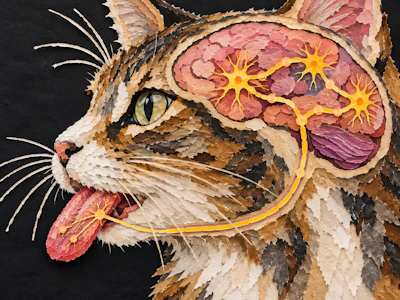
Taste begins when compounds in food interact with receptors associated with taste buds, converting chemical information into electrical signals that can be transmitted through the nervous system.
Orozco noted, however, that taste receptors are not limited to the tongue. Receptors also occur in other tissues, including the gastrointestinal and respiratory systems. Research into the functions of these extraoral receptors in dogs and cats remains limited, she said.
Like humans, dogs can perceive the five commonly recognized taste categories, sweet, umami, bitter, salty and sour, while research is also examining the perception of fat and kokumi, the precursor to umami flavors.
A major difference between cats and dogs appears here. Cats’ sweet taste receptors are nonfunctional, Orozco said.
For both species, bitter taste presents a particularly important formulation challenge. Rather than viewing bitterness simply as an undesirable flavor, formulators should consider its biological role as a signal associated with potentially harmful compounds, she said. Sensory information is processed in several areas of the brain, including regions involved in identifying taste and the amygdala, which contributes to emotional and protective responses. This connection can make aversive sensory experiences particularly important to subsequent food acceptance.
For pet food companies, that means ingredients contributing bitter notes can have longer lasting effects than the immediate eating experience. Orozco identified medications, some botanical extracts, processing byproducts and certain ingredients as potential sources of bitterness.
Umami may help drive food acceptance
Umami provides a contrasting opportunity. Orozco described it as one of the taste sensations most closely associated with food consumption in dogs and cats.
Nucleotides and amino acids can interact in umami perception, with combinations potentially producing a stronger sensory response than individual components. Orozco pointed to cats' attraction to tuna as an example, citing the combination of inosine-related compounds and histidine as contributing to the sensory profile.
Processing can also influence these characteristics.
Maillard reactions, which occur through interactions among proteins, sugars and heat, can create roasted-meat aromas, browning and other sensory characteristics. Extrusion, baking, autoclaving and production of hydrolyzed ingredients can all provide conditions for these reactions.
For pet food manufacturers, controlling those reactions is important because excessive processing can create undesirable compounds rather than beneficial flavor characteristics, Orozco said. Excessive cooking time, temperature or storage can therefore undermine the intended sensory profile.
Hydrolyzed proteins illustrate another formulation trade-off. The extent and method of protein hydrolysis affect the resulting peptide profile. Some peptides can contribute bitter notes, while hydrolysis is also used for specific nutritional applications.
Aroma, texture complete the flavor experience
Smell adds another dimension to food perception. Orozco distinguished between aroma perceived before consumption and retronasal olfaction, which occurs as volatile compounds move toward the olfactory system while an animal eats.
Taste and aroma signals do not operate independently. Their combination contributes to the animal's overall perception of the food and can reinforce either attraction or aversion.
Texture matters as well. Mechanoreceptors in the mouth allow dogs and cats to perceive characteristics such as consistency and viscosity. Temperature also influences the eating experience. Orozco said cats show sensitivity to food temperature, connecting this response to characteristics associated with freshly caught prey.
These interactions mean palatability cannot necessarily be solved by adding a palatant to an otherwise problematic formula. Ingredients, processing conditions, aroma, kibble structure and other characteristics of the finished product all contribute to the animal's sensory experience.
Moving from basic formulation to targeted technology
Orozco outlined two broad approaches to using sensory biology for pet food differentiation.
The first involves formulation choices, including selection of fats, amino acids and nucleotide sources; management of compounds contributing bitter notes; and attention to physical characteristics such as kibble texture and shape.
A more technology-focused strategy could address sensory problems at their source. Orozco suggested microencapsulation as one option for ingredients that provide a nutritional or functional benefit but negatively affect flavor. Masking agents may provide another approach when bitter compounds cannot be removed from a formulation.
Processing control represents another opportunity. Rather than considering extrusion and other thermal processes only in terms of production efficiency, manufacturers can evaluate how processing changes the sensory compounds ultimately encountered by the animal.
The larger opportunity, Orozco said, is to incorporate sensory biology earlier in product development instead of treating palatability as a final adjustment.
Understanding how taste, smell, texture and neurological responses interact could give formulators a more systematic framework for identifying why animals accept or reject a food — and for designing products around those responses.