A review of 31 studies found that vegan and vegetarian diets for dogs and cats are generally highly digestible with results comparable to meat-based diets, though digestibility alone does not guarantee nutritional completeness and more research is needed for cats.
- Vegan and vegetarian pet diets showed digestibility rates ranging from 80.6% to 84.7% for dry matter, broadly comparable to meat-based diets
- Research included 22 studies on dogs but only 2 specific to cats, indicating a significant knowledge gap for feline nutrition
- High digestibility does not equal nutritional completeness—pet food formulators must ensure all required nutrients are present
- Processing methods significantly impact digestibility, with appropriate processing reducing anti-nutritional factors but heat treatment potentially decreasing amino acid availability
- Studies were limited to adult animals in controlled lab settings, leaving gaps for puppies, kittens, seniors, and real-world home feeding scenarios
A review of 31 studies found vegan and vegetarian diets for dogs and cats were generally highly digestible, with results broadly comparable to conventional meat-based diets. However, research was substantially more extensive in dogs than cats, and the paper cautioned that digestibility alone does not establish whether a pet food is nutritionally complete.
Published in the peer-reviewed journal Animals, "The Digestibility of Vegan and Vegetarian Diets for Dogs and Cats" examined research evaluating complete vegan and vegetarian diets along with individual plant-based and fermentation-derived protein ingredients. The paper was authored by Andrew Knight, who listed affiliations with Murdoch University, Griffith University and the University of Winchester.
The review included 22 studies specific to dogs, two specific to cats and seven applicable to both species.
Complete diets show high digestibility
Seven studies evaluated the digestibility of complete vegan or vegetarian pet diets, six of which included comparisons with non-vegan or non-vegetarian diets. Six were specific to dogs, while one produced findings applicable to both dogs and cats.
Five studies measured apparent total tract digestibility. Across these studies, digestibility of vegan and vegetarian diets ranged from 80.6% to 84.7% for dry matter, 85% to 86.3% for organic matter, 88.6% to 89% for nitrogen-free extract and 86.5% to 87.5% for energy. Crude protein digestibility ranged from 79.9% to 89.4%, while fat digestibility ranged from 88.8% to 97.1%.
For animal-based diets evaluated in those studies, apparent total tract digestibility ranged from 80.5% to 83.4% for dry matter, 83.5% to 87% for organic matter, 76.4% to 85.6% for crude protein, 86.5% to 97.3% for fat and 87.5% to 89.5% for nitrogen-free extract.
"Overall, the digestibility of vegan pet diets was broadly comparable to that of animal-based diets, with all seven studies concluding that vegan diets were well-digested," Knight wrote.
Results varied by nutrient and study. In research comparing two mildly cooked vegan dog foods with a chicken-based extruded diet, fat digestibility was slightly but significantly higher in the vegan diets, while organic matter digestibility was slightly lower. Researchers found no significant differences in dry matter, crude protein or energy digestibility.
Another study used in-home digestibility trials involving 61 healthy adult companion dogs. After 12 weeks, apparent total tract digestibility exceeded 80% for dry matter, 85% for crude protein and 97% for fat in both a vegan extruded kibble and a commercial chicken-based diet. Researchers found no significant differences between diets for those measures.
Plant and fermentation-derived proteins evaluated
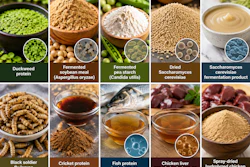
The review also examined individual protein ingredients, including soy, peas, lentils, chickpeas, wheat gluten, corn gluten meal, potato protein, dried yeast and proteins produced through microbial fermentation.
Soy was the most extensively studied vegan protein source. Comparisons with poultry proteins produced mixed results. Depending on the study and digestibility measurement, some differences favored soy, others favored poultry, and some were not statistically significant.
Even where poultry ingredients had higher digestibility for particular measures, the review found soy-based diets generally remained highly digestible. Across the included studies, apparent total tract crude protein digestibility of soy diets ranged from 80.9% to 89.3%, while fat digestibility ranged from 88.4% to 95.5%.
Processing also emerged as an important consideration. The studies indicated that appropriate processing can reduce the effects of some anti-nutritional factors. At the same time, heat processing can decrease the digestibility of certain amino acids through Maillard reactions.
"Pet food manufacturers should be aware of these nuances, and should optimize processing conditions for the specific ingredients used," Knight wrote.
Fewer studies available for cats
The evidence base was considerably smaller for cats. Of the 31 studies included in the review, only two were specific to cats, compared with 22 specific to dogs. Seven provided results considered applicable to both species.
The review nevertheless identified research showing cats could digest several plant-derived protein ingredients, including soy, rice protein concentrate, corn gluten meal and chickpeas. Knight cautioned that the limited number of feline studies makes additional research particularly important.
Research gaps extend beyond species. The studies generally involved adult animals consuming maintenance diets and did not establish the suitability of vegan or vegetarian diets for puppies, kittens, senior animals or animals with compromised digestive function. Most studies were also conducted under controlled laboratory conditions.
Digestibility does not equal nutritional completeness
The review emphasized another limitation particularly relevant to pet food formulators: High protein or macronutrient digestibility does not by itself establish that a finished food supplies all required nutrients.
"Protein digestibility alone does not fully indicate nutritional completeness," Knight wrote.
The review primarily considered dry matter, organic matter, fat, nitrogen-free extract, crude protein, amino acids and energy. It did not evaluate micronutrient digestibility, and the author identified micronutrients as an area requiring additional research.
Overall, the review concluded that the available evidence does not indicate an inherent digestibility disadvantage for nutritionally sound vegan and vegetarian pet foods.
"These findings support the use of nutritionally sound vegan pet diets, and challenge the notion that such diets are inherently less digestible than conventional animal-based diets," Knight wrote. "Nevertheless, further research involving cats, and in real-world, in-home settings would be beneficial."
Review was not a meta-analysis
Although the paper synthesized findings from numerous studies, it was a review rather than a meta-analysis. Knight also noted that it was not conducted as a systematic review.
The distinction is important when interpreting the results. The paper identified relevant research, established inclusion criteria and compared findings across the selected studies. It did not statistically combine results from those studies into a pooled effect estimate, as would occur in a meta-analysis. Instead, its conclusions were based on a qualitative assessment of findings across studies with different designs, populations, ingredients, processing methods and measures of digestibility.
The author acknowledged this methodological limitation, stating, "this review was not conducted as a systematic review." He suggested that a systematic review could provide more comprehensive coverage of the available literature.