A survey of 1,305 cats found that those fed vegan diets had 34% lower odds of being overweight compared to cats on conventional meat-based diets, though researchers note the findings are preliminary and warrant further investigation to understand the relationship between plant-based nutrition and feline weight management.
- Vegan-fed cats showed 34% lower odds of being overweight than meat-fed cats in a survey of 1,305 felines
- Only 9.7% of surveyed cats were on vegan diets, while 90.3% ate conventional meat-based food
- Overweight and obesity affect 30-60% of domestic cats and increase risk of arthritis, diabetes, and urinary tract disease
- Vegan-fed cats were often on dry food with constant availability, feeding patterns typically linked to weight gain, yet still showed lower overweight rates
- Researchers recommend larger prospective studies to directly measure energy intake and body condition before drawing definitive conclusions
Survey results published in Frontiers in Animal Science found cats fed vegan diets had lower rates of overweight and related health problems than cats fed conventional meat-based diets.
The online survey analyzed caregiver-reported veterinary assessments of 1,305 cats fed either conventional meat-based diets (90.3%) or vegan diets (9.7%) for at least one year.
After accounting for factors including age, sex, neuter status, activity and feeding practices, vegan-fed cats had 34% lower odds of being assessed as overweight.
However, the difference was not statistically significant, in part reflecting the relatively small number of vegan-fed cats. For several body weight-related problems, no vegan-fed cats were affected. Researchers said the findings show a trend that warrants further investigation.
Inconclusive findings, interesting trends
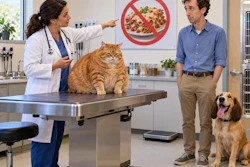
According to the study, overweight and obesity are common in domestic cats, with veterinary studies estimating 30% to 60% of cats are overweight or obese. Excess weight is associated with health problems including arthritis, diabetes, urinary tract disease and reduced quality of life.
Study author Andrew Knight, adjunct professor at Murdoch University School of Veterinary Medicine in Australia and visiting research fellow of the Faculty of Health and Wellbeing at the University of Winchester in England, said the findings, while not conclusive, showed interesting trends.
“Carers feeding cats vegan diets also reported lower rates of body weight-related disorders such as osteoarthritis and other musculoskeletal and mobility problems,” Knight said. “However, the relatively small number of vegan-fed cats mean these results cannot be considered conclusive.
“Interestingly, most vegan-fed cats were eating predominantly dry food and were more likely to have food available throughout the day. These are feeding patterns normally associated with increased overweight risk. Yet we still observed lower rates of overweight in this group.”
Weight impacted by more than food
The study noted diet is not the only determinant of a cat’s weight. Other factors consistently associated with overweight risk include age, sex, neuter status, activity levels and feeding practices.
Why vegan-fed cats showed lower rates of overweight is uncertain. While the study did not analyze the foods themselves, some commercial vegan cat foods may be higher in fiber and lower in calories or fat than comparable meat-based foods, which could help with weight control.
Differences in L-carnitine, a nutrient involved in energy metabolism and maintaining lean body tissue, could also play a role.
Knight said the findings should be seen as a starting point.
“We can’t conclude from this study that vegan diets definitely protect cats against becoming overweight, but we have found a consistent pattern that is worth further investigation,” he said. “An ideal next step would be a larger, prospective study that directly measured what cats are eating, their energy intake and their body condition.”