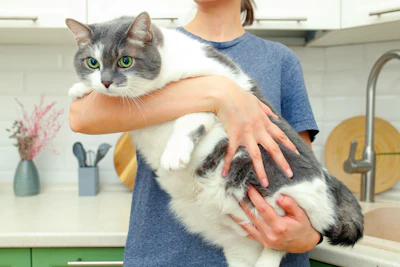
Obesity and being overweight — collectively referred to as O&O — are now twin problems affecting many domestic cats in highly urbanized regions of Asia such as China, Japan and Taiwan.
The problem is linked to overfeeding, indoor lifestyles and owners' favorable attitude toward heavier cats.
In China, about one-third of household cats — an estimated 73 million of the country's 126 million pet cats in 2025 — are overweight, according to the China Pet Industry Association. Contributing factors include unlimited feeding, especially of dry kibble, sedentary lifestyles and owners' fondness for plump cats.
Drugmakers target pet obesity market
With more cats and dogs gaining weight, a pet weight-loss drug market is emerging in China, and major international pharmaceutical companies are moving to get in.
In December, Pfizer signed a $2.1 billion out-licensing deal with Yao Pharma, a unit of Fosun Pharma, for an experimental oral obesity drug designed for humans and animals. Another Chinese company, Huadong Medicine, is developing a weight-management drug for obese adult cats. Both companies are working with glucagon-like peptide-1, or GLP-1, a natural hormone in the gut that sends a "satiety signal" to slow digestion.
In Taiwan, an estimated 30% to 50% of the country's 1.74 million pet cats are obese. The issue is both a concern and, in one instance, a contest: A search in Kaohsiung, a city in Taiwan, for the fattest domestic cat found one weighing 10.6 kilograms.
Over-humanizing cats
Japan has 8.8 million cats, and many are on the chunky side as well, according to a research study that looked at a sample of pet cats that visit veterinary clinics. Staying indoors all the time is considered a major cause of feline obesity in the country. Cats at Japanese cat cafes, meanwhile, are putting on extra weight due to the constant snacks provided by guests.
A study on feline obesity published in the United States National Library of Medicine, led by Kendy Teng, identified several factors that contribute to feline O&O. The study found the condition is more common among cats whose owners shower them with affection and tend to over-humanize them.
"Some people seem to have a positive attitude toward feline O&O and even relate chubbiness and fatness with cuteness in cats," the researchers wrote, noting that cats that beg for food are at higher risk of becoming overweight.
Kibble's increased energy density
After examining different types of cat food, the study's authors said they found that dry food, or kibble, is the only risk factor for feline O&O due to its increased energy density.
Studies show that worldwide, about half of adult dogs and cats are overweight or obese, putting them at high risk of developing cardiovascular, metabolic and orthopedic diseases and significantly reducing their lifespan.