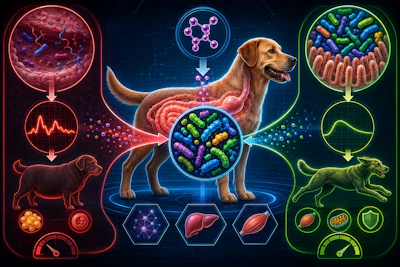
Lindsay Sumners, Ph.D., director of creation, design and development at ADM's Pet & Animal Wellbeing segment, presented research on the gut-metabolic axis and postbiotic supplementation during a session titled "Biotics Beyond the Gut: Exploring the Gut-Metabolic Axis" at the recent National Animal Supplement Council (NASC) conference.
Sumners opened by distinguishing metabolic health from metabolism, noting that metabolism refers to the chemical processes that convert food into energy, while metabolic health concerns the management of interrelated processes tied to energy regulation. She said her presentation would reference disease states for illustrative purposes only.
"We're not suggesting to make any sort of claim to treat, prevent, cure or mitigate any diseases," Sumners said.
From human to pet
For human health, Sumners cited data showing high blood pressure, high blood sugar, obesity and high cholesterol among leading risk factors for death, with cardiovascular disease, dementia and diabetes ranking among the top causes of death worldwide.
The global metabolic health foods market is valued at an estimated $23.5 billion this year and is projected to reach $45.6 billion by 2034, reflecting a compound annual growth rate of 8.6%, according to data Sumners presented. She said the category includes functional foods and beverages, dietary supplements and meal replacements.
Sumners attributed growing interest in metabolic health products to three factors: the global prevalence of metabolic disorders, the food-is-medicine movement emphasizing preventive nutrition over reactive care, and the rise of digital health tools such as continuous glucose monitors, smart scales and activity trackers. She said GLP-1 medications have also raised consumer awareness of glucose metabolism's role in overall health.
"When it comes to trends in the human health and wellness space, it's typically only a matter of time until we see that transition into the pet space," Sumners said, adding that interest in metabolic health supplements for pets is already emerging among brands and consumers.
Metabolic syndrome in humans and dogs
Sumners reviewed the International Diabetes Federation's criteria for metabolic syndrome in humans, which requires central obesity based on waist circumference plus at least two of the following: elevated triglycerides, reduced HDL cholesterol, elevated blood pressure or elevated fasting plasma glucose.
She described a comparable condition in dogs, canine obesity-related metabolic disorder, or ORMD. ORMD criteria require a body condition score of 7 to 9 plus at least two of the following: elevated triglycerides, elevated total cholesterol, elevated blood pressure or elevated fasting plasma glucose.
Sumners noted key differences between the two conditions. Body condition score replaces waist circumference as the adiposity measure in dogs, and while human metabolic syndrome is marked by lower HDL cholesterol, obese dogs show elevated levels of both HDL and LDL cholesterol. She also said research points to central obesity as the primary underlying factor in human metabolic syndrome, while ORMD in dogs has been more closely associated with increased plasma insulin and decreased serum adiponectin levels.
Citing a study of 35 client-owned obese dogs, Sumners said only 20% met ORMD diagnostic criteria, compared with a 50% to 60% prevalence of metabolic syndrome among obese humans.
The gut-metabolic axis
Sumners described the gut-metabolic axis as a bidirectional relationship between the gut microbiome and metabolic organs that also involves gut-brain signaling through neuronal, hormonal and metabolic pathways.
She said gut microbes produce metabolites including vitamin K and biotin, ferment carbohydrates into short-chain fatty acids such as propionate and butyrate, and convert primary bile acids into secondary bile acids that act as signaling molecules in glucose metabolism.
Strain identification and clinical research
Sumners outlined ADM's screening pipeline for identifying metabolic health strains, which begins with cell culture and murine studies before moving to a proprietary C. elegans lipid-reduction model developed by ADM researchers.
Screening of 16 Bifidobacterium strains identified Bifidobacterium animalis subspecies lactis CCT 8145 as producing a 40% reduction in fluorescence, the highest fat-reduction result among strains tested, according to Sumners. Both live and heat-treated versions of the strain showed significant fat-reducing effects with no significant difference between them, she said.
The strain, branded as BPL1 in its probiotic form and HT-BPL1 in its postbiotic form for the human market, was evaluated in a randomized, double-blind, placebo-controlled human trial in which one group received 100 billion cfu of the probiotic and another received 100 billion cells of the postbiotic over 12 weeks. Sumners said both groups showed improvements in waist circumference, conicity index, body mass index and visceral fat.
ADM then tested the strain in a canine study using a metabolic stress model: a seven-week overfeeding phase at 200% of metabolizable energy requirements, a two-week washout period, and a seven-week weight-loss phase at 100% of requirements. Results were published in the journal Animals, Sumners said.
"We really saw significant effects of the postbiotic supplementation, but not necessarily with the probiotic," Sumners said.
She said postbiotic supplementation was associated was associated with supporting normal postprandial glucose metabolism during the weight-loss phase, along with modulation of gastrointestinal hormones GLP-1 and glucagon, increased protein and fat digestibility, along with changes in gamma-glutamyl transferase, a liver enzyme marker studied in canine metabolic research. Both the probiotic and postbiotic versions were well tolerated, according to Sumners.
The strain has been branded Priome MH, or Prime Metabolic Health, part of ADM's Priome postbiotic line for pets.
Consumer insights and formulation
Sumners referenced an ADM-commissioned consumer insight study indicating pet owners are receptive to postbiotics, with microbiome-supporting ingredients ranking among top purchase drivers for nutritional pet products. The study found 86% of pet owners were at least somewhat familiar with postbiotics, and product messaging linking postbiotics to clinically tested benefits increased purchase likelihood by about 80%. Additionally, 66% of respondents said a clinically tested probiotic or postbiotic justified a higher price point, Sumners said.
She said metabolic health ingredients can be incorporated into a range of supplement types, including weight management, vitality, healthy aging and senior support products, and that ADM's application science testing has shown the strain remains stable across tablets, capsules, powders, soft chews, thermal extrusion and retort processing.
"It's really more than just the term metabolic health. It's setting the basis for overall well-being," Sumners said.