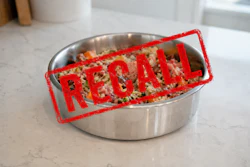
Raaw Energy raw dog food has been recalled in New York and New Jersey over potential Listeria and Salmonella contamination, marking a repeat recall for the brand that poses risks to both pets and people handling the contaminated product.
- Product affected: Raaw Energy raw dog food sold in 2-pound and 5-pound tubes in NY and NJ
- Contamination risk: Possible Listeria and Salmonella presence that can spread to kitchen surfaces, storage containers, and human handlers
- Repeat recall: This is a second recall for Raaw Energy, indicating potential systemic issues in sourcing, processing, or quality controls
- No confirmed illnesses: The recall is precautionary and based on possible contamination rather than confirmed test results or reported sickness
- Action required: Pet owners should check freezers and refrigerators for affected products and treat them as potential cross-contamination sources
A raw dog food sold throughout New York and New Jersey has been pulled from shelves over possible Listeria contamination, a recall that lands again on a product category already under scrutiny and that puts both pets and the people handling the food at risk.
The recall covers raw dog food from Raaw Energy and stems from the potential presence of Listeria, with the action also citing possible Salmonella contamination. The affected product was distributed in 2-pound and 5-pound tubes across the two-state market, the packaging format consumers should check first when determining whether they have the recalled food on hand. For households feeding raw, the overlapping Listeria and Salmonella concerns matter beyond the bowl: both pathogens can move from contaminated product to kitchen surfaces, storage containers and the hands of anyone preparing meals, turning a pet-food issue into a human exposure risk.
What distinguishes this pullback is that it is happening again. The action is framed as a repeat recall, placing Raaw Energy within a pattern of recurring safety concerns rather than a single isolated incident. That repetition is the operational story here. A one-off contamination event points to a single bad batch; a repeat recall points to persistent gaps somewhere in sourcing, processing or in-plant controls. The recurrence shifts the burden onto the company to demonstrate that its hazard controls can reliably keep pathogens out of finished product, and it sharpens the regulatory and reputational pressure that follows a brand through every subsequent shipment.
The contamination concern is characterized as possible. The recall does not point to confirmed laboratory positives, does not report any illnesses in pets or people, and does not quantify how the problem surfaced. That distinction is standard in the raw category, where companies and regulators routinely act on potential contamination before test results or sickness reports materialize, given how quickly raw product moves through cold chains and into homes. Acting on possible contamination is the precautionary default, but it also leaves open questions about whether the issue was caught through routine testing, a consumer complaint or a supplier notification.
For consumers trying to confirm whether their purchase is affected, the package format remains the clearest available marker. Pet owners holding 2-pound or 5-pound Raaw Energy tubes bought in New York or New Jersey are the first group that needs to act, checking their freezers and refrigerators and treating any suspect product as a potential source of cross-contamination throughout the storage and preparation areas where it has been handled.
The repeat nature of the recall is what industry participants will be watching. A brand that keeps returning to the recall list faces mounting pressure from retailers and regulators alike, and in the raw segment, where the margin for microbial error is thin and the human-exposure pathway is direct, each additional pullback compounds the scrutiny on whether the underlying safety system is working as intended.