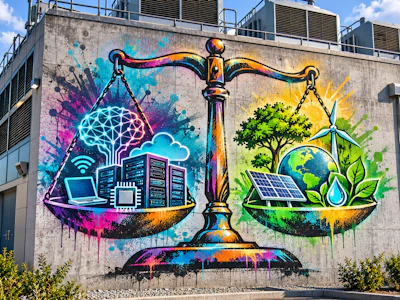
The extreme end of AI terror is Terminator-like apocalypse. The more prosaic and realistic fear is that AI data centers compete with human resource needs, while polluting the ecosystems we depend on for air and water. During the Pet Sustainability Coalition's Impact Unleashed conference last week, concerns about artificial intelligence's environmental footprint came up repeatedly.
It’s undeniable that AI technology requires electricity, water and physical infrastructure, presenting a dilemma for sustainability-minded professionals who want to use in AI. As I explored in AI overuse drags on pet food sustainability, using AI simply because it's easy or a habit can undermine environmental commitments.
However, AI can also reduce waste, improve efficiency and conserve resources. For example, AI applications in pet food processing can help manufacturers reduce startup waste and improve production consistency. After the conference, I wondered how my own AI use compared with other environmental decisions I've made.
How much energy does one person actually use?
I use ChatGPT frequently for research, analysis, html coding and generating images. I asked ChatGPT to estimate my average daily energy consumption based on its records of my activity.
I use approximately 10 to 30 watt-hours daily, equivalent to roughly 4 to 11 kilowatt-hours annually. That’s roughly equivalent to a 5-watt LED light bulb running for 2–6 hours daily or approximately one full charge per day of a smartphone. That doesn’t sound too bad, right?
The scale changes considerably when millions of people and businesses use AI.
According to the International Energy Agency's 2026 Key Questions on Energy and AI report, global data centers consumed approximately 485 terawatt-hours in 2025, close to the annual electricity consumption of Germany. Consumption could reach 950 terawatt-hours by 2030, with electricity demand from AI-focused facilities tripling.
However, individual users create only a fraction of that data center demand. Data centers also support large-scale corporate computing, cloud storage, financial transactions, streaming services and countless other digital activities. Training and deploying increasingly sophisticated AI models adds another substantial burden.
Consumer demand does matter in aggregate, but there are ways we as AI users can reduce or offset our environmental toll.
Solar panels and remote work offer offsets
My household has a 5.4-kilowatt solar installation. Through Nov. 16, it has generated 6,400 kilowatt-hours of electricity in 2026.
That's hundreds of times more electricity than my estimated annual ChatGPT consumption. Here in St. Peters, Missouri, that solar generation may represent several metric tons of avoided carbon dioxide emissions from the coal-fired Labadie Power Plant.
I also work remotely, eliminating a regular commute. Considering someone who drives 20 miles round trip, five days weekly for 220 workdays, avoiding that commute would eliminate 4,400 vehicle miles annually. At 25 miles per gallon, that represents 176 gallons of gasoline and approximately 1.5 metric tons of avoided carbon dioxide from combustion.
Nevertheless, I can’t cancel out the emissions from data centers or their resource use. Likewise, the solar panels had manufacturing impacts, and remote work doesn't mean I don’t fly to Colorado for sustainability conventions. Nevertheless, both illustrate how a pet food professional’s broader choices can reduce one’s ecological footprint substantially.
Pet food companies could reduce their own environmental impacts by encouraging remote or hybrid work. Sustainability initiatives might include financial assistance for residential energy-efficiency improvements. Companies could also encourage renewable energy adoption through subsidies for residential solar installations, partnerships with solar providers or renewable electricity purchasing programs. For employees working remotely, employers might provide energy-efficient home office equipment. These initiatives could complement investments in renewable electricity and energy efficiency at manufacturing facilities, warehouses and corporate offices.