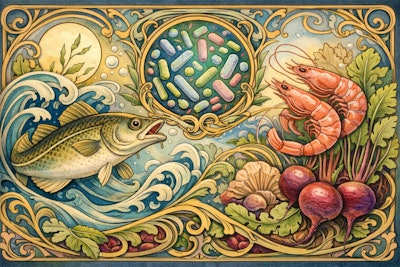
As health and wellness have become dominant trends in pet food marketing, functional ingredients have become increasingly important in appealing to consumers. Functional ingredients are added to pet food to provide benefits beyond basic nutrition. In dog and cat diets, these ingredients are increasingly used to support joint health, digestion, skin condition and overall well-being. Below are four widely used functional ingredients, along with evidence from peer-reviewed research on their effects in dogs or cats.
1. Fish oil
Omega-3 fatty acids, particularly eicosapentaenoic acid and docosahexaenoic acid, are commonly supplied through fish oil. In dogs, these fatty acids have been shown to support joint health by helping manage inflammation associated with osteoarthritis. A controlled study published in the Journal of the American Veterinary Medical Association found that dogs fed diets enriched with omega-3 fatty acids showed improved weight-bearing and mobility compared with controls. In both dogs and cats, omega-3 fatty acids are also associated with improved skin and coat condition.
2. Probiotics
Probiotics are live microorganisms intended to support gastrointestinal health. In pet food, they are most often strains of Lactobacillus, Bifidobacterium or Enterococcus. Research in dogs suggests that certain probiotic strains can help stabilize the intestinal microbiome and improve stool quality. A study in the Journal of Veterinary Internal Medicine reported that dogs receiving a probiotic supplement showed faster recovery from diarrhea and improved fecal consistency. In cats, probiotics have been studied for their potential role in managing chronic gastrointestinal disorders, although results vary by strain of probiotic.
3. Glucosamine and chondroitin
Glucosamine and chondroitin sulfate are commonly included in pet foods and supplements formulated for joint support. These compounds are natural components of cartilage and other animal tissues. Glucosamine and chondroitin sulfate used in pet food are typically produced from animal-derived raw materials, such as shellfish shells for glucosamine and bovine or porcine cartilage for chondroitin sulfate, though fermentation-based glucosamine is increasingly available. In dogs, long-term feeding studies suggest they may help maintain joint structure and function, particularly in aging animals. A review published in Veterinary Medicine: Research and Reports concluded that while results are mixed, evidence supports modest benefits for mobility and comfort in dogs with degenerative joint disease. Evidence in cats is more limited but emerging.
4. Beet pulp
Beet pulp is a moderately fermentable fiber frequently used in dog and cat foods to support digestive health. It contributes to stool quality and promotes the production of short-chain fatty acids in the colon. A study in the Journal of Animal Science demonstrated that beet pulp inclusion improved fecal consistency and supported beneficial microbial activity in dogs. These effects are particularly important for adult maintenance and senior pet diets.