Omega-3 fatty acids are among the most widely used functional ingredients in pet food and supplements as humanization drives increased focus on companion animals’ health and wellness. Interest is driven by research linking long-chain omega-3s, especially eicosapentaenoic acid and docosahexaenoic acid, to skin and coat health, inflammation control, cognition and joint health in dogs and cats (Bauer, 2011; Calder, 2017; Vendramini, 2025). Traditionally, fish oil has been the primary source. However, algae oil has emerged as a commercial alternative, raising questions about comparative performance, sustainability and formulation.
Fish oil: the established source
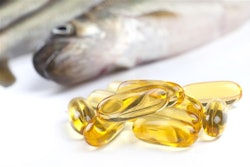
Fish oil has appeared in human supplements and pet products for decades. The oil is typically derived from anchovy, sardine, menhaden or salmon. It naturally contains both eicosapentaenoic acid and docosahexaenoic acid in forms that are readily utilized by dogs and cats. Research and meta-analyses consistently report benefits of fish oil supplementation for osteoarthritis management and dermatologic conditions in companion animals (Bauer, 2011).
From a formulation standpoint, fish oil is familiar to pet food manufacturers. It can be sprayed onto extruded kibble, incorporated into canned foods, or added to supplements and treats. However, fish oil is sensitive to oxidation, requiring antioxidants and careful handling to protect shelf life. Flavor can also be a challenge, particularly at higher inclusion rates.
Sustainability and supply variability are ongoing concerns. Fish oil production depends on marine fisheries, which are subject to environmental pressures and price volatility. Quality can also vary depending on species and refining processes.
Algae oil: the emerging alternative
Algae oil is produced through controlled fermentation or cultivation of microalgae. Algae aren’t plants in case you ever encounter a question about that on a trivia night or are a pro-protists advocate. Algae are the original producers of docosahexaenoic acid and eicosapentaenoic acid in marine ecosystems, with fish bioaccumulating omega-3s through the food chain. So why not go straight to the source? That’s exactly what commercial algae oils do. These algal extracts used in pet food are typically rich in docosahexaenoic acid, with some newer products also containing eicosapentaenoic acid.
Recent reviews in human and animal nutrition indicate that docosahexaenoic acid from algae oil is bioavailable and supports similar physiological functions as marine-derived sources (Magalhães, 2021; Calder, 2017). While fewer pet-specific studies exist compared with fish oil, available evidence supports its use as an effective omega-3 source for dogs and cats.
In feeding trials with algal oil containing EPA and DHA, increased plasma levels of these fatty acids confirmed that algal oil provides a bioavailable and safe omega-3 source for dogs (Dahms, 2019). In that study Beagle dogs eating diets containing algal oil rich in EPA and DHA increased plasma levels of these fatty acids in line with their intake levels.
Likewise, in feline nutrition, algal oil increased serum EPA and DHA concentrations and may serve as a viable alternative source of DHA (Motsinger, 2025). This study in cats found that inclusion of algal oil can increase serum DHA and EPA. However, fish oil produced higher EPA concentrations when included at greater levels.
Algae oil may offer advantages in consistency, traceability and sustainability. Production occurs in closed systems, reducing exposure to environmental contaminants and avoiding reliance on wild fisheries. Algae oil is often described as more neutral in flavor, which can be beneficial in treats and supplements.
Cost remains a limiting factor, although prices have declined as production has scaled. Another consideration is fatty acid profile. Many algal oils contain predominantly docosahexaenoic acid, so formulators targeting specific eicosapentaenoic acid levels may need blends or complementary sources.
Is one better than the other?
From a nutritional standpoint, evidence doesn't support saying one or the other is universally better (Bailey, 2025). In humans, bioavailability studies have shown that docosahexaenoic acid and eicosapentaenoic acid levels from algal oil are comparable to fish-derived sources in long-chain omega-3 supplements when intake is equivalent.
Fish oil provides a balanced profile of eicosapentaenoic acid and docosahexaenoic acid and has extensive supporting research in pets. Algae oil delivers highly purified omega-3s with strong sustainability credentials and growing scientific research.
The choice may depend on formulation goals. For products emphasizing joint health or anti-inflammatory support, fish oil remains common due to its eicosapentaenoic acid content. For cognitive support, early life nutrition or sustainability-driven positioning, algae oil may be increasingly attractive. Some manufacturers use blends to balance fatty acid profiles and manage supply risk.
In complete pet foods, both oils are typically applied post-extrusion or incorporated into wet formulations. Protection against oxidation is critical, regardless of source. In supplements, oils are delivered as liquids, soft chews or capsules, where higher inclusion rates are possible. Treats may favor the flavor of algae oil because of milder aroma and improved palatability.
Ecological sustainability considerations of fish and algae oil
From a sustainability perspective, algae oil and fish oil differ significantly in environmental footprint and supply risk (FAO, 2022). Fish oil production depends largely on wild-caught forage fish such as anchovy, sardine and menhaden. While many fisheries supplying fish oil are managed and certified, global fish oil availability is constrained by natural fish stock limits, climate variability and competing demand from aquaculture, livestock and human nutrition markets (Tacon & Metian, 2015; Majluf, 2024). These pressures can contribute to price volatility and raise concerns about long-term marine ecosystem impacts, particularly when demand increases faster than fishery productivity.
By contrast, algae oil is produced through fermentation or controlled cultivation of microalgae in closed systems, decoupling omega-3 production from wild fisheries. Life cycle assessments in human nutrition literature generally show algae oil to have lower reliance on marine resources and more consistent quality, with reduced risk of ocean-derived contaminants such as heavy metals. However, algae oil production is energy- and capital-intensive, and its overall sustainability profile depends on factors such as energy source, production efficiency and scale. As a result, algae oil is widely viewed as a more scalable and fisheries-independent omega-3 source, while fish oil remains a resource-efficient option when derived from well-managed fisheries and fish-processing byproducts rather than whole fish.
Pet food oil outlook as insects rise
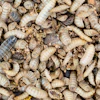
Insect oil is emerging as a potential complementary, rather than direct, competitor to fish oil and algae oil in pet food, particularly from a sustainability and circular economy perspective. Oils derived from insects such as black soldier fly larvae are typically rich in lauric acid and other medium-chain fatty acids, with lower concentrations of long-chain omega-3 fatty acids like eicosapentaenoic acid and docosahexaenoic acid compared with fish or algae oils. As a result, insect oil is not a like-for-like replacement for marine or algal omega-3 sources. However, research suggests insect oil can contribute functional benefits related to energy metabolism, skin health and gut health, while offering strong sustainability credentials due to efficient feed conversion, use of food waste streams and low land and water requirements (Spranghers, 2017; Gasco et al., 2020; Makkar et al., 2014). For pet food manufacturers, insect oil may compete indirectly by supporting broader sustainability goals and by partially replacing traditional fats in formulations, while fish oil and algae oil remain the primary ingredients for delivering specific long-chain omega-3 functionality.
As demand for functional ingredients grows, both fish oil and algae oil will continue to play important roles in pet nutrition. Ongoing research, particularly comparative studies in dogs and cats, will help clarify optimal applications. For now, formulation objectives, sustainability priorities and cost considerations are likely to drive ingredient choice rather than a clear nutritional winner.
References
Bailey, E., Wojcik, J., Rahn, M., Roos, F., Spooren, A., & Koshibu, K. (2025). Comparative bioavailability of docosahexaenoic acid and eicosapentaenoic acid from microalgal and fish oil in adults. International Journal of Molecular Sciences, 26(19), 9343.
Bauer, J. E. (2011). Therapeutic use of fish oils in companion animals. Journal of the American Veterinary Medical Association, 239(11), 1441–1451.
Calder, P. C. (2017). Omega-3 fatty acids and inflammatory processes: From molecules to man. Biochemical Society Transactions, 45(5), 1105–1115.
Dahms, I., Bailey-Hall, E., Sylvester, E., Parenteau, A., Yu, S., Karagiannis, A., et al. (2019). Safety of a novel feed ingredient, algal oil containing EPA and DHA, in a gestation-lactation-growth feeding study in Beagle dogs. PLoS ONE, 14(6), e0217794.
Food and Agriculture Organization of the United Nations. (2022). The state of world fisheries and aquaculture 2022: Towards blue transformation. FAO.
Gasco, L., Acuti, G., Bani, P., Dalle Zotte, A., Danieli, P. P., De Angelis, A., Fortina, R., Marino, R., Parisi, G., Piccolo, G., Pinotti, L., Prandini, A., Schiavone, A., Terova, G., & Tulli, F. (2020). Insect and fish by-products as sustainable alternatives to conventional animal proteins in animal nutrition. Italian Journal of Animal Science, 19(1), 360–372.
Makkar, H. P. S., Tran, G., Heuzé, V., & Ankers, P. (2014). State-of-the-art on use of insects as animal feed. Animal Feed Science and Technology, 197, 1–33.
Magalhães, T. R., de Oliveira, L. D., Félix, A. P., Maiorka, A., & Saad, F. M. O. B. (2021). Therapeutic effect of EPA and DHA supplementation in neoplastic and non-neoplastic diseases in dogs and cats. Veterinary Sciences, 8(6), 1–17.
Majluf, P., et al. (2024). Aquacultured carnivorous species consumption of fishmeal and fish oil: implications for sustainability. Science Advances.
Motsinger, L. A., et al. (2025). Effects of algal oil as an alternative to fish oil in feline foods on serum EPA and DHA concentrations. Journal of Animal Science.
Spranghers, T., Ottoboni, M., Klootwijk, C., Ovyn, A., Deboosere, S., De Meulenaer, B., Michiels, J., Eeckhout, M., De Clercq, P., & De Smet, S. (2017). Nutritional composition of black soldier fly (Hermetia illucens) prepupae reared on different organic waste substrates. Journal of the Science of Food and Agriculture, 97(8), 2594–2600.
Tacon, A. G. J., & Metian, M. (2015). Feed matters: Satisfying the feed demand of aquaculture. Reviews in Fisheries Science & Aquaculture, 23(1), 1–10.
Vendramini, T. H. A., Pedrinelli, V., Teixeira, F. A., Zafalon, R. V. A., Rentas, M. F., & Brunetto, M. A. (2025). Exploring the efficacy and optimal dosages of omega-3 supplementation for companion animals. Nutrition Research Reviews. Published online ahead of print.