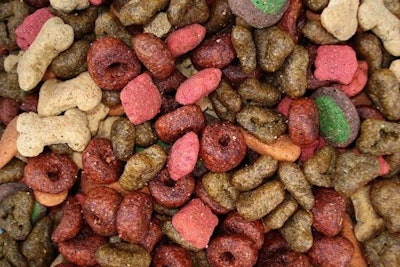
Modern pet food manufacturers are on constant look-out for new and novel proteins and seeking ingredients with high functionality from a physiological perspective. Casein is a protein that seems to fit the bill. It has wide name recognition in the human foods and supplements market where it is found prominently in sports drinks and other applications. In pet food, casein shows up in some prescription and specialty diets but we don’t often find it in over-the-counter diets. So why hasn’t it found popularity in pet food? The answer to that question merits exploration to determine if something besides cost is limiting its use.
Casein is a milk protein. Milk is about 87% water and ~3.5% protein. The proteins can be divided into the group that coagulates (curds) known collectively as casein and the soluble portion called whey (October 2007; Petfood Industry magazine). Approximately 80% of the protein is from casein. Casein is suspended in fluid milk as microscopic globules or “micelles.” The micelles stay uniformly suspended in part due to their composition of different protein subunits (αS1, αS2, β) held together by calcium phosphate bridges. This is surrounded by the protein subunit κ-casein (kappa-casein) which helps stabilize the micelle. The tail of the κ-casein protein has a negative charge and creates a repulsion to other casein molecules much like the north pole of two magnets do when brought into close proximity. By this electrostatic repulsion the casein micelles stay suspended in the milk. This also gives casein some unique properties that can be exploited in food systems.