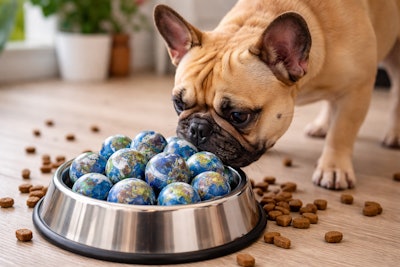
Two trends contradict each other in the pet food industry. Pet owners demand reducing the environmental degradation associated with pet food production. At the same time, they demand formulations made with high quantities of human-grade muscle meat. A study published in the Journal of Cleaner Production, addressed this dichotomy.
- You can read the press release about the study here.
In contrast to earlier studies on pet foods’ contribution to climate change, this study differentiated between products made with animal tissues that would otherwise have gone to waste and those ingredients that compete with the human food stream. When pet food makers use organ meats, rendered by-products and other tissues that humans no longer desire in their own diets, it reduces the discarded nutrition. In my opinion, this better honors the lives of those livestock. I’m no vegetarian, but unlike my German grandfather, who relished Braunschweiger and other organ meats ground up and stuffed into intestines, I rarely eat offal. That doesn’t mean kidneys and livers aren’t nutritious, and there’s no reason dogs and cats shouldn’t eat them. It’s just that humans tend to mimic the eating habits of wealthier humans, and beef steak has traditionally been the meat of the upper classes in Europe and the U.S., notwithstanding a bit of goose pate.
It’s important for owners to know that choosing grain-free, wet or raw foods can result in higher impacts compared to standard dry kibble foods.
- John Harvey, University of Edinburgh
As people humanize their pets, they project their own dietary preferences onto their companion animals. High-protein diets have become a dominant trend in human health food, although nutritionists point out that most people in wealthy nations get more than enough essential amino acids. The human protein trend often translates into animal consumption. While plants and former by-products, such as yeast and whey, have grown in popularity and can provide complete proteins, protein-packed human diets tend to focus on muscle meat.
Likewise, pet foods now market themselves as having human-grade meats. However, the claim that these products are inherently healthier may be lacking. Another recent study reviewed claims made by frozen fresh meat pet foods found little published, peer-reviewed research backing marketing claims.
Climate change and pet food
Unfortunately, people are rarely swayed by research that doesn’t confirm their own beliefs. If they were, there would be no argument about climate change. The greenhouse effect happens because certain gases in Earth’s atmosphere, famously carbon dioxide and methane but also water vapor and others, interact with heat at the molecular level. Sunlight passes those gases in the atmosphere mostly unchanged and warms the Earth’s surface. That warm surface then releases energy as infrared radiation, which is basically heat. Greenhouse gas molecules are shaped and bonded in ways that let them absorb this infrared energy, causing their atoms to vibrate. When they release that energy, some of it goes back toward the surface instead of escaping into space, trapping warmth. This process can be intensified by volcanoes and wildfires, as well as burning fossil fuels, all of which release more heat trapping gases into the air.
Molecules don’t care about politics or profits, but people do. Which brings us back around to the role of pet foods in contributing to climate change.
“As a veterinary surgeon working on environmental sustainability, I regularly see owners torn between ideals of dogs as meat‑eating ‘wolves’ and their wish to reduce environmental harm,” John Harvey, of the University of Edinburgh and the University of Exeter and principal investigator of the study in the Journal of Cleaner Production, said in a press release. “Our research shows just how large and variable the climate impact of dog food really is. It’s important for owners to know that choosing grain-free, wet or raw foods can result in higher impacts compared to standard dry kibble foods. The pet food industry should make sure meat cuts used are of the types not typically eaten by humans, and that labelling is clear. These steps can help us have healthy, well-fed dogs with a smaller pawprint on the planet.”
In 1987, the United Nations Brundtland Commission defined sustainability as “meeting the needs of the present without compromising the ability of future generations to meet their own needs.” Sustainability has expanded to include a wide range of environmental, social and economic issues, many of which relate to the pet food industry. Environmental sustainability includes the effects of growing crops and livestock used as pet food ingredients. Agricultural systems affect the ecosystems around them, along with local economies. Maintaining functional environments ensures the long-term economic sustainability of the farms themselves. Farmers depend on rain and aquifers, soil microbes, pollinator insects and many other aspects of the natural world that can be disrupted by human activities. Those ecosystem services ensure the farms can continue employing people from surrounding communities while supporting the overall global economy. Those people growing, harvesting and processing foods deserve equitable pay for their work and safe working conditions, bringing social aspects of sustainability to the pet food system.
Social sustainability aspects of pet food
The contradictions to sustainability arise with conflicting consumer demands. For example, pet owners want muscle meat for their dog and cats, the same meats that people eat, while rejecting organ meats and rendered meat meals. Using large amounts of muscle meat in pet food places greater strain on farms, food prices and ecosystems. High-meat pet foods may raise prices in the butcher’s case while inflation already turns families’ steak nights to meatloaf. Even in the United States, federal statistics classified 13.5% of households as food insecure in 2023. On a societal level, some pet owners feed human-grade meat to dogs while children remain malnourished on the other side of the tracks. In many ways, the food system doesn’t meet the needs of present generations, so it fails the sustainability definition before even getting to the caveat about future generations.

Along with social justice aspects of sustainability, human-grade meat in pet food also increases the resources needed to produce those diets. To produce a certain amount of protein from cows requires more land, water, feed and other resources, compared to other protein sources, such as plants or insects. Muscle meat makes up only a portion of that cow, so failing to use the whole animal wastes resources. If the guts and other parts most people don’t want also don’t go into pet food, then byproducts fall in value. Likewise, the food and water that cows turned into their hearts, lungs and kidneys gets wasted. Wasting resources now does little to ensure their presence for future generations.
Upcycling is a new word for something the pet food industry has done for a long time, using human food products that would have otherwise gone to waste. Upcycled pet food ingredients use existing materials, especially otherwise discarded foods like misshapen vegetables, to make a value-added item. Co-products, or by-products, have served as ingredients in pet food for decades. However, consumers don’t always think of these ingredients in terms of environmental and economic sustainability. Instead, pet owners may tend to think of by-products as inherently low-quality, in part because of marketing efforts by some pet food brands.
Pet food industry professionals need to start thinking and evaluating current supply chains and systems and allocating new resources to creating new ones, Alex Waite, co-founder of Shameless Pets, said during her presentation at Petfood Forum. Shameless Pets uses unwanted fruits, vegetables and other ingredients to make upcycled dog treats.
“It's now time to start figuring out how we can start reframing consumer perceptions,” she said. “Thinking that co-products are not nutritious solutions for companion animal nutrition, it's not only inaccurate, but it ignores the opportunity to improve the sustainability of our food system, while adding value back into otherwise wasted ingredients.”
Pet owner survey results suggest that younger generations may be the most concerned with environmental conservation, social justice, animal welfare and other aspects of sustainability. Millennials and younger generations have eclipsed Boomers as the largest pet owning demographic in the U.S. The economic viability of the pet food industry may depend on how well businesses can adapt to use only the resources they need, while minding what others need now and in perpetuity.