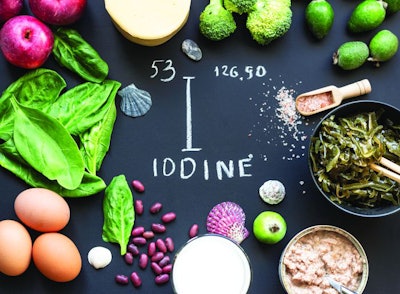
Iodine is a chemical element, the heaviest of the stable halogens, and is an essential nutrient. As a nutrient it functions as the key component of the thyroid hormones T3 (triiodothyronine) and T4 (thyroxine) which help to regulate metabolic rate and energy metabolism. The body can produce T3 and T4 from the amino acid tyrosine if phenylalanine and iodine are available. Thus, a dietary source of iodine is a must.
The concentration of iodine in most plant sources is similar to the concentration in the soil. These levels are usually small and insufficient to meet animal requirements. Animal-based proteins contain small amounts of iodine with slightly higher quantities in the rendered meals due to their bone-ash content. Regardless, they too are insufficient. Marine-based ingredients such as fish and mussels contain higher concentrations of iodine. Some of the seaweeds like kelp are rich sources of iodine, often high enough to support the entire diet. However, these “natural sources” can be variable in their concentration from lot to lot and location to location. Since they are not produced to a specific target level of iodine they can fluctuate between insufficient and toxic.