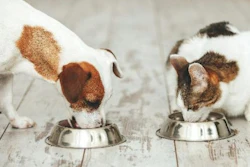
Pet owners may microwave their pets’ food without understanding the potential downsides or how to do it properly at all.
mister Big I iStock.com
The processes of making pet food vary greatly. Foods can be extruded, baked, dried, retorted, freeze-dried, refrigerated, powdered, frozen and even processed raw. Some advocates and brands state that their specific food process is far superior to other processes because of better nutrition, control of negative compounds being formed or even safety issues.
From a microbiological viewpoint, moisture matters. There are dried foods under 15% moisture (extruded/dry, baked, spray-dried, freeze-dried) and there are wet foods that are over 65% moisture (retort, sous vide, frozen, refrigerated, raw). There are many treats with levels up to 35% moisture, but the focus of this article is primarily foods.
Log in to view the full article
Subscribe to Magazine