Colors have an important influence on our emotions, moods, perceptions and how we communicate information. It is said we eat with our eyes as much as with our mouth. Blue might make you calm, and you might feel energized when you “see red.” Traffic lights and signs can communicate warnings through color. The rock band Chicago wrote “Colour my World” with a promise of love. We have been accustomed to multiple products with color for the pets we love.
FDA, HHS move to remove color additives from human foods
In April 2025, the U.S. government (Food and Drug Administration – FDA, Department of Health and Human Services – HHS) announced a joint venture to remove certain color additives from the human food supply. These petroleum-based additives were said to have impacts upon children leading to aggression, hyperactivity and developmental issues. It would not be uncommon for all of us to see a deeply colored tongue of a child after consuming colorful candies. Further, implications were suggested with cancer, immunity and allergy. Offering no nutritional value, the prudent question of safety was raised again from previous regulatory approvals and acceptance.
FDA defines a food additive as any substance intended to become a component of food or to otherwise affect its characteristics (which includes substances that improve nutritional value, maintain freshness, enhance taste or improve texture). Additives are subject to premarket review by FDA unless they are "Generally Recognized As Safe" (GRAS) under their intended conditions of use or otherwise exempted.
Artificial colors were the most reliable, cost-effective and consistent means to impart the desired color to a food product. As examples, well-recognized artificial colors are simplified common names for more definitive chemical identifications.
- Blue 2 is also called Indigo Carmine and is a synthetic color used in foods, drugs and cosmetics.
- Yellow 5 is also called Tetrazine (petroleum-based) and is a lemon yellow color that is allowed in cheeses, many foods and candies.
- Red 40 is also called Allura Red and is a salt-form deep red that is approved in a variety of foods, medications and hair dyes.
- Yellow 6 is also called Sunset Yellow (petroleum-based) and is a red-yellow color found in many foods and candies.
Bright white most often comes from titanium dioxide. It was recently suggested to be a carcinogen that can also lead to inflammation and neurological issues. The reactions to these accusations are mixed, but loud enough to reduce their use in food products. Caramel colors are rated in different classes and safety. Some are considered safe while others are implicated as carcinogens.
Alternatively, natural colors were extracts from fruits, vegetables or spices. Some approved food ingredients naturally contributed color to products. The yellow variation of corn protein meal swings from a light yellow to an orange hue. Malted barley brings a chocolate brown shade to kibbles and treats. Beta carotene adds yellow-orange hues. Various minerals bring white, yellow, brown, black and red shades to products.
Definitions are many, confusion is inevitable
Food companies and consumers have recognized these two options as Artificial Colors and Natural Colors. Many brands have added claims on packaging with “no added colors” or “no artificial colors.” Claims stating natural colors are less likely to be seen, although some have called out colors from vegetables, herbs and spices.
In 2014, FDA presented their position from 21 CFR 501.22 (a)(4) where the term “artificial color” or “artificial coloring” means any color additive as defined in 21 CFR 70.2, specifically stating that there are no “natural” color additives. All approved colors are in 21 CFR 73 and 74 where there will be no enforcement discretion. Colors used must be disclosed in descending predominance. Pet food packaging often stated “color added” without the specific source, which would be in violation of this disclosure. Most accept “Added Color” with all colors used in parentheses.
Further, they stated the definition for “Certified Colors” as synthetic used to impart intense, uniform color and to blend more easily for different hues. Each batch of these must be approved by CFSAN for composition and purity (21 CFR 80). It must be “certified.” This would include FD&C colors like blue 2, red 40, yellow 5, yellow 6 and others. However, in the same presentation they declared certified colors could be declared as coloring, artificial color, artificial color added or color added.
Alternatively, the FDA stated there were colors exempt from certification, including pigments derived from vegetables, plants, minerals, algae or animals. The approved list is in 21 CFR 73 and includes annatto extract (yellow), dehydrated beets (blue-red), caramel (yellow to tan), astaxanthin, etc.
Colorings in pet food
PF7 of the AAFCO Official Publication states, “an artificial color may be used in pet food or specialty pet food only if it has been shown to be harmless to pets.” It goes on to state, “the color listed by FDA shall be deemed satisfactory evidence.” AAFCO further states that something is not natural if “any chemically synthesized ingredients are present in the product.” Under another section (Color Additives Approved by FDA), it states “color additives intended for use in animal feed approved by FDA (CFSAN) are listed in 21 CFR 73 and 74.” Some colors found in these lists are still considered unapproved by AAFCO (e.g., spirulina and sodium copper chlorophyllin).
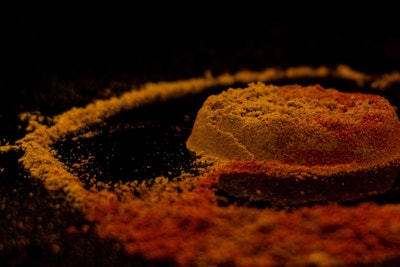
Some regulators have read these definitions as the end of the terms “artificial colors” and “natural colors,” and believe that package communication should be “no colors that need to be certified” or “we use natural sources of colors that do not need to be certified.” That certainly rolls off the tongue and makes zero sense to consumers. Thankfully, that interpretation has not taken root. However, in some areas the more correct statement has been made that “natural colors from vegetables, spices and herbs” is more descriptive to consumers and eliminates these regulatory definitions. Another regulatory document (21 CFR 501.22 (a) (2) addresses spices used as colors like paprika, turmeric, saffron, etc.
Brand identity in the pet food industry has been a mix of red and white, green and blue. If a product looked meaty, it needed shades of red. If it was white meat, there needed to be lightness to the product. If a product were to resemble a bone, all background colors must be overcome with white. Today we expect our dental chews to be green at different levels of intensity although chew bones of red, white and blue have also entered the pet channel. We have avoided gray canned foods caused by mineral reaction because the appearance is dull and appears spoiled.
It must be pointed out that food colors are not important for pets. There is no nutritive value added with artificial colors. The opposite could be true for colors from vegetables, herbs, spices and fruits. Cats often vomit hairballs. Artificial colors included in cat foods have stained many floors and carpets in these cases. Bright red, blue and green stools have led many consumers to call consumer affairs or veterinary clinics concerned with the health of their pet. Green urine has been noted with adsorbable blue colors in some pets and children.
Use of colorings in other countries
While FDA and HHS now have their eyes on these artificial colors, many countries have already excluded them from their food system. Naturally colored options are available. There are natural colors and ingredients that impart color available for all foods, treats and chews. Switching from artificial to natural colors in a food product is not an easy choice. Natural colors do not withstand heat, light and acidity as well as artificial colors. They also do not bring the same vibrant look of artificial colors. Natural colors must be used at higher percentages, reflecting higher costs. The choice often is to eliminate colors.
While some artificial colors are implied to be negative to health, no specific data exists in pets. There are plenty of searchable opinions stating concerns as “facts.” It might be a prudent preference to choose your pet products based upon the artificial colors used or not used, but certainly that is not the only choice in food products. Nutritional composition, fortification, balance, quality, sourcing and consistency are key decision points.