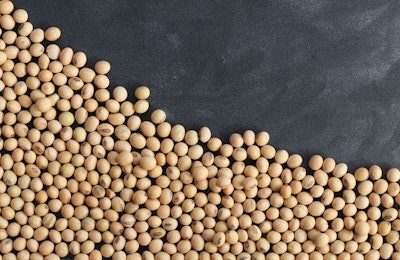
Soybeans are much maligned and vilified in the pet aisle. Claims of “No Corn, No Wheat, No Soy” are common. Yet we have been feeding soy as soybean mill feed or millrun, soybean meal, soy protein concentrate or isolate, and soy hulls for as long as commercial pet food has been around. These ingredients have served a valuable purpose with few issues. What we have not been using in pet foods are whole soybeans. Much like the “whole grains” movement in human foods, whole soybeans might be an interesting ingredient to consider.
Globally, the U.S. is the leading producer of soybeans with Brazil and Argentina a close second and third. In 2018, U.S. farmers grew over 123 million metric tons (USDA-NASS, February 2019). Whole soybeans are rich in protein (35–40%) and fat (22–25%) with relatively modest levels of ash (5%) and crude fiber (4%). The protein is shy on methionine but has plentiful lysine, and the fat is a meaningful source of the essential linoleic acid. So it serves as a great complement to the cereals.