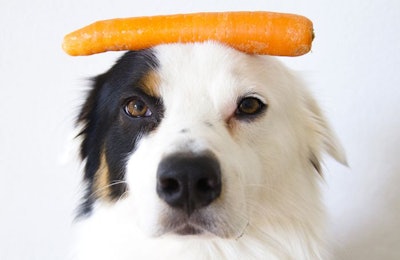
Carrots are found in a wide array of products including dry extruded, canned and baked foods, as well as treats. They are added mostly as a minor accent or feature. There are also many pet enthusiasts that encourage the use of carrots — presumably peeled raw carrots — as a low-calorie, tasty treat for dogs. This is mostly a “dog matter” with very few, if any, items noted for cats. Interestingly, criticism of carrots is almost nonexistent. Yet given their current status as a very low-inclusion visual highlight or an incidental treat, perhaps there is value to adding more carrots to pet diets. A deeper look into their nutritional properties, handling characteristics and availability might be merited, especially as we continue collectively to look for more alternative ingredients to fill the void in dwindling options.
Carrots can be found in many forms for use in pet foods. They can be whole-fresh, IQF frozen, dried pieces or powders, and as secondary products such as dried carrot pomace and even carrot puree. The composition of each varies based on the processing method. But as a point of reference, whole raw carrots are 85% moisture with the dry solids composed of roughly 8% crude protein, 2% crude fat and 8% ash (USDA NDB for Standard Reference).