Food safety in pet food manufacturing has evolved beyond regulatory checkboxes into a strategic business imperative centered on trust, transparency and proactive risk management, according to Jennifer Lott, technical development director with SGS North America.
Lott will present "Auditing the Future – Digitalization and Data Analytics in Pet Food Quality Assurance" on Tuesday, April 28, 2026, at Petfood Forum in Kansas City, Missouri, U.S.
"Food safety in pet food is no longer just about compliance; it is about trust, transparency and proactive risk management across the entire supply chain," Lott said.
Shifting landscape demands new approaches
The pet food industry faces increasing complexity as ingredient sourcing becomes more global, formulations incorporate novel proteins and functional ingredients, and consumers view pets as family members with corresponding expectations for product safety and quality.
"Regulatory expectations are tightening, but regulations alone are not enough to prevent emerging risks such as adulteration, contamination or supply chain disruptions," Lott said. "Recalls travel fast and damage brands deeply — pet owners are less forgiving when animal health is at stake, and trust once lost is hard to regain."
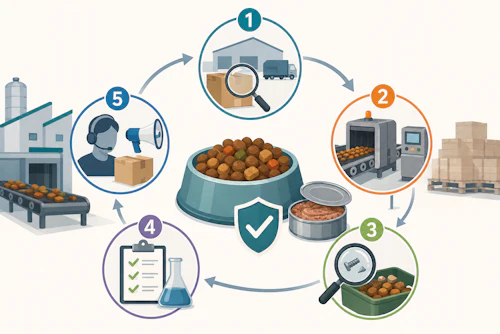
She emphasized that preventive, data-driven approaches including risk assessments, supplier verification, testing strategies and AI-enabled monitoring have become essential rather than optional for pet food manufacturers.
From compliance to competitive advantage
The shift reframes food safety from a cost center into a strategic differentiator, according to Lott. Companies that embed food safety and authenticity into their culture and decision-making are better positioned to protect animal health, meet evolving expectations and maintain brand credibility.
Pet food manufacturers must move beyond compliance and recalls to preventive, risk-based food safety systems, strengthen supplier oversight and traceability, and leverage science, data and emerging technologies to detect issues earlier and respond faster, she said.
"Food safety issues not only impact animals, but also erode consumer trust and long-term market stability, and increase regulatory scrutiny," Lott said.
Technology driving transformation
Lott outlined several developments shaping the next stage of food safety in pet food:
- Real-time monitoring of suppliers, production environments and logistics using integrated data platforms will enable earlier risk identification. Advanced analytics and AI-enabled tools will support predictive risk modeling and anomaly detection, helping manufacturers prioritize resources where risk is highest.
- Enhanced traceability tools, including digital chain-of-custody systems, will verify ingredient origin, authenticity and handling conditions. As novel and high-value ingredients increase, robust food fraud vulnerability assessments and verification programs will become more critical, Lott noted.
"The future of the pet food industry will be shaped by how effectively organizations embrace proactive risk management, transparency and innovation to protect animal health and earn lasting consumer confidence," Lott said.
She predicted food safety will become a competitive differentiator within five years, with brands demonstrating strong preventive controls and transparency gaining consumer trust and loyalty. Regulatory oversight will become more risk-based and data-informed, while supply chains will gain better visibility into risks related to geography, climate and geopolitical pressures.
"Trust and accountability will define market leaders, as pet owners increasingly choose brands that can prove, not just claim, the safety and integrity of their products," Lott said.
To view the full Petfood Forum 2026 agenda, click here.
Petfood Forum and Petfood Essentials show dates are April 27-29, 2026, in Kansas City, Missouri, U.S. To register or stay informed on the latest event developments, go to PetfoodForumEvents.com.