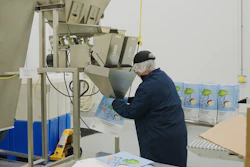
During a recent Ask the Petfood Pro chat, Todd Baker, vice president of innovation, and Justin McRae, pet food industry manager, both with Horizon Systems, walked through practical ways to evaluate and optimize existing ingredient handling and batching systems, as well as improve plant performance without major facility changes.
The conversation focused on the front end of the plant, where Baker and McRae said efficiency gains, ingredient savings and added flexibility are often left on the table. They covered how to reassess aging systems, recover expensive ingredients, streamline changeovers, and use automation and AI to improve batching reliability as formulations grow more specialized.
Here are 10 takeaways from "Batching smarter: Practical ways to reduce waste and improve efficiency:"
1. The front end of the plant deserves more scrutiny because it drives more recalls than contamination does. Baker said attention tends to concentrate on higher-risk post-extrusion steps such as drying, coating and packaging, and that front-end batching gets ignored once product ships and tests clean.
"There's a higher number of recalls that are ingredient- and inclusion-related than there are for things like Salmonella or bacterial contamination or foreign material," he said, urging manufacturers to focus on the batching process.
2. Reevaluate the system whenever ingredients or production requirements change. The first step is understanding what the existing batching system was designed to do, McRae said; if it still matches current ingredients and production needs, it is probably fine.
Baker added that ingredient swaps frequently happen without a formal change process. "It's quite common that we get inquiries on systems where people have changed ingredients without going through a good management-of-change process," he said, pointing to ingredients such as tapioca starch that can require equipment to be configured differently.
3. Look for low-hanging efficiency in the existing system before pursuing capital projects. McRae said knowing the ingredients being handled — their flow characteristics, batching times and sequencing — lets manufacturers optimize scaling and accuracy.
"You might be able to get some additional capacity by eliminating some bottlenecks and improving coordination between pickup points and destinations," he said.
4. Ask the operators on the floor what workarounds they've built. Baker said evaluations should reach the people interfacing with the equipment every day.
"There are a lot of unknown workarounds that operators have found to get around issues with system changes or maintenance," he said. "Automating those fixes can produce significant gains."
5. Switchover and clean-out time is a hidden throughput bottleneck. Equipment performance when it is not feeding or batching matters as much as when it is, Baker said, pointing to how long it takes to stage new formulations, change over ingredients and clean equipment.
"That overall switchover time can be a big gain on efficiency if you could reduce a lot of it," he said. McRae added that easy equipment accessibility makes systems simpler to maintain.
6. Legacy systems weren't designed to reclaim ingredients or track reclaimed lots. Many older systems assumed a single dedicated ingredient per piece of equipment, Baker said, leaving no path to recover leftover material at the end of a campaign, a growing problem as pet food ingredients become more expensive and specialized.
Reclaiming material also raises a controls challenge, he said: "How do you do lot tracking on something that was already staged into a potential lot?" Operations must be able to document that an ingredient was reclaimed and returned to inventory without mixing lots.
7. Test and characterize novel ingredients, and control the environment around them, before production. "Make sure you know the characteristics of that product," McRae said, recommending small-scale trials in a pilot plant or test lab and attention to atmosphere and moisture, which can affect how material moves through a system.
Baker added that many incoming ingredients are fine, spray-dried powders that "want to become a slurry again" and will pull moisture from the air, so manufacturers should understand a material's behavior, and condition the space for temperature and humidity, before dropping it into an unconditioned process.
8. Verify the real maintenance state and undocumented modifications of equipment you plan to reuse. Baker said evaluations of existing conveying systems often turn up changes no one is fully aware of.
"Speeds have been changed, air locks or blower airflows have been adjusted over time, so manufacturers should confirm whether the equipment's performance and maintenance condition actually match what they believe," he said.
9. Smart discharge and point-source dust collection recover costly ingredients. McRae said every point where an ingredient enters the system should have a reliable way to discharge it without loss, citing screw feeders with built-in clean-out ports and easy-clean air locks.
Baker added that legacy minor and micro feeding clusters often route all hoppers to a central dust collector, mixing and losing expensive material; he is seeing more demand for individual, point-source dust collection that pulses material back into the same hopper.
10. AI, added sensors and more weigh points turn plant data into preventive insight. McRae said AI can serve as a redundant check that ingredients are staged correctly and can alert operators to rising pressure or falling airflow before a problem escalates.
Baker described control systems that can generate downtime reports and pinpoint likely causes without manual data sifting. Both emphasized building the data foundation first: Baker said falling sensor costs make it worth instrumenting anything that could carry a sensor, and adding weigh points wherever an ingredient is moved, "because someday you'd like that data."
Both McRae and Baker urged manufacturers to weigh equipment decisions on operational fit rather than lowest price. Baker said spending 10% to 20% more on a piece of equipment can yield 30% to 40% in efficiency gains, while McRae said the right specification depends on a plant's tier and customer requirements.
Looking ahead, McRae predicted that more synthetic and novel ingredients will push manufacturers toward modular designs. Baker noted batching systems are more important now than ever.
"The growing use of functional ingredients and rising label-claim scrutiny, fueled by the humanization of pets, makes your batching systems even more important to what's going on in your facility," he concluded.
Visit Petfood Forum's Ask the Petfood Pro site to view a recording of this chat or see upcoming chats.