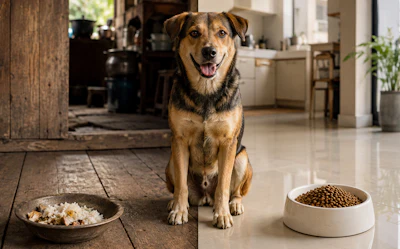
Regional market monitors indicate that the percentage of pets fed solely on table scraps across Southeast Asian (SEA) nations has dropped from 60% 10 years ago to roughly 35% to 45% in 2025.
The realization that highly salted, spiced human food is toxic to dogs and cats has nudged even lower-income households to switch table scraps with commercial food to protect their pets' health.
While the so-called "prepared food gap" (pets eating leftovers vs. commercial food) still exists, recent tracking data from consumer research groups and regional pet food market associations shows a massive decline in table-scrap feeding across SEA countries.
Country-by-country declines
In the Philippines, the number of dogs and cats fed on table scraps has officially dropped below 45%, based on a report from the USDA Foreign Agricultural Service. This finding is supported by a 2024 Kantar survey that saw a massive surge in demand for commercial economy dry foods in the country as pet ownership hit 94% of total households. In Metro Manila and major urban centers, table scrap use has mostly vanished, sitting below 20%, though it remains a common practice in rural areas.
In Thailand, market researchers noted the gap shrinking even faster, now below 30%, and table scrap feeding is almost single-digits in Bangkok, according to Euromonitor. As the world's No. 2 global exporter of manufactured pet food, Thailand has embraced pet humanization to the hilt, with Thai consumers substituting table scraps with functional treats and premium, breed-specific kibble.
In Indonesia, table scrap feeding is now at 40%. As a Muslim country, Indonesia highly favors cats as pets, and feeding them commercial cat food is favored especially by those who live in high-density urban apartments for sanitary reasons. Online cat food sales in Indonesia saw massive double-digit growth recently, directly cutting into the reliance on leftover food.
Among Vietnamese households with pets, about 35% still give leftovers, but this is expected to decrease further as younger pet owners opt for commercial pet food.
Market analysts attribute the rapid drop in leftover feeding in SEA over the last few years to three main structural shifts: from pets seen as protector of property (against robbers and rodents) to "fur babies" that give joy and emotional support; from pricey pet food imports to more affordable dry kibble that can be even cheaper when bought online; and pet owners transitioning from subsistence to nutritional pet care.
Euromonitor said efforts by both local and international companies to produce affordable lines of pet food helped working-class families in the region consider buying a shelf-stable bag of kibble as less wasteful and more convenient than cooking extra rice and meat scraps.
Globally, daily table scrap feeding dropped from 22% to 19%, according to Euromonitor's Voice of the Consumer Survey, which added that what's happening in SEA reflects a massive catch-up to Western standards.