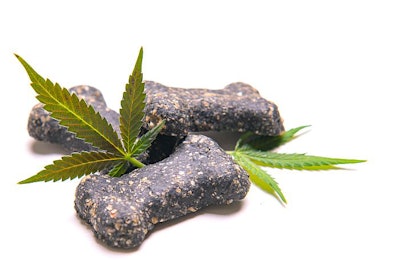
CBD in the pet space continues to evolve in terms of popularity, but regulatory concerns make creating, marketing and selling pet products with CBD in them challenging in terms of legality and consumer opinion.
“In this area, the pet segment is in the same boat as the rest of the CBD sector,” says Greg Dicum, co-founder and CEO of CWI Consulting Services, which provides cannabidiol consulting and product development. “CBD from hemp has been definitively legal in the U.S. for two full years — since the end of 2018 — and yet regulators have been slow to set the ground rules for the space. The worst offender is the U.S. Food and Drug Administration (FDA), which currently holds that CBD is not an allowed ingredient in food, drink or pet products.”
In December 2018, the 2018 Farm Bill was signed into law. It removed hemp and derivatives of cannabis with very low concentrations of THC from the definition of marijuana in the Controlled Substances Act, while also preserving FDA’s authority over hemp products. Three hemp seed products went through the Generally Recognized As Safe (GRAS) confirmation process in late 2018 — hulled hemp seed, hemp seed protein powder and hemp seed oil — and can legally be used in the U.S. food supply. None of these GRAS items contain CBD or THC, however, and as of yet FDA has not approved CBD for use in any pet product.
CBD in the pet space continues to evolve in terms of popularity, but regulatory concerns make creating, marketing and selling pet products with CBD in them challenging in terms of legality and consumer opinion.
CBD legality in the U.S.
“In this area, the pet segment is in the same boat as the rest of the CBD sector,” says Greg Dicum, co-founder and CEO of CWI Consulting Services, which provides cannabidiol consulting and product development. “CBD from hemp has been definitively legal in the U.S. for two full years — since the end of 2018 — and yet regulators have been slow to set the ground rules for the space. The worst offender is the U.S. Food and Drug Administration (FDA), which currently holds that CBD is not an allowed ingredient in food, drink or pet products.”
In December 2018, the 2018 Farm Bill was signed into law. It removed hemp and derivatives of cannabis with very low concentrations of THC from the definition of marijuana in the Controlled Substances Act, while also preserving FDA’s authority over hemp products. Three hemp seed products went through the Generally Recognized As Safe (GRAS) confirmation process in late 2018 — hulled hemp seed, hemp seed protein powder and hemp seed oil — and can legally be used in the U.S. food supply. None of these GRAS items contain CBD or THC, however, and as of yet FDA has not approved CBD for use in any pet product.
“Obviously many people — pet owners and brands alike — are ignoring this legal grey area, but the biggest players with the most to lose are hanging back,” says Dicum. “Just as in the consumer goods space, major pet brands are looking closely at CBD. Some are formulating products and are ready to launch the minute the rules are in place.”
Challenges to CBD legality and FDA findings
When this will happen is not at all clear. The FDA has sent out many warning letters to companies selling unapproved CBD drug products, particularly those that claim to treat or prevent serious diseases. The agency has also done studies that show the amount of CBD claimed on a package and the actual amounts contained in products being sold often vary wildly, including in pet products.
“While there is a lot of talk about decriminalizing marijuana nationally, that is a different issue from hemp-based CBD,” says Dicum. “There are a number of bills circulating in Congress that would clarify the situation, but again it's anyone's guess when any of them will actually come to a vote. All this uncertainty makes it really hard to plan. As long as CBD exists in a grey area, many service providers, including banks, credit card processors, insurers, advertising platforms, online stores and others are refusing to work with CBD companies. Worst of all for pet CBD, this grey area means veterinarians are risking their licenses if they recommend CBD, even though many sing its praises off the record. This follow-on effect of unclear regulation isn't helping anyone, least of all the people who are trying to provide safe, effective plant medicine to their furry loved ones.”
Read the companion article, "Still growing: CBD trends in the pet space,” published in the December 2020 issue of Petfood Industry magazine,.