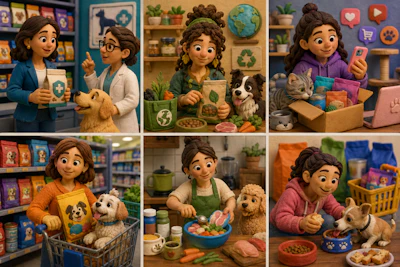
Six distinct pet owner personas with different motivations and shopping habits drive dog and cat food purchases, from health-focused expert followers to budget-conscious feeders. Successful pet food brands tailor their marketing messages to emphasize the attributes most relevant to each persona rather than using one-size-fits-all messaging.
- Vera (39%) prioritizes health and nutrition, relies on expert guidance, and shops specialty pet stores
- Erin (7%) is eco-conscious, researches ingredients, and prefers natural, sustainable products
- Cecilia (9%) conducts online research, seeks premium quality at mainstream prices, and shops digitally
- Renée (27%) values convenience and taste, shops during grocery trips, and remains loyal to familiar brands
- Helena (16%) prepares homemade meals, supplements with commercial products, and buys dietary supplements frequently
- Tess (3%) is budget-focused, less concerned with nutrition details, and purchases across economy and mid-priced brands
Understanding why pet owners choose one product over another may be as important as developing the product itself. However, pet food purchasers’ motivations are many, and there is no such thing as a "typical" pet owner, Anderson Conejo, Latin America marketing manager for Symrise Pet Food, said during his presentation at Foro Mascotas in Guadalajara, Mexico on July 16.
Nevertheless, those diverse pet owners can be condensed into models. Conejo presented six distinct consumer personas with different motivations, shopping habits and decision-making processes. A specific pet owner may not fall exactly into one persona or another, instead they reflect archetypal customers.
The personas emerged from Symrise's global consumer research conducted through its proprietary Loop consumer insights platform across the United States, Canada, Mexico, Brazil, the United Kingdom and France.
Regardless of whether the purchases are made actively after research or passively out of convenience, they tend to fall into two categories:
· purchasing decisions are driven by specific needs such as health and nutrition or
· general needs such as taste and price.
These are the six personas, along with their percentage of Mexican pet owners in the survey.
1. Vera: The expert follower (39%)
Vera represents the largest consumer segment in Mexico, accounting for 39% of surveyed pet owners. She prioritizes health and nutrition but prefers guidance from trusted experts rather than conducting extensive research herself.
According to Conejo, this consumer relies heavily on veterinarians, retail specialists or other knowledgeable advisors before purchasing a product. She typically shops in specialty pet stores and is willing to pay more for premium products if the added value is clearly justified.
For brands, success with Vera depends on building credibility. Marketing should emphasize professional recommendations, product specifications and health benefits. Because she is influenced by expert opinions, manufacturers also need to monitor brand reputation and address negative commentary.
Promotional samples and recommendations from third parties are effective tools for reaching this segment, while price increases must be carefully explained and supported by clear product benefits.
2. Erin: The eco-conscious nutrition seeker (7%)
Erin is an actively engaged consumer motivated by health, nutrition and natural ingredients. Although she represents just 7% of Mexican consumers, Conejo described her as one of the industry's most influential future-oriented segments.
She carefully researches products, looks for natural ingredients, real meat and ingredient transparency, and is receptive to alternative proteins and new processing technologies. Erin also values sustainability and holistic wellness, considering both physical and emotional well-being for her pet.
Unlike consumers who trust large established brands, Erin often questions mass production and prefers companies that tell authentic sourcing stories.
To connect with this group, Conejo recommended investing in content marketing that explains ingredient sourcing, manufacturing practices and environmental initiatives. Claims highlighting the absence of artificial preservatives or controversial ingredients also resonate strongly with these consumers.
3. Cecilia: The value-conscious health seeker (9%)
Cecilia represents younger Millennials and Generation Z consumers. She makes highly involved purchasing decisions, conducting extensive online research before selecting products.
This consumer seeks premium health benefits and high-quality ingredients but also looks for value. According to Conejo, Cecilia often believes she has found a premium product at a mainstream price, making her highly receptive to emerging brands.
She shops primarily online, follows social media and enjoys introducing variety into her pet's routine through treats, wet food and new products. She is also among the strongest purchasers of cat treats and wet food because she enjoys creating new experiences for her pet.
Brands targeting Cecilia should emphasize digital marketing, loyalty programs, mobile applications and personalized communication. She also responds well to messaging around sustainability and innovation.
4. Renée: The routine shopper (27%)
Renée accounts for 27% of Mexican consumers and represents the convenience-driven shopper.
Unlike the previous personas, Renée places greater emphasis on simplicity, taste and price than on researching health claims. She typically purchases pet food while shopping for household groceries and remains highly loyal to familiar brands.
Because convenience is her priority, marketing messages should be straightforward and easy to understand. Strong shelf visibility, recognizable branding and in-store promotions are more important than lengthy technical explanations.
Conejo noted that emotional connections also play an important role with this consumer, who views her pet as part of the family but prefers simple purchasing decisions over extensive product comparisons.
5. Helena: The home cook (16%)
Helena represents consumers who prepare homemade meals for their pets while supplementing them with commercial products. She accounts for 16% of Mexican pet owners.
Health and nutrition are her primary motivations, and she has confidence in her own ability to evaluate ingredients. She values real meat, high protein levels, natural ingredients and the absence of controversial ingredients. She is also the largest consumer of dietary supplements among the six personas.
Although she purchases processed pet food less frequently, Helena remains interested in new technologies that can complement homemade feeding.
For manufacturers, indirect messaging focused on convenience, fresh ingredients, food safety and nutritional support may be more effective than attempting to replace home-prepared meals entirely.
6. Tess: The budget-focused feeder (3%)
The smallest segment, representing 3% of Mexican consumers, is motivated primarily by affordability and palatability.
According to the presentation, Tess believes feeding pets is relatively straightforward and is less concerned with detailed ingredient lists or nutritional composition than other consumer groups. She feeds a wide variety of foods, including dry food, wet food, treats, homemade foods and table scraps.
This consumer purchases across economy and mid-priced brands and is among the least willing to pay a premium for specialized nutrition.
Conejo suggested brands focus on mass retail channels, online shopping, promotions, product variety and enjoyable feeding experiences when targeting this segment. Loyalty programs and prominent retail displays can also help maintain engagement.
Conejo concluded that brands should avoid assuming one marketing message fits every consumer.
Manufacturers can adapt how they communicate the same product in different markets by emphasizing the attributes most relevant to each persona, whether that is veterinary endorsement, natural ingredients, convenience, innovation, affordability or nutrition.
"There is no standard consumer," Conejo said. "We can show the same product differently by highlighting the points that matter most to each pet owner."