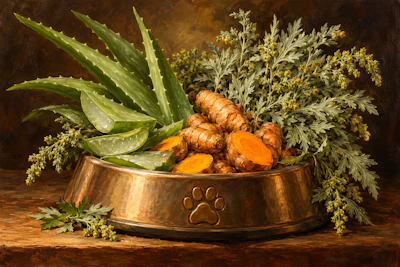
A combination of aloe vera, sweet wormwood and turmeric was associated with increased abundance of several bacteria involved in short-chain fatty acid production and decreased abundance of certain opportunistic microorganisms in dogs, according to research results published in the journal Veterinary Sciences.
Researchers from Biotech Tricopharming Research and Sequentia Biotech in Barcelona, Spain, evaluated the effects of three botanical ingredients on the gut microbiomes of 18 healthy dogs over 30 days.
The study included nine dogs receiving a daily combination of Aloe vera, Artemisia annua (sweet wormwood) and Curcuma longa (turmeric), while nine control dogs received a placebo containing cellulose.
The experimental formulation contained 25 mg of aloe vera, 200 mg of sweet wormwood and 500 mg of turmeric per 10 kg of body weight, along with 50 mg of microcrystalline cellulose. The ingredients were administered in capsules.
Researchers collected fecal samples at the beginning and end of the study and used shotgun metagenomic sequencing to identify microorganisms and assess their potential metabolic functions.
Bacteria associated with fatty acid production increased
After 30 days, dogs receiving the botanical supplement showed significantly higher abundance of several bacterial taxa associated with fermentation and short-chain fatty acid production.
These included Megasphaera elsdenii, Butyricimonas virosa, Blautia species, Bacteroides species and Phascolarctobacterium succinatutens.
These microorganisms are associated with the production or metabolism of short-chain fatty acids, including butyrate, propionate and acetate. These compounds contribute to intestinal energy metabolism, barrier function and immune regulation.
The supplemented group also showed increased abundance of Amedibacterium intestinale and Alistipes onderdonkii, although the researchers noted that the roles of these bacteria in canine intestinal health remain poorly understood.
Conversely, three bacterial groups associated with intestinal imbalance or opportunistic infections were less abundant in the supplemented dogs:
- Enterocloster bolteae, previously associated with intestinal dysbiosis in some contexts.
- Anaerobiospirillum species, which can occur in the canine intestinal microbiome but have also been associated with opportunistic infections.
- Stenotrophomonas maltophilia, an opportunistic bacterium previously identified in dogs with urinary tract infections and respiratory disease.
Researchers also observed increased abundance of Myoviridae-like bacteriophages, viruses that infect bacteria. However, the study did not establish whether these viruses contributed to the changes in bacterial populations.
Overall microbial diversity did not change significantly
Although individual bacterial populations differed between groups, researchers found no statistically significant differences in overall microbial diversity after supplementation.
Median observed species richness was 1,132 in the experimental group compared with 859 in the control group. However, the difference was not statistically significant.
Another measure of estimated species richness, Chao1, was also higher in supplemented dogs, at 1,619 compared with 1,281 in controls.
Analysis of overall microbial community composition likewise found no significant difference between groups.
The researchers interpreted these results as evidence of selective differences in microbial populations rather than broad changes in intestinal microbiome composition.
Researchers call for larger studies
The researchers identified several limitations, including the small sample size, differences in dogs' diets and the absence of formal randomization.
Although samples were collected before and after treatment, the primary statistical analysis compared the experimental and control groups at Day 30 rather than measuring changes within individual dogs.
Because all three botanical ingredients were administered together, the study could not determine their individual contributions or establish whether they acted synergistically.
The researchers also did not measure short-chain fatty acid concentrations or clinical health outcomes. Consequently, the observed microbial differences cannot establish improvements in digestive health.
Biotech Tricopharming Research, which employed several study authors, develops and commercializes botanical products for animal health, including a product containing the three ingredients evaluated. Co-author Luis Matías-Hernández serves as the company's CEO. The research received Spanish public research funding.