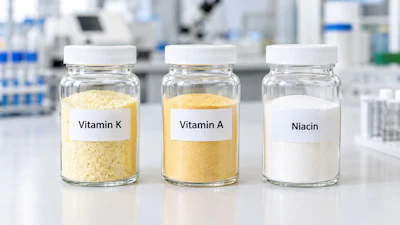
IFEEDER and Kemiex released a primer mapping upstream supply chain risks for vitamins and amino acids used in animal feed, revealing how shared chemical inputs and infrastructure create interdependencies that could disrupt ingredient availability across the feed and pet food industries.
- IFEEDER's new primer examines precursor materials and intermediates required to produce vitamins and amino acids for animal feed and pet food
- Supply chains share chemical inputs and infrastructure across manufacturers, creating vulnerabilities where disruptions in one area affect multiple producers and products
- Niacin (vitamin B3) production depends on beta-picoline, a byproduct of pyridine that also serves herbicide and pharmaceutical industries, making availability subject to external market changes
- Supply chain vulnerabilities vary by product based on upstream complexity, production routes, and availability of alternative chemical inputs
- The report highlights practical limits to transparency, including proprietary processes, supplier confidentiality, and competition law restrictions
The Institute for Feed Education and Research (IFEEDER), in collaboration with market intelligence provider Kemiex, has released "Feed Additives: A Primer on Precursors," an introductory assessment of the upstream supply chains behind vitamins and amino acids used in animal feed and pet food.
The review builds on IFEEDER's previous research into U.S. reliance on imported vitamins and amino acids. It looks beyond finished feed additives to the precursor materials, intermediates and other inputs required to produce them.
"The precursors assessment looks upstream of the vitamin and amino acid supply chain, giving the feed and pet food industries a more complete picture of the complexity that could affect ingredient availability," said Lara Moody, IFEEDER executive director. "Understanding the interconnected chemical and industrial supply chain for vitamins and amino acids equips industry leaders with the knowledge necessary to make decisions about the design, opportunities, risks and resilience of essential supply chains."
Interconnected supply chains
According to the report, supply chains for essential feed, food and health additives have changed in recent years, with COVID-19, geopolitical and trade dynamics, drug shortages and shifts in market concentration drawing attention to their structure.
Shared chemical inputs and infrastructure can improve manufacturing efficiency, but they can also create interdependencies in which a disruption affecting one precursor, facility or production pathway could affect multiple manufacturers and finished products.
The report uses niacin, or vitamin B3, as an example. Niacin is an essential nutrient involved in animal nutrition and energy metabolism, supporting animal health, feed efficiency and productivity. It is produced through chemical synthesis that relies on beta-picoline, a key precursor that is a byproduct of pyridine production. The pyridine value chain is also connected to other chemical markets, including herbicide and pharmaceutical production. As a result, changes in those markets can affect the upstream inputs needed for niacin, potentially influencing production costs and availability.
The assessment found that supply chain vulnerabilities vary by product. Risk can depend on the complexity of a product's upstream supply chain, its production route and whether alternative chemical inputs or manufacturing pathways exist. Integrated industrial parks, where manufacturers may share inputs, utilities and infrastructure, can provide efficiencies but may also create dependencies across multiple products and producers.
"Understanding nutrition and health supply chains requires looking beyond where a finished vitamin or amino acid is produced to the inputs and processes that make that production possible," said Stefan Schmidinger, partner and head of market research at Kemiex.
"Our evaluation shows how interconnected these supply chains can be, with critical precursors, intermediates and infrastructure often shared across manufacturers, products and even industries," Schmidinger explained. "Mapping those connections provides greater visibility into where opportunities and vulnerabilities may exist. Kemiex presents this primer for IFEEDER as a basis for further discussion and research."
The report also notes practical limits to supply chain transparency, including proprietary manufacturing processes, supplier confidentiality and competition law.
"Feed Additives: A Primer on Precursors" is available at ifeeder.org. It is part of IFEEDER's ongoing research on the resilience of the U.S. animal food supply chain.