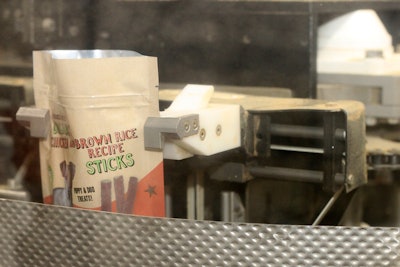
Driven by consumer demand and evolving legislation, the pet industry is embracing sustainable packaging alternatives. "Reduce, reuse, recycle" is top of mind for both consumers and pet food producers when it comes to packaging.
Packaging protects the pet food’s shelf life and taste characteristics. When planning pet food packaging materials, being aware of the lifecycle and circular recovery path of those materials can help pet food producers and buyers make environmentally sound choices while avoiding "greenwashing" – false or misleading claims about a product's positive environmental impact.
Greenwashing can convey a false impression or provide misleading information about the environmental benefits of a product, service or company. This can involve exaggerating environmental claims, using ambiguous language, or emphasizing minor environmental achievements while ignoring significant negative impacts. The goal of greenwashing is often to attract environmentally conscious consumers without making meaningful changes to reduce environmental harm.
Consumers are increasingly environmentally conscious
Mary Jo Werlein, senior packaging manager - sustainability with Adept Group, a packing and engineering consulting company, will speak with Katie Ireland, packaging engineer with CRB, during Petfood Forum in Kansas City this spring on the topic of pet food packaging sustainability and how to avoid greenwashing claims on your pet food packaging.
When it comes to packaging pet food, sustainability needs to be top of mind for these three reasons, said Werlein.
- Environmental impact: Packaging in the pet food industry contributes to a significant portion of waste. Adopting sustainable packaging helps reduce the industry's environmental footprint by minimizing plastic use, promoting recyclability, and decreasing overall waste generation.
- Consumer awareness: Modern consumers are increasingly environmentally conscious. Sustainable packaging aligns with the values of pet owners who seek ecofriendly products. This can enhance brand image, attract a broader customer base, and foster loyalty among environmentally conscious consumers.
- Regulatory compliance: As governments and regulatory bodies focus more on environmental regulations, adopting sustainable packaging can help the pet food industry stay compliant with evolving standards. This proactive approach minimizes the risk of legal challenges and ensures long-term viability.
Werlein and Ireland said having a plan can help avoid greenwashing claims on your packaging. Things like backing up your environmental claims with evidence and data and avoiding exaggerated or misleading claims go a long way in transparently communicating the environmental attributes of your pet food product.
What’s next for pet food packaging?
A shift toward recyclable monomaterial packaging, post-consumer recycled material (PCR) and renewable resin continue to gain momentum. Compostable packaging options are also expanding.
“The world is good at recycling paper, glass and metals,” said Ireland. “The circularity development of plastics outside of high-density polyethylene (HDPE) and polypropylene (PP) are the next big change.”
Werlein and Ireland shared this list of what’s next for pet food packaging:
- Biodegradable materials: Advances in the development of truly biodegradable materials that break down harmlessly in various environments could revolutionize packaging sustainability. Research in this area aims to create alternatives to traditional plastics, reducing the persistence of packaging waste.
- Circular economy models: The adoption of circular economy principles involves designing packaging that can be easily recycled, reused or repurposed. Future developments may focus on creating packaging systems that seamlessly integrate into circular supply chains, minimizing the need for new raw materials.
- Smart packaging: Incorporating technology into packaging to enhance sustainability is a promising area of development. Smart packaging may include sensors to monitor product freshness, reducing food waste, or indicators that help consumers make informed choices about recycling or disposal.
- Alternative sourcing: Research into alternative sourcing for packaging materials, such as plant-based or renewable resources, is ongoing. The hope is to find materials that are not only sustainable but also economically viable and scalable for large-scale production.
- Reducing packaging weight and volume: Innovations in materials and design may lead to packaging that is lightweight yet robust, reducing the overall environmental impact associated with transportation and storage. This can contribute to energy savings and lower carbon footprints.
- Innovative recycling technologies: Advancements in recycling technologies, including chemical recycling and improved sorting processes, can enhance the efficiency of recycling systems. This could enable the recycling of a broader range of materials and reduce the amount of packaging ending up in landfills.
Consumer education, awareness necessary
Future developments in pet food packaging will also involve increased focus on educating consumers about sustainable packaging choices and encouraging behavior that supports recycling and responsible disposal. Enhanced consumer awareness can drive demand for sustainable packaging solutions.
“The chasing arrows around a number does not indicate that it is recyclable, it just clarifies the type of plastic resin used,” Ireland explained. “Being able to separate the resins and reuse them as primary barriers again will be important to the lifecycle of plastics that are oil-based and the impact to our environment."
Educating consumers to be able to identify the right materials for function, use/reuse/recycle for products across all industries is very important for sustainable living now and for our future generations, added Ireland.
“I hope there is more research done to understand how and what we make impacts us as humans and our environment so we can help eliminate the sources and causes of detrimental effects to our bodies, our environment, animals and ecosystem,” she concluded.
Katie Ireland and Mary Jo Werlein will speak at Petfood Forum on Tuesday, April 30, in Kansas City. Their session, Identifying and avoiding greenwashing in packaging sustainability, will offer tips on how to plan and apply packaging sustainability to your pet food products while avoiding greenwashing to succeed in today’s market. For more information, visit petfoodforumevents.com.