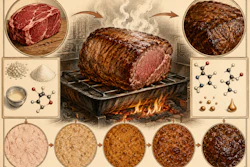
Retorted wet cat foods contain substantially higher concentrations of advanced glycation end-products than mildly cooked or extruded dry diets, with processing time, formulation, and food matrix all playing important roles in AGE formation rather than temperature alone.
- Retorted wet diets had the highest AGE concentrations, while mildly cooked fresh and extruded dry diets were generally similar despite different manufacturing processes
- Processing time matters more than peak temperature: extruded diets reach high temperatures briefly (seconds), while retorted wet diets undergo prolonged heat treatment (20-120 minutes)
- Formulation and food matrix significantly influence AGE formation; dry diets with lower protein and fat content accumulated fewer AGEs than mildly cooked diets
- No single factor predicts AGE levels; ingredient selection, nutrient composition, additives, and processing conditions must be considered together
- Reactive lysine concentrations differed substantially among diet formats, meaning similar ratios don't guarantee equivalent nutritional value across different food types
Retorted wet cat foods contained substantially higher advanced glycation end-product (AGE) concentrations than mildly cooked or extruded dry diets, according to a study published in the Journal of Animal Science. Researchers said processing time, formulation and the food matrix all influence AGE formation.
To better understand the findings and their implications for pet food manufacturers, Petfood Industry asked lead researcher Devon Tate about her study's unexpected results, what drives advanced glycation end-product formation and what formulators should take away from the research.
Q: Your hypothesis was that mildly cooked diets would contain lower concentrations of advanced glycation end-products than conventional diets, but mildly cooked and extruded dry diets often did not differ significantly. What do you think explains that result?
A: Retorted wet diets consistently contained the highest AGE concentrations, while mildly cooked (fresh) and extruded dry diets were generally similar, despite being manufactured very differently. This suggests that AGE formation is influenced by more than just peak processing temperature.
One likely explanation is processing time. Although extruded dry diets reach much higher temperatures than mildly cooked diets, they do so only briefly, typically for a matter of seconds. In contrast, retorted wet diets undergo prolonged heat treatment during sterilization, typically for several minutes to hours, providing much more opportunity for AGEs to form.
Formulation also appears to play an important role. In our study, the dry diets contained substantially lower protein and fat than the mildly cooked diets. Because these nutrients can contribute to the formation of AGEs during processing, their lower concentrations may have limited AGE accumulation. In addition, the very low moisture content and dry structure of extruded diets may restrict the mobility of reactants, further limiting AGE formation despite the high temperatures used during extrusion.
Taken together, our findings suggest that AGE formation reflects the combined effects of processing conditions, formulation, and the food matrix, rather than temperature alone. This interpretation is further supported by the broad range of AGE concentrations observed within each diet format, indicating that factors beyond processing method also contribute to AGE formation.
Q: Retorted wet diets consistently had the highest concentrations of the advanced glycation end-products you measured. Which aspects of retort processing do you believe contribute most to those higher levels, and are there practical opportunities for manufacturers to reduce their formation?
A: Retort processing is designed to produce a commercially shelf-stable, high-moisture product, with diets exposed to elevated temperatures for prolonged periods, typically 20 to 120 minutes. The combination of high heat and extended processing time likely provides ample opportunity for AGEs to form.
One of the strongest indications that processing intensity matters comes from the comparison between the retorted wet and mildly cooked (fresh) diets. These two formats had broadly similar protein and fat concentrations, yet the retorted wet diets consistently contained substantially higher AGE concentrations. That suggests the longer, more intensive heat treatment associated with retort processing is an important driver of AGE formation.
This interpretation is also supported by our preliminary internal work. When a mildly cooked diet was subjected to sterilization conditions comparable to retort processing, concentrations of AGEs increased markedly, further supporting processing intensity as a key driver of AGE formation.
At the same time, processing isn't the only factor. We observed considerable variation among products within each diet format, indicating that ingredient selection, nutrient composition, additives, and overall formulation also influence AGE formation.
From a manufacturing perspective, this suggests there may be opportunities to reduce AGE formation through both processing and formulation. Optimizing time–temperature combinations and considering ingredient and formulation choices may help limit AGE formation. However, these approaches must be balanced against other essential requirements, including microbial safety, nutritional adequacy, and palatability.
Q: Your analysis found only limited relationships between nutrient composition and advanced glycation end-products within each diet format. Does that suggest processing conditions have a greater influence than formulation, or is the picture more complicated?
A: Our findings suggest the picture is more complicated. We found only a small number of significant relationships between nutrient composition and AGE concentrations within each diet format, and those relationships were not consistent across formats. That indicates proximate composition alone doesn't fully explain why some diets accumulate more AGEs than others.
Instead, our results suggest that AGE formation reflects the interaction between processing conditions, formulation, and food additives. Two diets with similar nutrient profiles can develop very different AGE concentrations if they're processed differently, while diets processed similarly can still vary because of differences in ingredient selection, palatants, or even the way ingredients were handled before manufacturing or stored after.
It's also important to remember that commercial pet foods are highly complex products. We don't know the complete processing history of every ingredient, the precise manufacturing conditions used, or the contribution of ingredients such as palatability enhancers, all of which may influence AGE concentrations. The limited transparency around commercial formulations and manufacturing processes makes it difficult to attribute differences in AGE concentrations to any single factor.
Overall, our findings reinforce that no single nutrient, or even a single processing parameter, is sufficient to predict AGE formation. A more holistic approach that considers both formulation and processing, together with multiple complementary AGE markers, provides a much more complete understanding of how these compounds develop in commercial pet foods.
Q: Extruded dry diets had the lowest total and reactive lysine concentrations, yet the reactive-to-total lysine ratio did not differ among formats. What should formulators take away from those findings when evaluating ingredient quality and processing condition?
A: The reactive-to-total lysine ratio is a useful indicator of how much of the available lysine has been modified during processing, but our findings suggest it shouldn't be interpreted in isolation. Although the ratio was similar across diet formats, the absolute concentrations of reactive lysine (the nutritionally available form) differed substantially. Mildly cooked diets contained considerably more total and reactive lysine than extruded dry diets, likely reflecting differences in ingredient composition and higher whole meat inclusion rather than processing alone.
From a formulation perspective, this means it's important to consider both the quantity and proportion of reactive lysine. A similar reactive-to-total lysine ratio doesn't necessarily mean diets have equivalent nutritional value if the absolute amount of lysine differs. Diets with higher reactive lysine concentrations provide more nutritionally available lysine for absorption and metabolism. While all diets exceeded minimum recommended requirements, those recommendations represent minimum requirements to prevent deficiency, and no maximum limit has been established.
Our findings also reinforce that no single marker fully characterizes heat damage. The reactive-to-total lysine ratio provides information on lysine availability but does not predict the formation of AGEs, which can be generated through various pathways. Using multiple complementary markers, as we did in this study, provides a much more complete picture of how processing and formulation influence both nutritional quality and Maillard reaction progression.