Create a free PetfoodIndustry account to continue reading
Purina study: Younger farmers seek regenerative agriculture ROI
Research commissioned by Nestlé Purina PetCare found farmers under 45 view regenerative practices favorably but want a clearer business case before adopting them.
November 16, 2026
Farmers under 45 are less likely than older farmers to be enrolled in regenerative agriculture programs (46% vs. 54%), according to research commissioned by Nestlé Purina PetCare.
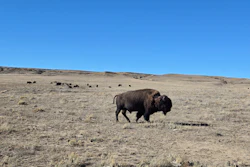
Kwiaatekk | Pixabay.com
Younger farmers under 45 are less likely to adopt regenerative agriculture programs than older farmers despite supporting the practices, primarily because they need to see a clear return on investment and practical value that fits their current operational realities.
Only 46% of farmers under 45 are enrolled in regenerative or conservation agriculture programs compared to 54% of farmers over 45, according to a Farm Journal Intelligence survey of 510 U.S. farmers.
38% of younger farmers said they adopted only some or none of the regenerative practices they wanted due to economic and time constraints, versus 29% of older farmers.
45% of surveyed farmers adopt conservation practices only when they can see a clear return on investment, while 26% are motivated by moral obligation to stewardship.
Rising input costs, crop underperformance, and market drops are the top factors prompting farmers to reconsider their practices, with 65% citing each of the first two.
70% of farmers adopt new practices only after seeing results from other similar operations, making peer examples and trusted advisory networks critical to scaling regenerative agriculture.
Farmers under age 45 are less likely than older farmers to be enrolled in a regenerative or conservation agriculture program (46% vs. 54% of farmers over 45), despite generally positive views of the practices, according to research commissioned by Nestlé Purina PetCare and conducted by Farm Journal Intelligence.
The survey of 510 U.S. farmers with at least 250 acres of corn, rice, soy or wheat found that farmers of all ages and experience levels are adopting regenerative practices at similar rates. However, 38% of farmers under 45 said they adopted or continued some, but not all, or none of the regenerative practices they wanted to adopt this year, compared with 29% of farmers over 45.
Most producers surveyed reported positive views of regenerative agriculture practices (88% of those under 45 and 92% of those over 45). Farmers of all ages showed strong interest in specific conservation outcomes, including soil health, nutrient management and resilience to extreme weather. According to the research, if programs supporting these practices do not fit the realities of running an operation, it may become harder to sustain younger farmers’ participation.
Purina said long-term farmer participation in regenerative practices is essential to building food system resilience for companies that depend on agricultural production.
“Regenerative agriculture scales most effectively when it delivers near-term value for farmers while supporting the long-term health of their operations,” said Gopi Sandhu, vice president of sustainability at Purina. “Building lasting relationships and unlocking practical value for farmers, especially the next generation of farm decision-makers, is essential to achieve the food industry’s long-term goals.”
Economic pressures prompt practice changes
Lack of time was a key barrier for the 33% of surveyed farmers who did not add or continue regenerative methods. Rising crop input prices and crop underperformance were each cited by 65% of farmers as events that would make them seriously consider changing a practice, while 51% cited market drops.
When asked to select the view that most closely reflects their approach to conservation agriculture practices, surveyed farmers responded as follows:
Nearly half (45%) said they adopt conservation practices when they can see a return on investment.
More than one-quarter (26%) prioritize the practices out of a moral obligation to be good stewards of natural resources.
Twelve percent adopt practices that give their operation a competitive edge.
Nine percent said they would be motivated by changes that offer new revenue streams.
Forty-one percent of farmers said seeing positive results from operations similar to their own would convince them to adopt or expand a conservation agriculture practice. The research indicated that examples showing how specific practices affect input costs, yields and other farm outcomes, along with long-term data on soil health, resilience and overall farm performance, could help drive sustained adoption.
“Farmers are balancing their interest in regenerative and conservation practices with the realities of running an operation today, from uncertain markets to the cost of trying something new,” said Emily Johannes, senior vice president of Farm Journal’s Trust in Food initiative. “Purina’s partnership in this research identifies the specific insights that help food and agriculture companies continue to tailor support around farmers’ operational needs by focusing on the business benefits in addition to the benefits to the planet.”
Farmers look to peers before adopting practices
Seventy percent of farmers said they try new practices only “after a handful of other farmers have done so,” and peers were the most trusted source of advice across age groups. For farmers under 45, seeing results from operations similar to their own was a leading motivator for adoption.
Farm size also played a role. Among farmers operating 4,000 acres or more, seeing results on their own test acreage was the top motivator for considering a conservation practice, ranking ahead of financial incentives.
“It’s clear that farmers value many inputs, including seeing results from other operations like their own and learning from one another,” said Kelsey Ryan, regenerative agriculture lead for Purina North America. “Adoption happens farm by farm. That’s why Purina’s approach to scaling regenerative agriculture leaves room for farmers to make decisions that feel right for their operation.”
Purina’s regenerative agriculture programs
Purina invests in programs that support row-crop farmers in the Midwest and Mississippi Delta as they transition to regenerative practices, including cover cropping, reduced and no-till systems, crop rotation, nutrient management planning and alternate wetting and drying for rice.