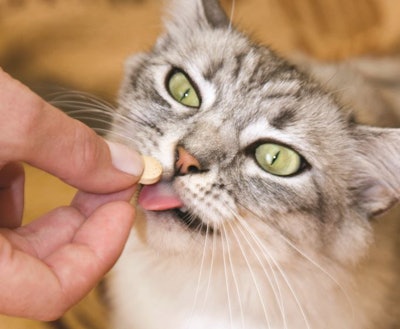
Supplements in the pet space are getting a closer look as pet owners take on more of their pets’ health and wellness responsibilities themselves. | Elenica | Shutterstock.com
Functional options in the pet space are gaining ground. Whether it’s in the form of pet foods (which claim to provide health and wellness benefits beyond the “complete and balanced” requirements for pet nutrition), pet treats (which often make singular claims such as dental health or calming) or pet supplements and vitamins (which run the gamut from all-in-one preventives to symptom-specific options), pet parents are leaning toward looking for ways to take better care of their pets that don’t include a veterinarian and/or pharmaceuticals as the first line of defense.
In a March 31, 2021 presentation titled, “The pet food and treats industry: Reflecting on the past, understanding the present, anticipating the future,” Packaged Facts Research Director (and regular Petfood Industry magazine columnist) David Sprinkle presented data on recent pet supplement purchasing. According to the data, 34% of those surveyed said they’re purchasing dog vitamins/supplements, while 24% said they’re purchasing cat vitamins/supplements. These numbers, are, notably, higher than the percentages who said they are purchasing functional treats for dogs and cats (21% and 17%, respectively, not including dental treats).
They’re not alone. According to market research and consulting company Grand View Research, the global pet supplements market size was valued at US$637.6 million in 2019 and is expected to grow at a compound annual growth rate (CAGR) of 6.4% from 2020 to 2027.
Pet owners paying more attention
The past year found pet owners spending more time than ever with their pets, and amidst a global pandemic preventive health in the human and pet spaces became a focus.
“I think we’ve seen some healthy growth in the supplement space, as pet parents have been home with their pets and noticing health issues more acutely,” said Derek Archambault, vice president of marketing for FoodScience Corp. (which owns such brands as Pet Naturals and VetriScience).“I think then in terms of what they’re looking for once they see there are issues, pet parents are looking for efficacious products … our own research indicates that 90% of consumers would rather try a supplement than go straight to a pharmaceutical. So they’re looking for something that works, they’re looking for high-quality products that they either recognize or can understand, and I think the other important thing that plays into this is they’re looking for products that their pet will eat.”
A need brought into sharp focus by COVID-19, supplements such as this one by VetriScience that focus on pet behavior and calming are becoming more popular. | Courtesy FoodScience Corp.
These demands track well with what pet owners look for when they’re searching for preventive health or treatment solutions in the pet food aisles — it’s well known that many pet parents will look at nutrition as the first line of defense for their pet’s health. But pet foods aren’t necessarily meant to address specific health concerns, as their primary purpose is overall balanced nutrition, so pet owners are increasingly willing to take a look at additional offerings in the same place they’d go for themselves: the supplement space.
“We are definitely seeing a stronger level of interest and an increase in sales like never before,” said Dr. Bob and Susan Goldstein, co-founders of Earth Animal. “Our herbal condition-specific sales are up by over 100%, indicating a new trend in what used to be more esoteric. Consumers are looking for another way of dealing with common conditions and diseases, as opposed to chronic drugs.”
[Earth-animal-natural-remedy]
Supplements such as Earth Animal’s natural remedies appeal to consumers looking for a more holistic approach to pet wellness, with functions such as urinary and kidney relief and immune support. | Courtesy Earth Animal
The need for consumer education
Unsurprisingly, education is a huge component of those dealing in pet supplements, ensuring that consumers understand their options and can intelligently choose what might be right for their animal.
“Education is huge,” said Lindsay Saggu, vice president of pet sales and marketing for PureForm Pet Health, a supplement company that focuses on systemic health rather than the larger trend of symptomatic treatments in the space. “People needed to be educated first because then they can understand why they might need a systemic supplement (versus looking for a single-symptom solution). You have to educate the retailer, the buyer and do it well enough for them to educate their customers. It’s easy for people to notice a symptom and then go look for a product to address that symptom, because that’s what we’ve always done [in the human space].”
PureForm’s Canine and Feline Essentials supplements focus on overall animal health and wellbeing, with multiple benefits built into a single formula. | Courtesy PureForm Pet Health
All that assumes, of course, that pet owners find themselves in the supplement space to begin with.
“There’s an education component to pet parents around what a supplement is and what it isn’t,” said Archambault. “There’s a fair number of functional treats out there that have really low levels of actives. And the way that the packaging works, I think it’s hard for the average consumer to do the math and realize hey, I would have to give a lot of this to equal what is in a real supplement.”
Larger pet trends touching the supplement space
Since the consumer base is largely the same, those who make supplements for pets are working within many of the same big trends happening in pet food right now.
“I think we do see consumers looking for more natural options, looking for sustainability, looking for clean product labels, looking for companies that are committed to doing good, whether that’s in the world or in the community, with their suppliers or whatever,” said Archambault. “I think pet owners project themselves into what they buy for their pets, so what’s going on in their world is what they end up looking into for their pets.”
Meeting those trends can be as easy as enhancing something that’s already there.
“Our formula has always been the same, but we have been highlighting on our labels that we have no fillers, no flavors, nothing GMO and no sugars,” said Saggu. “Our canisters are biodegradable and the top and bottom are aluminum, so you can hammer them off and recycle them.” PureForm is also researching ways to make the entirety of their packaging compostable. “Really we just want to stay out of the landfills,” said Saggu. That’s definitely a trend that we jumped on.”
The biggest challenge (and opportunity) of all is one many in the pet space will be familiar with: loyalty.
“Helping the pet parent to stick with it and have good compliance [is important],” said Archambault. “Because supplements, if you don’t take them, they don’t work. Keeping the participation in the category consistent is a big opportunity.”