A doctor of veterinary science and medicine is urging veterinarians in the Philippines to use phytonutrients as ingredients and supplements in pet food, as research shows their healing benefits when they are included regularly in pet diets.
Speaking before delegates to the recent Global Pet Nutrition Forum in Manila, Rodolfo Ongchangco Encarnacion Jr., DVSM, told fellow veterinarians and pet food professionals to "start using and promoting phytogenics as phytonutrients in pet food to promote growth, maintenance and reproduction."
He said that plant-based nutrients increase their effectiveness in improving pets' overall health the longer they are used. In addition, he said more research and development studies will prove that natural and organic based pet foods and supplements can help prevent and control sickness in companion animals.
Referencing the Greek physician and philosopher Hippocrates, who said, "Let food be thy medicine and medicine be thy food," Encarnacion said that with phytonutrients, "Let pet food be our pet medicine."
"Science and scientific-based research have shown and proven that antimicrobial works best to address bacterial diseases and not for growth and health wellness of animals ... Phytonutrients, as it advances in pet nutrition, health and wellness, will stop the further spread of antimicrobial resistance," Encarnacion said.
Common phytonutrients and their benefits
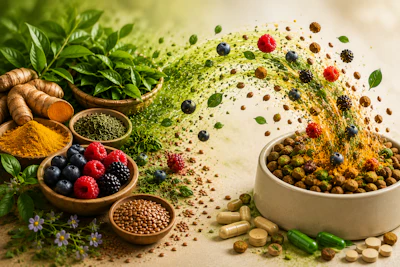
Common phytonutrients include turmeric/curcumin as anti-inflammatory; polyphenols, green tea extracts and berries as antioxidants and antioxidative stress agents; sunflower and flax seeds for healthy skin and coat; and Indian ginseng, andrographolide and mango for immunomodulation and as anti-stress and anti-inflammatory agents.
Encarnacion said phytonutrients work best in groups as they exist in nature. When introduced in pet food, phytonutrients like carotenoids can help improve animals' eyes and skin health. Polyphenols' antioxidant and anti-inflammatory properties will help senior pets with osteoarthritis and cardiovascular problems. Tannins can support mental wellness and lower high cholesterol, while phytosterols can help manage high lipid levels and cholesterol in hyperlipidemic dogs and cats. Organosulfurs found in broccoli support detoxification and can help in cases of cancer.
Although phytonutrients are recognized as generally safe, careful attention should be paid to proper dosage and palatability, said Encarnacion, who also serves as assistant vice president for technical services at Pet Options, a companion animal health care, manufacturing and distribution company in the Philippines.
"High levels of essential oils can cause toxicity in dogs and cats, while most blends of multiple compounds like carvacrol, cinnamaldehyde and capsaicin can achieve better results than single, high-dose components," he said.
Encarnacion emphasized that standardization is important to develop optimum dosage and establish consistency in prebiotic effects of phytonutrients in pet nutrition.