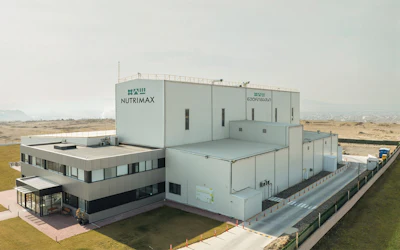
Georgia's Nutrimax operates a pet food factory in the country, holding a 30% share of the Caucasian region, and is advancing plans to strengthen its foothold in Central Asia, according to senior company representatives.
Beka Bekaia, the managing partner of Nutrimax, told Petfood Industry that 2023 marked a strategic turning point for the business as it launched its second production facility.
"This plant is dedicated to extruded dry cat and dog food, with an annual capacity of 25,000 tons," Bekaia said. "We didn't just want to enter the market, we wanted to lead it by combining European manufacturing standards with regional agility.
"We hold approximately 30% of the total dry cat and dog food market across Georgia, Armenia and Azerbaijan," Bekaia continued. "That's a meaningful share in a competitive environment that includes established global brands. Achieving it required more than just a local manufacturing advantage, it required consistent quality, a broad product range from economy to premium, and strong relationships with retail partners."
Asked about the company's international development plans, the managing partner said Central Asian markets are Nutrimax's strategic priority.
"In 2025, we made a significant move by opening a representative office in Kazakhstan," he said. "Our vision for Kazakhstan, Uzbekistan and Kyrgyzstan is clear: we are introducing products with exceptional palatability and high nutritional value that compete directly with global brands on quality, but remain highly competitive on price.
"With the right local partners and our proven marketing strategies, we aim to capture a significant portion of these markets within the next few years," he added.
Nutrimax wants to benefit from a synergy of stable quality, unique palatability and dedicated care, as well as private label projects with foreign partners, according to Bekaia.
"While we are proud of our own brands, our facility is designed for versatility. We are actively seeking and open to negotiations with partners interested in private label production," he said. "We offer various packaging sizes and formulations, providing a turnkey solution for businesses looking to launch their own high-quality pet food lines without the overhead of manufacturing.
"Strategically located at the crossroads of Europe and Asia, we also provide partners with faster, more cost-effective logistics than traditional global hubs."
Polish pet food maker to invest in production capacities
Polish pet food producer ASpol has obtained permission to expand the production capacities of its factory in the Katowice Special Economic Zone (KSEZ), located in the country's southwestern region of Silesia.
"As part of the project, the company will increase the production capacity of its existing plant in Jaworzno by purchasing and integrating a modern machine for grinding and crushing raw and frozen meat, along with completing the necessary installation work, including electrical wiring," the KSEZ said in a statement.
The investment will enable ASpol to increase its production efficiency, improve product quality, enhance process automation and strengthen its competitiveness in the domestic and international markets, according to the statement. The value of the investment in Jaworzno was not disclosed.
Increasing the plant's production capacities will also enable the Polish pet food maker to advance its foreign expansion plans. ASpol currently sells about 30% of its output abroad, predominantly exporting products to other European Union member states.
ASpol has been active in pet food production and distribution since 1989. Last year, the business added a new pet food brand to its portfolio, BarfACE. ASpol's product range is focused on dog food made with various types of meat, including poultry, beef, veal, fish and game, according to data from the Polish company.
Poland's 14 special economic zones accommodate a significant share of the country's manufacturing activities. Investors declare the minimum number of jobs they plan to maintain at their production facilities, pledging to keep them for a determined number of years, and the minimum funds they aim to invest.
In return, domestic and foreign companies are eligible for preferential tax treatment on their investments and can also secure state support for their manufacturing projects. Over the past years, special economic zones have also attracted a growing number of investors from the pet food industry.