Czech biotechnology company, BeneMeat, and a university research team have published what they describe as one of the first life cycle assessments of cultivated meat based on primary production data rather than laboratory estimates.
BeneMeat and the Faculty of Mechanical Engineering at the Czech Technical University in Prague co-authored the study, published in The International Journal of Life Cycle Assessment. The research modeled an industrial plant designed for 400–600 kg of cultivated meat per day.
The study found current carbon output at 5.3 kg CO2 equivalent per kilogram of product, below that of conventional beef or pork. Identified process optimizations could reduce that figure to 3.3 kg CO2 equivalent, which is below the footprint of European conventional chicken production, noted the study. Energy intensity currently stands at approximately 66 MJ per kilogram, with potential to drop to 61.5 MJ.
The article, titled "Life cycle assessment of industrial-scale cultivated meat production: case study of real market entry via pet food application," noted that raw material sourcing and energy mix are key variables in the environmental outcome.
"The goal was to align the environmental impact assessment with the real conditions of future production," said Miroslav Žilka, Ph.D., head of the Department of Management and Economics at CTU and co-author of the study. "Using primary data from the industrial process allows us to significantly refine previous estimates and provides a vital reference framework for further development in the field of cultivated meat."
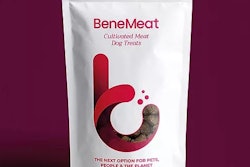
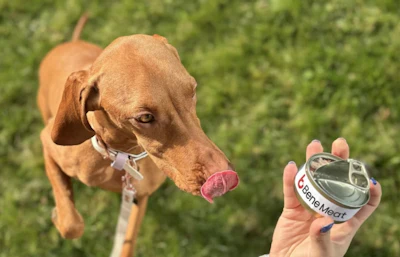
BeneMeat was registered in the European Union as a producer of cultivated meat for pet food in autumn 2023. The company said a follow-up analysis based on full-scale operations is planned.
"For BeneMeat, it is essential to work with real data," said Jan Luprich, business development at BeneMeat. "This study clearly demonstrates that our technology has the potential to succeed in industrial production from both a technological and environmental standpoint."