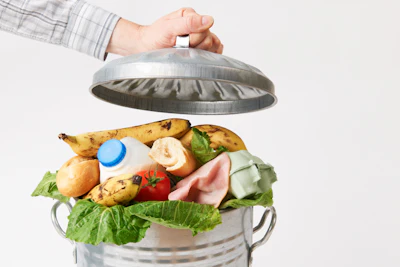
When we think about upcycling, circular nutrition and ingredients, at what point do we decide that food stops being food? And at what point does something still contain nutrition, value and energy but gets labeled as waste?
These are questions posed by Ann Marie Ocker, technical marketing and innovation director at the International Ingredient Corp., during the 2026 Petfood Forum in Kansas City, Missouri, USA.
“Once food leaves the human food chain, sometimes it’s simply treated as waste. Circular nutrition challenges that assumption,” she said. “It doesn’t have to go to waste – not everything.”
Circular nutrition keeps nutrients moving through the food system rather than ending at disposal. At nearly every point in the food system – from production to processing to distribution to consumption to food systems to resource and waste recovery – there are materials that are still food grade.
“They can still be regulated, they can still contribute valuable nutrition, even if they no longer meet human retail standards,” Ocker said.
Using upcycled ingredients manage waste and preserve nutrition at the same time. Upcycled ingredients are food-grade materials redirected into new, higher-value applications rather than discarded.
“Upcycling shouldn’t be a buzzword. It should really be a discipline in terms of how we look at our entire food system and what we can reclaim from that system that still offers additional value,” she said. “The goal isn’t simply less waste. The goal is value creation.”
In pet food, value creation has to mean something specific, such as nutrition, palatability, safety or consistency.
Where does pet food fit into this system? Agriculture supports the human food system, the human system can create usable co-products, and those co-products can nourish pets.
Upcycled ingredients keep nutrients in the food system to feed pets instead of going to landfills. These ingredients include animal proteins, animal fats, dairy, yeast, fish and grains.
Examples of upcycled ingredient uses in pet food:
- Dairy co-products: Support energy density and flavor enhancement in pet food formulations.
- Primary function: Palatability, protein
- Secondary benefit: Minerals
- Animal fat: Supports energy density and flavor enhancement in pet food formulations.
- Primary function: Energy, flavor
- Secondary benefit: Fatty acid delivery
- Yeast: High-quality source of protein, B vitamins and trace minerals as well as palatability and digestibility enhancement.
- Primary function: Digestibility, micronutrients
- Secondary benefit: Fermentation-derived value
- Fish: Responsibly harvested ingredient naturally rich in omega-3s
- Primary function: Protein, amino acids
- Secondary benefit: Alternative sourcing
By using upcycled ingredients, “we’re able to preserve nutrition vs. managing waste,” Ocker said. “When we reduce waste, we honor the resources that created it. When we nourish pets, we honor the bond we share with them. When practice and purpose align, circular nutrition becomes a responsibility.”