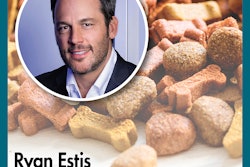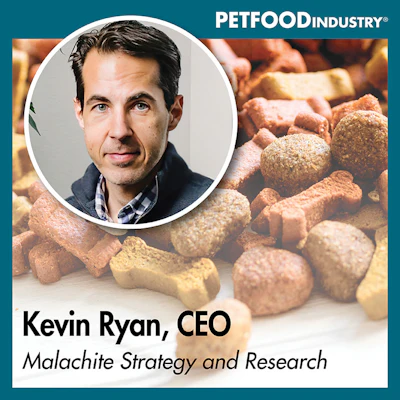
In this episode of Trending: Pet Food, Lindsay Beaton speaks with Kevin Ryan, CEO of Malachite Strategy and Research and Petfood Forum 2026 keynote speaker, about the accelerating transfer of human wellness trends into the pet food space. Ryan draws on his background in food anthropology and corporate innovation strategy to explore the consumer mindsets — from optimizers to ancestral diet adherents to ethical shoppers — driving demand for raw, longevity-focused and sustainability-oriented pet food products.
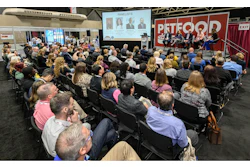
Ryan will expand on these themes at Petfood Forum 2026, where he'll deliver the opening keynote, "Next-gen premium: The consumer trends rewriting pet food innovation," on April 28 in Kansas City, Missouri, U.S.
We want to thank AFB International for sponsoring this podcast. AFB International is the premier supplier of palatants to pet food companies worldwide, offering off-the-shelf and custom solutions and services that make pet food, treats, and supplements taste great.
Lindsay Beaton, editor, Petfood Industry magazine and host, Trending: Pet Food podcast: Hello, and welcome to Trending: Pet Food, the industry podcast where we cover all the latest hot topics and trends in pet food. I'm your host and editor of Petfood Industry magazine, Lindsay Beaton, and I'm here today with Kevin Ryan, CEO of Malachite Strategy and Research and our Petfood Forum 2026 keynote speaker. Hi, Kevin, and welcome!
Kevin Ryan, CEO, Malachite Strategy and Research: Hi, Lindsay. How are you?
Beaton: Pretty good! In case you've not yet been introduced to Kevin or Malachite, here's what you need to know. Kevin brings 20 years of experience bridging anthropology, food science and corporate strategy. Before founding Malachite, he served as global strategic senior planner at Amazon and led innovation strategy at General Mills. He holds a Ph.D. in food science and a master's degree in food anthropology, and shares industry insights through his FoodStuff newsletter and 3 Squares podcast.
Malachite Strategy & Research is a strategic innovation consultancy that helps CPG, foodservice, and retail clients navigate the complexities of the front end of innovation. By combining deep consumer research with market analysis and facilitated team sessions, Malachite helps companies build profitable product pipelines and actionable growth strategies.
As I mentioned, Ryan is the keynote speaker at Petfood Forum 2026, being held at the end of April, where he'll be presenting "Next-Gen Premium: The Consumer Trends Rewriting Pet Food Innovation." This, alongside his multifaceted experience in people, food and innovation, is why I've brought him on today to answer this question: How are human wellness trends shaping the pet food space?
This has been a known entity in pet food for quite some time, and it used to take a while before human food trends hit pet food. That lag time has been slowly decreasing over the years. I want to start with some of the most obvious trend transfers from human food to pet food recently that you have seen. What have some of those been?
Ryan: I think the ones that come to mind immediately are the raw or gently cooked trends. That goes to both the ancestral diet perspective and the culinary side — consumers wanting to see the carrots, the pieces of meat, all of that. Another one I see, and I think there's a lot of room to grow on both of these, is the longevity piece. We've always had puppy, adult and senior life stage positioning, but you're seeing that concept stretch, just as you are in human food and beverage.
The other one that comes to mind, which is an evergreen, is convenience. Humans have, for the last 100 years, really been pushing from a food perspective into more and more convenient sources — things on the go and all that. You're seeing a lot of that within pet food as well: more convenient formats, more snacking. As we have moved from main meals to the snackification of those meals in human food, we've seen the same thing with pets.
Beaton: I want to make use of your degree in food anthropology here, because one of the biggest reasons these transfers are happening is that people have brought pets into their families to the point where they humanize them. What are the cultural implications of bringing a non-human member into your family unit and essentially looking at them as a small human? How much has that played a role in these trend transfers?
Ryan: I think we sometimes hear words like "fur baby" and assume that when people bring their pets closer to them, it's always a maternal dynamic. If you think of it as concentric circles, we've moved our pets deeper and deeper into those circles — but I think that's a little simplistic. Different pet owners have different perspectives.
One may absolutely be a parental dynamic, and that translates directly into how a human desire or trend gets transferred — if it's a baby or child perspective, then all the trends happening in toddler food come over. But the relationship could also be that of a friend, a companion, a helper, someone seen as a life partner.
Different relationships determine which of your own trends you bring over. They're getting closer to us, and we're humanizing — or to use the precise term, anthropomorphizing — them in some ways, but it's not always the same kind of relationship, and that influences how trends get transferred.
Beaton: Let's dive into that a little more, because when we were having our initial conversation about this podcast, you talked about the mentalities of different consumer types and the ways that various trends relate to those types. When you were researching the transference from human food trends to pet food trends, did you notice any definitive patterns or groups of pet owners that emerged?
Ryan: Absolutely, and you can see it within regular human trends. Look at someone who is an optimizer — sometimes called a transhumanist. That is a very significant and growing human trend right now: How do I optimize my body? My body is a project, and it's something I can improve with creatine, nootropics, adaptogens and these other buzzwords — all to become mentally and physically sharp. That thinking transfers over into how they approach their pet.
The pet is a biological entity that can be optimized, that isn't living the best version of itself. Another consumer type is more ancestral in mindset — the paleo diet, the raw diet, the carnivore diet. There's a direct transfer to pets there: the idea that who they are needs to be reflective of where they came from. Going back to roots, viewing industrialization as the enemy of nature.
Then there's the ethical consumer, who thinks about how their shopping choices affect the earth. They think the same way about their pet's diet. I've heard people talk about their pet's carbon pawprint — and that reflects into natural and organic choices, but also further into upcycling or insect protein, because those options are seen as better for the planet. Those are just a few examples of the consumer tribes whose thinking gets transferred over into the pet space.
Beaton: How defined are the lines between these consumer types? Is there a lot of overlap, or is there something the industry could really pin down and say, here are the characteristics of each type — and use that as part of consumer demographics analysis when figuring out who to reach?
Ryan: Larger pet food companies do conduct segmentations, and many of them have identified consumer types along these lines — grouping different mentalities into different segments. There's definitely overlap, and that overlap may change during the life cycle of either the human or the pet. You may think about your pet one way when it's a kitten or puppy, and then shift your thinking as it gets older and develops health issues.
As the human goes through different life stages, that can make a difference, too. And if there are multiple people in a household, they may have different perspectives — so just like raising a child, you have to make concessions between household members about what choices to make for the pet. There's a lot that goes into it, but yes, you absolutely can cluster and theme. There will be overlap, but the clusters are real.
Beaton: When it comes to figuring all of this out, what have you seen from companies that do segment? Where can a company start to look at their consumers and begin to identify these trends?
Ryan: There are two approaches, and they work together. One is qualitative and one is quantitative. You typically start qualitative — doing in-home interviews, which is ideal in this case. Virtual interviews are possible, but in-home is best because you need to see the interaction and understand the deeper dynamic of how they treat their pet and how they think about the pet when it comes to food and care. That begins to build the framework, and you start to notice patterns.
Once those patterns are in place, you move to a quantitative survey to understand things like, "I think of my pets this way" or "I do these things for my pets." When you get all of that information back, you can use statistics to put respondents into groups — this group represents X percentage of the population, this one represents Y.
You can also start to identify areas of the marketplace that are overrepresented or underrepresented, or which current brands map to which groups. But it always starts with deeper conversations and the recognition that not all pet owners are the same.
Beaton: As you were talking, I was thinking about the direct reach that brands have to their consumers these days via social media. Is that a viable way to try to figure this out — by monitoring your own social channels and seeing how consumers are talking about their pets?
Ryan: Absolutely, and all of that is useful input. You can do it organically, just reviewing the verbatims you get in consumer comments on your website or social media, and start to understand how your core consumer talks about their pet. There are also more sophisticated approaches using AI to do that segmentation work at scale.
That said, one watch-out: people tend to present an idealized persona on social media. No one's life is quite what they represent on Facebook, and the same is true in pet. You won't capture the struggles — the moments where someone says, "I can't afford this raw food this week," or, "the refrigeration is too difficult to manage," and they make a different choice. The ideal and the real don't always match. That's why you need to balance social listening with some form of in-home research — the two methods complement each other.
Beaton: That is a very good point. One of the biggest areas of cognitive dissonance in the pet space right now is what consumers say they want regarding sustainability versus how they actually behave — whether that's a disconnect between what consumers think sustainability means versus what it means in practice, or whether they're speaking to an idealized version of themselves. The industry hasn't quite parsed that out yet, and it's probably a combination of factors.
What are the right questions to ask in order to get to the truth of the matter, given that even in a survey, people tend to answer from their ideal self rather than their current reality?
Ryan: My first point — and I usually make this to clients — is don't start with surveys. It's the easiest method, but it's also the easiest way to miss a lot, because when you're designing a survey you're already making assumptions, and those assumptions are usually based on your own bias. If you ask, "I only want to shop for sustainable goods for my pet — true or false?" most consumers will say true, because that's the ideal.
You're missing a couple of critical things. First, what does sustainability even mean to that consumer? You've already embedded your own definition without stating it, so the consumer fills in their own — and they may define it as simply "natural," while someone else thinks of carbon footprint, and someone else thinks in terms of energy per acre. All of that nuance only comes from qualitative work upfront. Surveys, to me, are best used for quantifying what you already know — understanding size and reach. Deep insight almost always comes through qualitative work first.
Beaton: There are a lot of different sizes of pet food company in this industry — the large ones, a lot of mid-sized companies, and then many specialty brands that are either still in their startup phase or have been around about 10 years and built themselves around specific trends like raw and fresh. Those companies have limited resources for deep-dive consumer research.
What is a good place to start if you don't have a robust marketing department but you still want a nuanced view of your consumers?
Ryan: I get this question a lot. I think the industry has a somewhat inflated sense of what's required to do qualitative work. Yes, there are best practices, and I've personally conducted thousands of in-homes. But for most startups and small companies, I always say: you already have conversations with friends and neighbors. Those conversations are a perfectly valid starting point. You don't need to go to nine cities, set up cameras or hire a research firm.
What I call the snowball approach works well here — talk to someone you know about their pet, using a broad discussion guide built around the questions you have. At the end of that conversation, ask them who else they know with a pet — someone similar to them in a relevant way, like they also feed raw — and go talk to that person. Many people are happy to talk with no compensation, or very little. Ten to 12 conversations of 45 minutes to an hour each is not a huge lift, especially when you're not hiring out the work.
At the end of that, you have a much more robust sense of who these people are and what they need. Then you're in a position to put together a much better survey — because qualitative work is what makes you smarter so you can do better quantitative work, not the other way around. A lot of startups have been very successful doing exactly this kind of scrappy, low-cost research.
Beaton: Those are some great insights, and I know a lot of my audience will appreciate hearing that — many of them are marketing teams of one or two people trying to do the jobs of 20.
Ryan: Right. To be clear, I'm not saying there's no place for more sophisticated, in-depth research. When you're trying to understand line extensions in a deep way, exploring a new consumer segment, or trying to influence a board, more structure and sophistication is warranted. But when you're small and getting started, doing it yourself — or with your direct reports — is perfectly good and acceptable.
Beaton: As we wrap up our conversation — we don't want to give everything away before Petfood Forum — what do current trends tell you about the future of human and pet food trend connections? Are these going to continue to intertwine indefinitely?
Ryan: Absolutely. There's no doubt about it. The closer our pets are to us, and the more they are part of our daily lives — especially for people who work from home — the more impossible it becomes not to feel empathetically connected to them. I think we'll continue to see strong reflection of what's happening in human food and beverage showing up in pet food, either slightly ahead of the curve or immediately after.
Beaton: Thank you so much for speaking with me today, Kevin. Human food trends and pet food trends have had known connections for years, and it's been fascinating to explore those links at a more nuanced level — because the industry knows the connections are there, but figuring out what to do with them and exactly how the threads weave through is what will move the industry forward in terms of consumer understanding. You've also given my audience a great preview ahead of Petfood Forum.
Before we go, where can people find more information about you and Malachite Strategy and Research?
Ryan: Probably the easiest thing is to Google "Malachite Strategy" and "Kevin Ryan" — the name is a little tricky to spell. You can find my website and my newsletter, FoodStuff, which covers trends in human food and occasionally pet food and comes out twice a month.
Beaton: Perfect. Once more, Kevin will be presenting "Next-Gen Premium: The Consumer Trends Rewriting Pet Food Innovation" as Petfood Forum 2026's opening keynote. Petfood Forum will be held April 27-29 in Kansas City, Missouri. Find more information at petfoodforumevents.com, and we hope to see you there.
That's it for this episode of Trending: Pet Food. You can find us on petfoodindustry.com, SoundCloud or your favorite podcast platform. You can also follow us on Instagram at @TrendingPetFoodPodcast. If you want to chat or have any feedback, feel free to drop me an email at [email protected].
Thanks again to our sponsor, AFB International, the premier supplier of palatants to pet food companies worldwide, offering off-the-shelf and custom solutions and services that make pet food, treats, and supplements taste great.
Once again, I'm Lindsay Beaton, your host and editor of Petfood Industry magazine. We'll talk to you next time!
Petfood Forum and Petfood Essentials show dates are April 27-29, 2026, in Kansas City, Missouri, U.S. To register or stay informed on the latest event developments, go to PetfoodForumEvents.com.