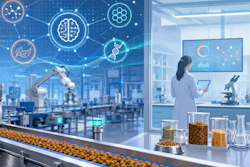
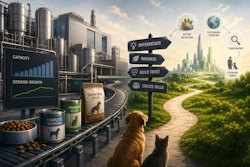
Art for the sake of art, or l'art pour l'art, may have intrinsic value, but l'AI pour l'AI, may not be so worthwhile. To paraphrase novelist George Sand, automation for automation’s sake is an empty phrase. Automation for the sake of safety and quality, that is the production facility one is searching for.
Automation has become a defining feature of modern pet food manufacturing, but deciding how much automation to implement remains one of the most important questions when planning a new facility, Erwan Gilet, business development expert with KSE, said during his presentation at Foro Mascotas in Guadalajara, Mexico. Companies should view automation as a strategic investment rather than an end in itself.
Highly automated pet food plants already exist, particularly in Europe and North America, with some facilities operating at nearly full automation. However, Gilet emphasized that the optimal level of automation depends on each project's business objectives, labor availability, food safety requirements and expected return on investment.
"There is no reason to automate simply for the sake of automation," he said. Instead, manufacturers should prioritize areas where automation reduces risk, improves consistency and delivers measurable economic value.
Labor shortages are accelerating automation
One of the primary drivers behind increased automation is the growing difficulty of recruiting and retaining workers for repetitive manufacturing jobs.
Gilet pointed to facilities in Europe where companies automated ingredient handling and dosing after struggling to fill positions. In one premix facility, automation replaced approximately 20 manual jobs associated with dosing hundreds of ingredients. Similar challenges, he noted, are becoming increasingly common in Mexico's industrial parks.
The issue extends beyond labor costs. High employee turnover can negatively affect production consistency, while manual handling introduces additional opportunities for human error.
For pet food manufacturers, those risks carry significant consequences. Gilet noted that formulation mistakes involving micro ingredients can have serious impacts on pet health and rapidly damage a brand's reputation.
Focus automation where precision matters most
While large-volume ingredients are important, Gilet argued that project planning should focus first on automating micro ingredient handling because small formulation errors can create disproportionately large nutritional and economic impacts.
Macronutrients may be added in kilogram quantities, making relatively small weighing deviations less significant. Vitamins, trace minerals and other micro ingredients, however, are often added in gram quantities, where small dosing errors become much more meaningful. Since dogs and cats typically consume the same food every day, repeated over- or under-dosing can lead to chronic nutritional imbalances.
Automation alone cannot deliver accurate dosing if the mechanical design is inadequate. Gilet said that manufacturers should establish weighing tolerances early in the project by bringing together formulation, quality assurance and plant engineering teams. Scale accuracy, minimum batch sizes and formulation limits should be coordinated before equipment selection begins.
He described ingredient flow as another critical design consideration. Poor-flowing materials can interrupt production, requiring operators to manually intervene and creating costly downtime.
To improve reliability, equipment should promote consistent gravity flow through properly designed silo outlets and, where necessary, use systems that keep difficult ingredients moving. Stable ingredient flow allows more accurate dosing while reducing interruptions to production.
Data should drive process optimization
Beyond mechanical equipment, Gilet highlighted the growing role of real-time process data.
Modern dosing systems continuously collect production information that can be analyzed using advanced algorithms to automatically adjust dosing parameters as operating conditions change. Rather than relying on fixed settings established during commissioning, adaptive control systems respond to changing ingredient characteristics, climate and production conditions throughout the day.
The value of automation, he said, comes not simply from collecting data but from using those data to make immediate process adjustments that improve accuracy, productivity and consistency.
Production reports can also help identify underutilized equipment, bottlenecks and recurring process issues that may otherwise go unnoticed.
Build flexibility into future plants
Looking ahead, Gilet described several technologies being incorporated into new facilities, including automated container transport systems that minimize cross-contamination and improve traceability. In some highly automated plants, ingredient dosing is physically separated from extrusion, with automated transport systems delivering pre-weighed ingredients to the production area.
These designs also allow facilities to reduce cross-contamination risks while increasing operational flexibility, particularly for manufacturers producing multiple formulations.
Although fully automated plants are technically achievable, Gilet said most companies should evaluate multiple automation scenarios before making investment decisions.
In many projects, automating 80% to 90% of operations delivers most of the available benefits, while the final increment toward full automation often produces diminishing economic returns. Each investment should therefore be justified based on labor savings, improved product quality, enhanced food safety and production efficiency.
The objective is consistently producing every batch to specification while maintaining traceability, food safety and profitability, Gilet said, as opposed to maximum production volume.