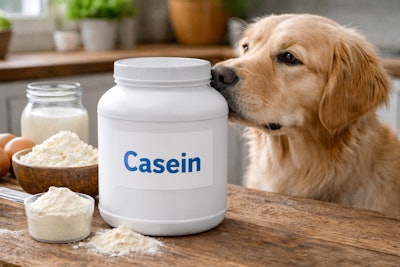
In 2015, Petfood Industry examined whether casein had a meaningful role in dog and cat food formulation in the article “Casein: Does it have a use in pet food?” by Greg Aldrich, Ph.D., Kansas State University research associate professor and Nulo Pet Food chief operating officer. Casein is a milk-derived protein that makes up roughly 80% of milk’s protein content and is used in human food and nutrition products for its high protein concentration and functional properties, including binding and emulsification. However, it remains a niche ingredient in dog and cat products.
That article covered how casein was a high-quality, highly digestible milk protein with useful functional properties, but one that appeared only occasionally in pet foods. When used, it was more common in prescription or specialty diets than in over-the-counter products. More than 10 years later, little has changed. Casein has not become a mainstream protein source in dog and cat foods. However, research and product development have continued since 2015.
The 2015 article noted that most published work on casein in dogs involved semi-purified research diets, with digestibility reported at greater than 89% and no adverse tolerance effects. Since then, limited new research has evaluated casein as a primary dietary protein for dogs or cats.
Instead, more recent studies have focused on casein-derived fractions, particularly hydrolyzed peptides, used at low inclusion levels. Research published in 2022 in Frontiers in Veterinary Science examined a casein phosphopeptide–selenium complex in dogs and reported changes in selected immune-related markers. Although the researchers didn’t state that these findings suggested that casein could serve as a replacement for conventional animal proteins, they did point to potential functional applications.
Casein in supplements for people and pets
In human nutrition, casein is widely used in dietary supplements and food products for its functional and nutritional properties. In sports and medical nutrition, it is commonly marketed as a slow-digesting protein, based on its tendency to coagulate in the stomach and provide a more gradual release of amino acids than whey protein. Casein and caseinates are also used in processed foods for binding, emulsifying and texturizing, including in nutritional beverages, meal replacements, baked goods and confectionery coatings.
Nevertheless, casein remains uncommon in dry and wet dog and cat foods. Its most consistent presence is in supplements and veterinary-focused products.
One example is Zylkene, a nutritional supplement for dogs and cats formulated with alpha-S1 tryptic casein derived from milk protein and positioned for situational stress. In addition, some veterinary therapeutic pet diets include hydrolyzed casein.
The case for casein hasn’t changed much since 2015. It remains permitted for use in pet foods and is recognized as a high-quality protein. Rather than emerging as a mainstream ingredient, casein has settled into a niche role in functional supplements and certain therapeutic diets. Considering its popularity in human dietary supplements there may be room for casein to appear in more pet products, it just hasn’t happened yet.