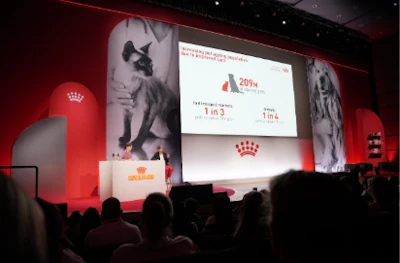
Royal Canin unveiled new research at its Vet Symposium 2026 in Montpellier, France, showing that while healthier aging in pets is achievable through earlier intervention, many owners still don't know when to act.
The symposium, themed "Entering the age of tomorrow," drew more than 700 participants — including veterinary professionals, journalists and content creators from 80 countries — to explore proactive care strategies for aging pets.
The company's consumer research, conducted by Censuswide in March 2026 among 19,012 pet owners globally, found that 46% of respondents avoid thinking about their pets getting older, 44% only consider aging once health issues arise, and 38% believe nothing can be done about pet aging. One in four (25%) were unaware that conditions such as diabetes can be a risk for aging pets.
COVID pets reaching middle age
The findings coincide with a wave of pets acquired during the COVID-19 pandemic now reaching midlife, a stage the company describes as critical for proactive care. Royal Canin said the focus of pet owners is shifting from extending lifespan to improving healthspan — the number of years lived in good health before the onset of age-related disease or decline.
Sessions at the symposium covered topics including the science of osteoarthritis care, AI adoption in veterinary practice and nutritional strategies to support aging. The programming drew on a body of scientific evidence including the paper "Aging is modifiable: current perspectives on healthy aging in companion dogs and cats," published in JAVMA and recognized as the journal's most-discussed article in 2025.
"Science gives us real reason for hope," said Dr. Tanya Schoeman, veterinary specialist physician and Royal Canin feline health specialist. "Healthier aging is within reach when we act at the right moment. The opportunity before us isn't about closing a knowledge gap within the veterinary profession, but about bringing pet owners into that knowledge earlier, before the signs of aging make the conversation feel urgent.
"Pet owners deeply want their companions to thrive, and when given the right information at the right time, they are ready to act," Schoeman added. "Seeing middle age not as a waiting period, but as a window of meaningful possibility, could allow veterinary teams to gently and proactively shape a pet's ageing trajectory for the better. It is a true privilege to explore how we can do this more effectively, alongside some of the world's most dedicated veterinary experts and professionals."
Healthy aging guide
Royal Canin also released a Healthy Aging Conversation Guide for veterinary professionals, designed to help veterinary teams shift from reactive to proactive care.
"Nutrition can play an important role in supporting healthy aging, from influencing puppy and kitten development to supporting heart health and the body's ability to stay strong and keep working well over time," said Silvia Miret-Catalan, global research and development VP at Royal Canin.
"At Royal Canin, we focus on precise, life-stage tailored nutrition designed to help veterinarians support pets proactively, long before visible signs of aging appear," Miret-Catalan said. "By integrating nutrition into early care strategies, we can contribute to help pets maintain vitality and quality of life for longer."