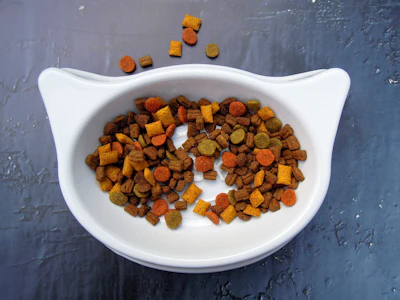
Researchers from the University of Sussex and the University of Exeter have detected microplastics in 76% of commercially available pet food products tested, according to a study published in Environmental Toxicology and Chemistry. The research, supported by the British Hedgehog Preservation Society, identifies pet food as a previously unrecognized pathway for microplastic contamination of terrestrial ecosystems.
"We found microplastics in 16 out of the 19 brands we tested, including very well-known ones," said lead researcher Emily Thrift, a PhD student at the University of Sussex in an announcement from the university. "Given the huge number of pets in the UK, as well as hedgehogs and other wild mammals which are fed these foods to supplement their diets, this represents a major, previously overlooked pathway for plastic to enter terrestrial ecosystems."
Methodology
Researchers tested 38 dog, cat and hedgehog food products sold in the UK across 19 brands, spanning three price tiers — "Value" less than £3/kg, or about US$1.72/lb.), "Mid-range" (£3–£9.50/kg, or about US$1.72–$5.47/lb.) and "Premium" (£9.50/kg and above, or about US$5.47/lb. and above). All cat and dog products were chicken-flavored to allow for consistent comparisons.
For each product, six individual retail units from different batch numbers were purchased to reduce the chance of results being skewed by a single contamination event. Each unit was subsampled from six locations within the package, yielding 228 total samples of 1 gram each.
To isolate microplastics, samples were chemically digested using a potassium hydroxide solution to break down biological material. The remaining material was filtered through fine glass filter papers and examined under a dissecting microscope.
Suspected plastic particles that did not break under pressure were measured using ImageJ software and classified as either a fiber or a fragment. Polymer type was identified using Fourier Transform Infrared Spectroscopy (FTIR), which matches the infrared light signature of each particle to a reference library. Only readings with a similarity score above 70% were accepted. Researchers used controls throughout to detect and account for any airborne contamination in the lab.
Results
Of the 228 samples tested, 63 (27.6%) contained microplastics. At the product level, 76% of the 38 products had at least one microplastic-positive replicate, and 47% had two or more positive replicates out of six. Of 19 brands, 84% had at least one contaminated sample. Three brands were entirely free of microplastics. The study did not publicly identify the clean brands.
Value-priced products had significantly more plastic-positive samples than premium products. Products containing "meat and animal derivatives" as an ingredient, a category that can include lower-quality byproducts, had even higher contamination rates: 90% had at least one plastic-positive sample.
The most common polymer types identified were polyester, polyacrylamide, polyethylene and polypropylene. Microplastic particles ranged in size from 0.09 mm to 3.8 mm and were roughly split between fibers (60%) and fragments (40%). Polymers were most commonly associated with industrial uses and textiles, followed by packaging and additives.
Dry foods had more microplastic particles per gram than wet foods. However, because wet food has lower caloric density, animals must eat larger quantities to meet their energy needs, resulting in greater estimated daily microplastic intake from wet food.
Estimation of daily food intake and microplastic exposure
Researchers modeled three consumption scenarios — moderate, high and worst-case — based on varying assumptions about brand loyalty and contamination rates. Estimated daily food intake was calculated using energy requirements for moderately active animals at small, medium and large body weights for dogs, and a standard body weight for cats.
Under the moderate scenario (based on mean microplastic counts across all samples, positive and negative), a large dog (35 kg/77 lbs.) fed wet food was estimated to ingest approximately 313 microplastic particles per day. The press release estimated a broader range of 162 to 2,314 particles per day across food types and brands, depending on the scenario.
Hedgehogs, which are frequently fed pet food in gardens and wildlife rehabilitation centers, were estimated to consume between 6 and 105 microplastic particles per day. Researchers noted that both pets and wild animals excrete these particles, which could then contaminate soil.
The study also found that microplastic concentrations in pet foods were higher than those reported for human foods, though lower than concentrations reported in wild invertebrates.
"Microplastics are not just a marine problem," said Professor Fiona Mathews, professor of environmental biology at the University of Sussex and overseer of the research. "Our pets may be inadvertently spreading plastic pollution through their food and feces, affecting wildlife and the wider environment."
Professor Tamara Galloway, professor of ecotoxicology at the University of Exeter, said, "Our results are a reminder that our pets are exposed to the same chemical pollutants as ourselves. Cleaning up the food chain is a crucial target for the future."
The study did not examine health impacts on animals. The sources of contamination, whether ingredient quality, packaging or processing methods, remain unclear, and researchers said further study is needed to identify the primary contributors and to understand any effects on animal health.