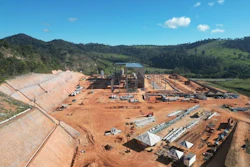
One year after its June 2025 inauguration, Mars' wet pet food facility in Ponta Grossa, Paraná, offers a clearer view of how the company is positioning itself within the Latin American market. The company invested approximately R$430 million (US$85 million) in the site, which is dedicated exclusively to wet pet food production and represents its third pet food plant in Brazil.
A segment with different economics
The facility operates with two production lines designed for continuous operation and has an initial capacity of around 20,000 metric tons per year. While relatively small compared to dry pet food plants, this scale is consistent with the structural characteristics of wet pet food, which involves higher production complexity, stricter processing conditions and higher value per unit.
In Brazil and across Latin America, wet pet food has shown faster value growth than the overall category, although from a smaller base. This dynamic reflects gradual changes in consumer behavior, including increased willingness to incorporate wet formats into feeding routines, particularly in urban and higher-income segments.
Brazil's role in regional supply
The location of the facility in Ponta Grossa highlights Brazil's role as a manufacturing and logistics hub within the region. Access to agricultural inputs, infrastructure and export routes makes it a strategic base for serving both domestic demand and neighboring markets.
At the same time, the plant's capacity provides a useful reference point for understanding the current stage of the wet pet food category in emerging markets. Despite continued growth, volumes remain relatively limited compared to dry food, with expansion constrained by price sensitivity, distribution reach and consumer adoption rates.
Rather than indicating a push for large-scale volume expansion, the investment suggests a more measured approach aligned with category development. Production capacity appears calibrated to current demand conditions, while allowing for potential future expansion.
Overall, the development underscores a broader industry pattern: in Latin America, growth in pet food is increasingly linked to product mix and value generation, while volume expansion — particularly in wet formats — continues to evolve at a more gradual pace.