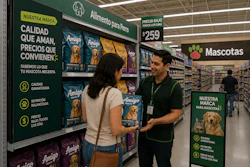
South America and the Caribbean represent the third-largest market for U.S. dog and cat food exports, according to a report from the U.S. Department of Agriculture's Foreign Agricultural Service (FAS). Latin America increasingly presents opportunities for U.S. pet food exporters as economic conditions improve and consumers place greater emphasis on pet nutrition.
The region imported US$162 million worth of U.S. dog and cat food in 2024, up 11% from 2023 (see infographic below). Improving economic conditions, including lower inflation, declining interest rates, favorable commodity prices and increased tourism, are boosting discretionary spending and supporting higher spending on pet care.
Latin America imported US$259 million in dog and cat food in 2023, a 75% increase compared with 2020. The United States accounts for 40% of imports from outside the region, making it the leading supplier ahead of the European Union and Mexico.
Urbanization continues to shape the market. With 82% of the region's population living in urban areas, consumers increasingly favor smaller dogs and cats that are better suited to apartment living. Cat ownership has risen 8%, while cat food purchases have increased 7%.
Premiumization is also accelerating. Citing Euromonitor data, the FAS report noted that 74% of pet owners in Latin America consider their pets family members, the highest level among all regions. As a result, consumers are paying closer attention to ingredient quality and seeking healthier, more natural and sustainable products. Although dry pet food remains the dominant format, wet food purchases are increasing.
Latin American growth markets
Among individual markets, Brazil, Peru and the Dominican Republic stand out as growth areas.
Brazil has the world's third-largest pet population and significant room for expansion because many owners still do not use prepared pet food. U.S. exports to Brazil reached US$9 million in 2024, four times higher than in 2020, giving the United States a 30% market share. While consumers remain price-sensitive, demand for premium products is increasing as inflation eases and economic conditions improve.
Peru imported US$48 million worth of dog and cat food in 2024, an 11% increase from the previous year. The United States supplied US$9 million and held a 21% share of the market. Increasing cat adoption and growing awareness of pet health are supporting demand for premium and gourmet products. Euromonitor projects Peru's pet care sector will reach US$730 million in sales.
The Dominican Republic imported US$22 million in dog and cat food in 2024, with the United States maintaining a 38% market share and exports totaling US$8 million. Although U.S. exports declined 8% during the year, the country remains the leading supplier. The Dominican Republic's pet food market is expected to grow 12% annually and add US$29 million in value by 2029.
Trade treaties and barriers to pet food commerce
Trade agreements continue to support U.S. competitiveness. The United States has free trade agreements with Chile, Colombia, Peru, the Dominican Republic, Costa Rica, El Salvador, Guatemala, Honduras and Nicaragua, allowing most products to enter duty-free. Colombia and Chile are now among the top 10 export markets for U.S. pet food globally.
However, barriers remain in some markets. Brazil imposes a 51% tariff on U.S. dog and cat food because pet food is classified as a luxury product. In addition, products containing more than 1% genetically engineered ingredients must carry a "transgenic" label and identify the donor gene, creating traceability challenges for manufacturers using corn and soy ingredients.
FAS concluded that Latin America's combination of economic recovery, pet humanization and growing interest in premium nutrition positions the region for continued expansion. The report said the market still offers considerable room for growth for U.S. exporters.